You’ve bought the litter box. You’ve got the litter. Now comes the question that trips up more cat owners than you’d expect: where do you actually put it?
Litter box placement isn’t just a matter of convenience for you — it’s a meaningful factor in whether your cat uses it consistently, whether they feel safe using it, and whether you’ll end up dealing with accidents in less welcome locations. In a small home or apartment, finding the right spot can feel like a puzzle, but it’s very solvable with a few guiding principles.
What Makes a Good Litter Box Location?
Before diving into specific spots, it helps to understand what cats are looking for in a bathroom location. Their preferences are rooted in instinct: in the wild, a vulnerable position while eliminating is a dangerous one. Cats want to be able to see their surroundings, not feel trapped, and not be ambushed mid-use.
The ideal litter box location is:
- Quiet: Away from loud appliances, high foot traffic, or sudden noises
- Private: Somewhere the cat can use the box without feeling exposed or watched
- Accessible: Easy to reach at any time of day, without obstacles or closed doors
- Away from food and water: Cats have strong instincts about keeping their food and elimination areas separate
- Multiple escape routes: Cats prefer not to feel cornered — a box in a dead-end alcove can make some cats uncomfortable
For a broader guide to setting up litter box systems that actually work, the complete litter box setup guide covers everything from box type to cleaning routine.
Spots to Avoid
Some locations feel intuitive for humans but are problematic for cats. Avoid placing boxes:
Near Food and Water Bowls
This is the most important rule. Cats are instinctively averse to eliminating near where they eat. A litter box too close to the food station can cause cats to avoid one or both — sometimes leading to food refusal or litter box avoidance. Keep food and litter areas in entirely separate zones of your home.
In High-Traffic Areas
A litter box in the middle of a busy hallway or near a frequently slammed door is a litter box that will stress your cat every time they use it. Over time, that stress can translate into avoidance. Cats need to feel secure during elimination, and constant disruption undermines that.
In Completely Inaccessible Spots
Tucking the box deep in a closet behind boxes, or behind a door that’s sometimes closed, might seem like a great way to hide it — but if the cat can’t reliably access it when needed, accidents happen. Accessibility must trump aesthetics.
In Basements with Noisy Equipment
Furnaces, water heaters, and washing machines that cycle unexpectedly can startle a cat mid-use and create a lasting aversion to that location. If you must place a box near appliances, choose ones that run on predictable schedules and aren’t excessively loud.
Bathroom vs. Laundry Room: Which Is Better?
These are the two most common default choices, and both can work well depending on your setup.
Bathrooms are often a good option: they’re typically private, quiet enough, and already associated with hygiene in most people’s minds. The main limitation is size — in a small bathroom, the box can feel cramped, and the cat may feel trapped. If the bathroom door is ever accidentally closed, your cat is locked out. Consider leaving the door open at all times or installing a pet door.
Laundry rooms work well if the appliances don’t run unpredictably loudly. The noise issue is real — many cats who originally accepted a laundry room location develop aversions after being startled by a spin cycle. If you use this location, try to run laundry on a consistent schedule so it’s not a surprise.
Creative Solutions for Small Spaces
In an apartment or small home, the challenge is finding spots that work both for your cat and for your sense of aesthetics and flow. Some options that owners often overlook:
Furniture Enclosures and Litter Box Covers
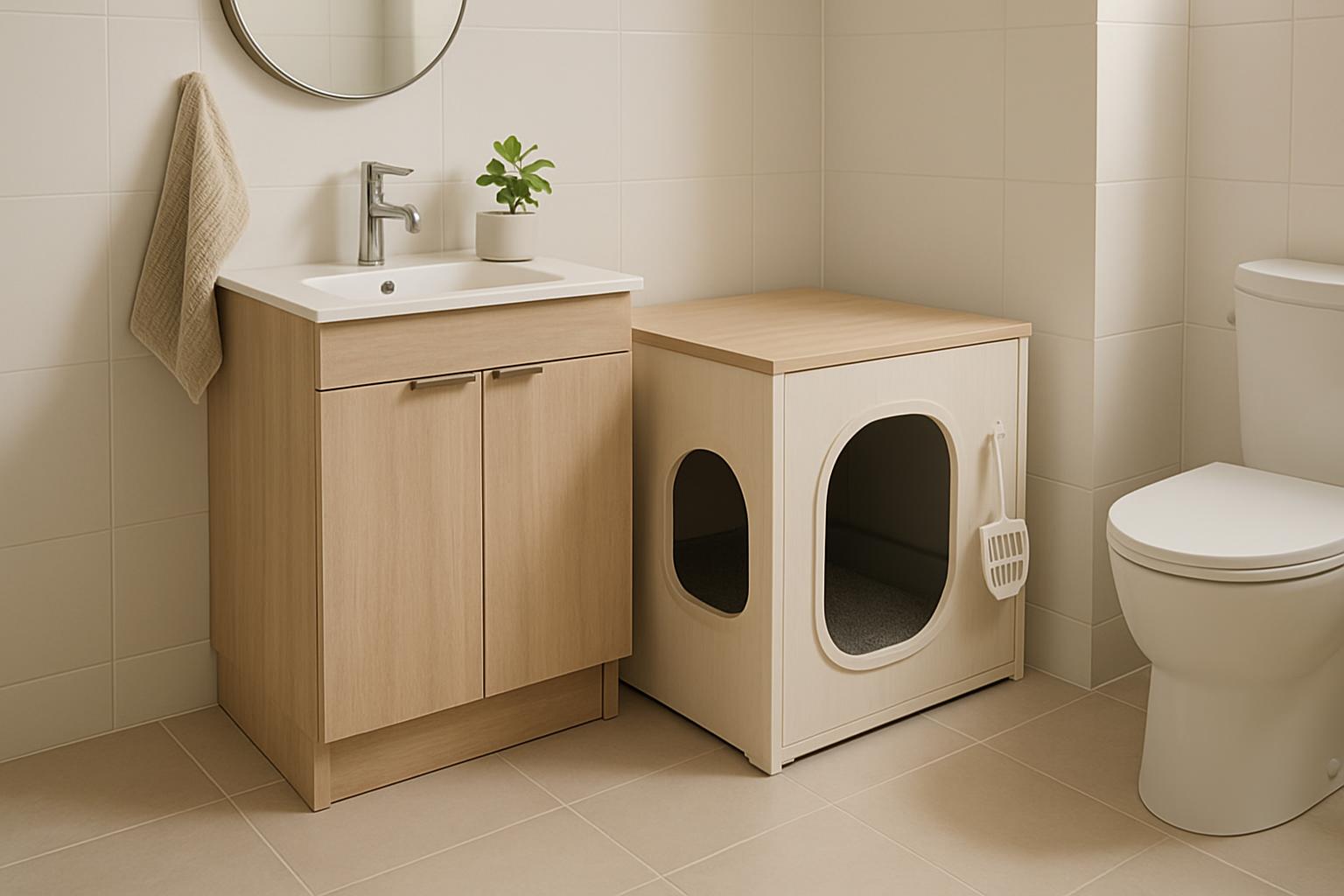
Litter box enclosures — essentially furniture pieces that hide a litter box inside — are a popular solution for small homes where every space does double duty. They look like end tables, benches, or cabinets but have a discreet opening for cat access. Quality options provide privacy for the cat and keep the visual footprint minimal for you.
The key is choosing an enclosure with adequate ventilation and an opening the cat can comfortably enter and exit. Some cats dislike enclosed spaces; if your cat seems hesitant, you may need an open or top-entry box instead.
Under Sinks and Vanities
The space under a bathroom vanity or kitchen sink (if pets aren’t accessing food prep areas) can work well for a slim litter box. It’s private, consistent, and out of the way. Remove cabinet doors or leave them ajar with a latch to ensure reliable access.
Corner Placement in Bedrooms or Home Offices
If you spend a lot of time in a specific room, placing a box there can help a cat who is anxious about distant box locations feel more comfortable. The cat associates that room with safety and will use the box more readily. This isn’t always ideal for the human, but it’s worth considering for cats with anxiety or avoidance issues.
Apartment-Specific Tips
Apartment living means fewer rooms, less floor space, and usually no basement option. A few strategies that help:
- Use vertical furniture (enclosures on top of low shelves or built-in nooks) to minimize floor footprint
- Consider top-entry boxes, which have a smaller visual footprint and contain litter scatter better
- Don’t forget balconies if accessible and safe — a weatherproof enclosure on a balcony works for cats who have safe balcony access
- In studios, use a room divider or shelving unit to create a semi-private zone for the litter box
The best litter boxes for apartments reviews compact, design-friendly options that work in tight spaces without sacrificing function. And if you have more than one cat, the guide to litter boxes for two cats explains how to manage placement and quantity in a small home.
Multi-Cat Placement in Small Homes
In a multi-cat household, the challenge is distributing boxes enough that no single cat can monopolize access. In a small home, this requires some creativity:
- Place boxes in different rooms even if they’re close together — physical separation still matters
- Use height strategically: a box on top of a low dresser (accessible via a small ramp or step) gives a second cat a completely different “territory” than a floor-level box
- Ensure at least one box is in a location that each cat feels is “theirs” — usually a room where they spend most of their time
For a full approach to apartment life with cats, the apartment cat setup guide covers litter, enrichment, vertical space, and routines in one cohesive framework.
The Bottom Line
The best litter box location is one your cat will actually use — consistently, comfortably, and without stress. In a small home, you may need to be creative about where that is, but the principles remain the same: quiet, private, accessible, and well away from food. Get the placement right, and the litter box becomes an invisible, functional part of your home that nobody thinks much about. Get it wrong, and it becomes the source of behavioral headaches that are frustrating for everyone.
Take a few minutes to assess your space with fresh eyes — from your cat’s perspective — and you’ll quickly identify where the strong candidates are. Start with the best option, monitor how your cat responds, and adjust if needed. Most cats settle into a good routine once the basics are in place.
🐱 Free Indoor Cat Enrichment Checklist
Get our printable daily enrichment checklist — designed for busy cat owners who want to keep their indoor cats happy and healthy.
Coming soon — check back for the download link!