
Living in an apartment does not mean your cat has to settle for less. A smaller home can still support a healthy, enriched indoor life when the setup matches what cats actually need: safe territory, vertical space, predictable routines, places to scratch, and a few quiet spots to retreat.
This guide walks through the essentials so you can create an apartment setup that works for both you and your cat.
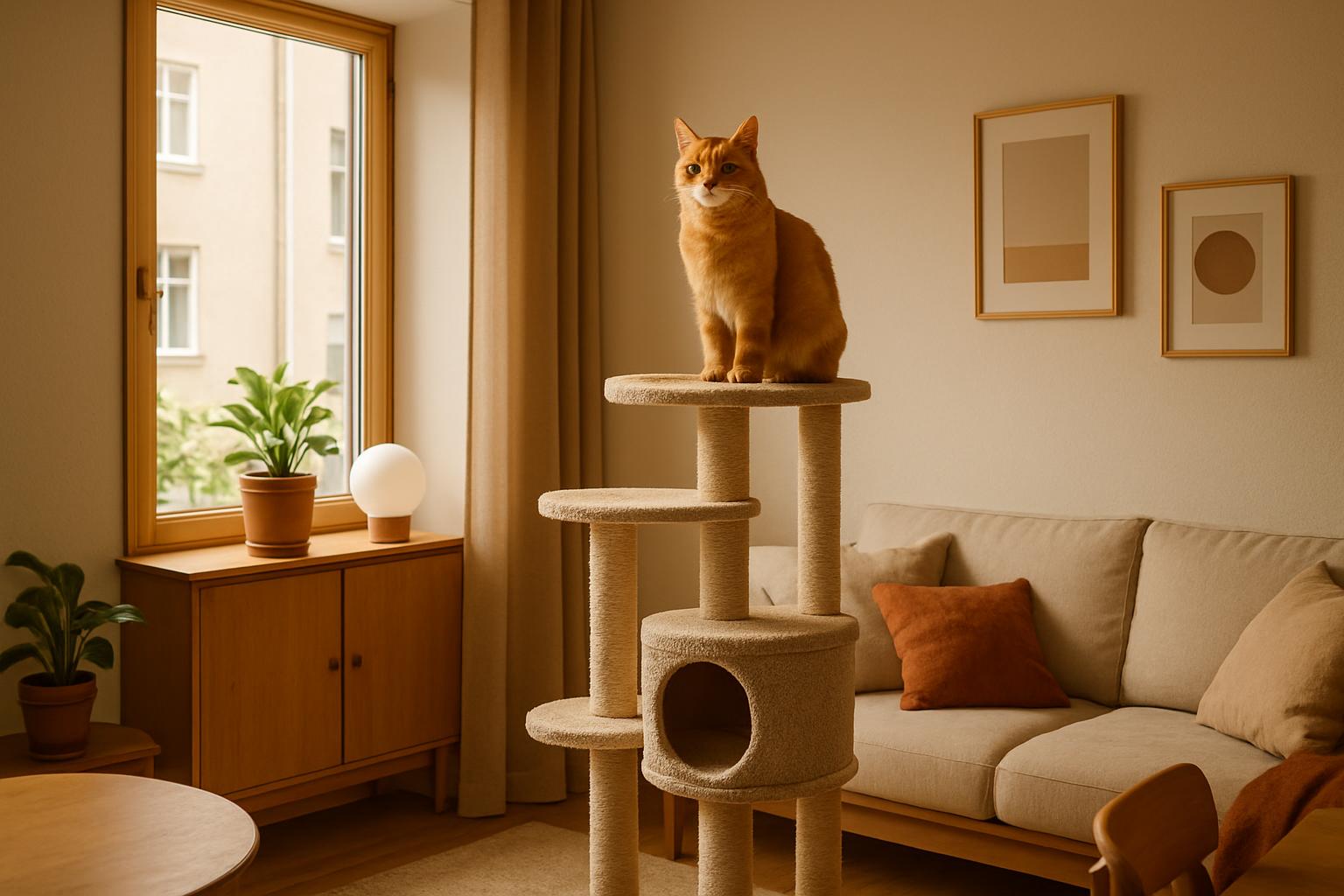
Why Apartments Can Work Well for Cats
Cats do not measure comfort the way humans do. They care less about open floor plans and more about whether their space feels safe, usable, and easy to control.
A well-set-up apartment can be a great fit because it offers:
- a defined territory that can feel secure
- fewer overwhelming spaces to patrol
- plenty of opportunities for vertical expansion
- an easier environment to keep consistent
The goal is not to make your apartment bigger. The goal is to make it more usable from your cat’s perspective.
The Core Apartment Cat Setup
If you only focus on a few things, focus on these:
- vertical territory
- at least one good scratching area
- well-placed litter boxes
- safe resting and hiding spots
- daily play and routine
- basic cat-proofing
When those pieces are in place, even a small apartment can feel rich and comfortable.
Use Vertical Space to Make a Small Home Feel Bigger
For apartment cats, vertical space matters as much as floor space. Cats often feel more secure when they can climb, perch, and observe from above. Height also gives them more room to move without taking over your living area.
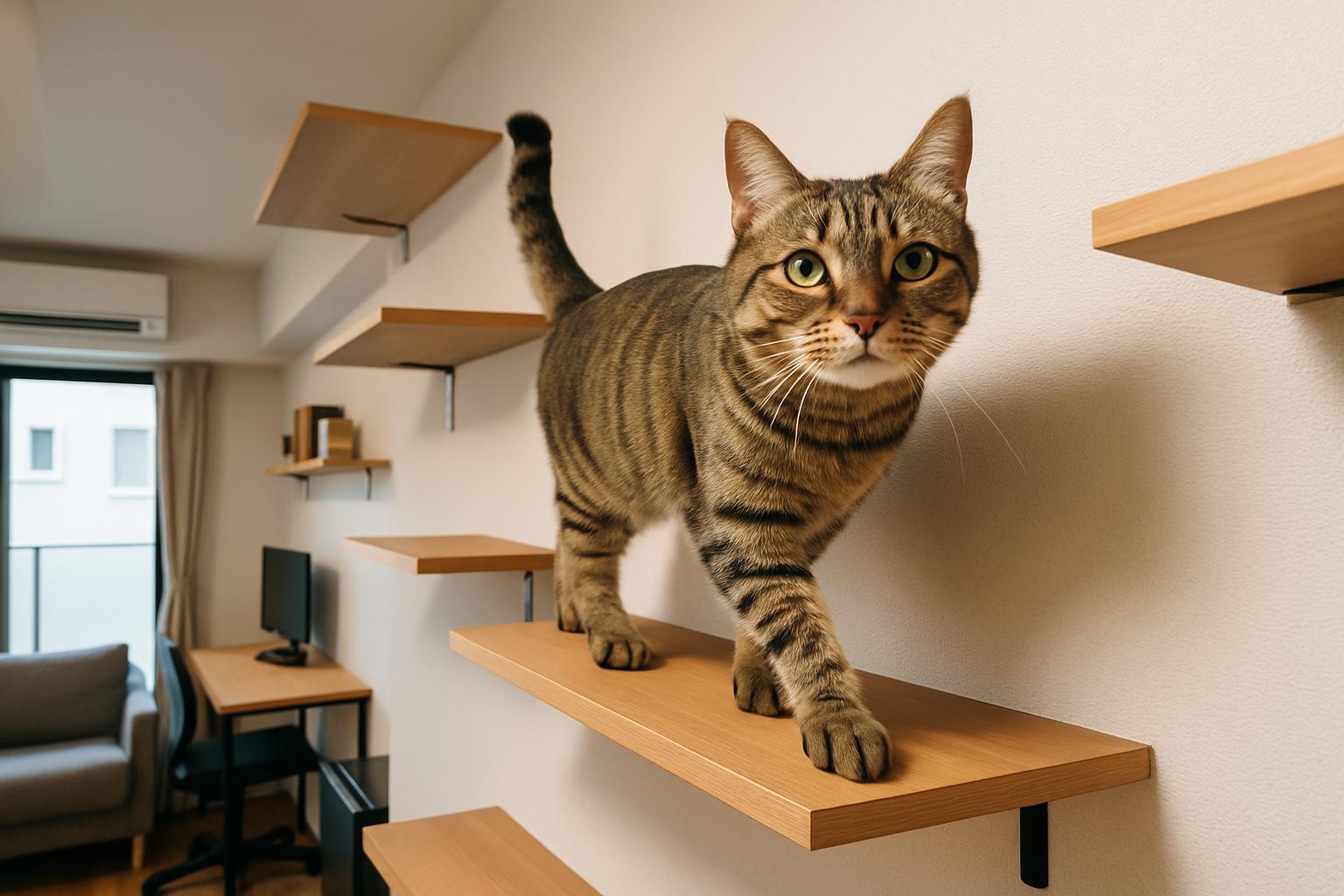
Easy ways to add vertical territory
- Cat trees: Choose a sturdy cat tree with multiple levels, a stable base, and at least one perch your cat can fully rest on.
- Window perches: A secure perch by a window gives your cat a place to watch birds, people, and daily activity.
- Wall-mounted shelves or perches: These can create a simple climbing route without using floor space.
- Furniture access: In some homes, the top of a dresser, bookshelf, or cabinet can become part of a cat’s route if the furniture is stable and safe.
Placement tips
- Put vertical furniture where your cat will actually use it, such as near a window or in the room where you spend the most time.
- Make sure tall furniture is stable and cannot tip.
- If your cat is older or less athletic, choose lower, easier access points rather than very tall jumps.
Create Quiet Resting and Hiding Spots
Cats need places where they can fully relax and not be bothered. In an apartment, this is especially important because shared spaces often do double duty for people and pets.
Good options include:
- a bed in a quiet bedroom corner
- a covered cat bed or cat cave
- a soft blanket on a shelf or chair
- a simple cardboard box in a calm area
- access to a safe under-bed or tucked-away resting spot
Try to give your cat more than one resting zone. Many cats like to rotate between sunny, social, and hidden spaces throughout the day.
Set Up Litter Boxes Carefully
Litter box setup can make or break apartment life with a cat. A box that is too exposed, too noisy, or too hard to access may lead to stress or avoidance.
What to aim for
Choose locations that are:
- easy for your cat to reach
- quiet and low-traffic
- away from food and water
- not so hidden that your cat feels trapped
Bathrooms, laundry areas, and quiet corners often work well, as long as your cat can get in and out comfortably.
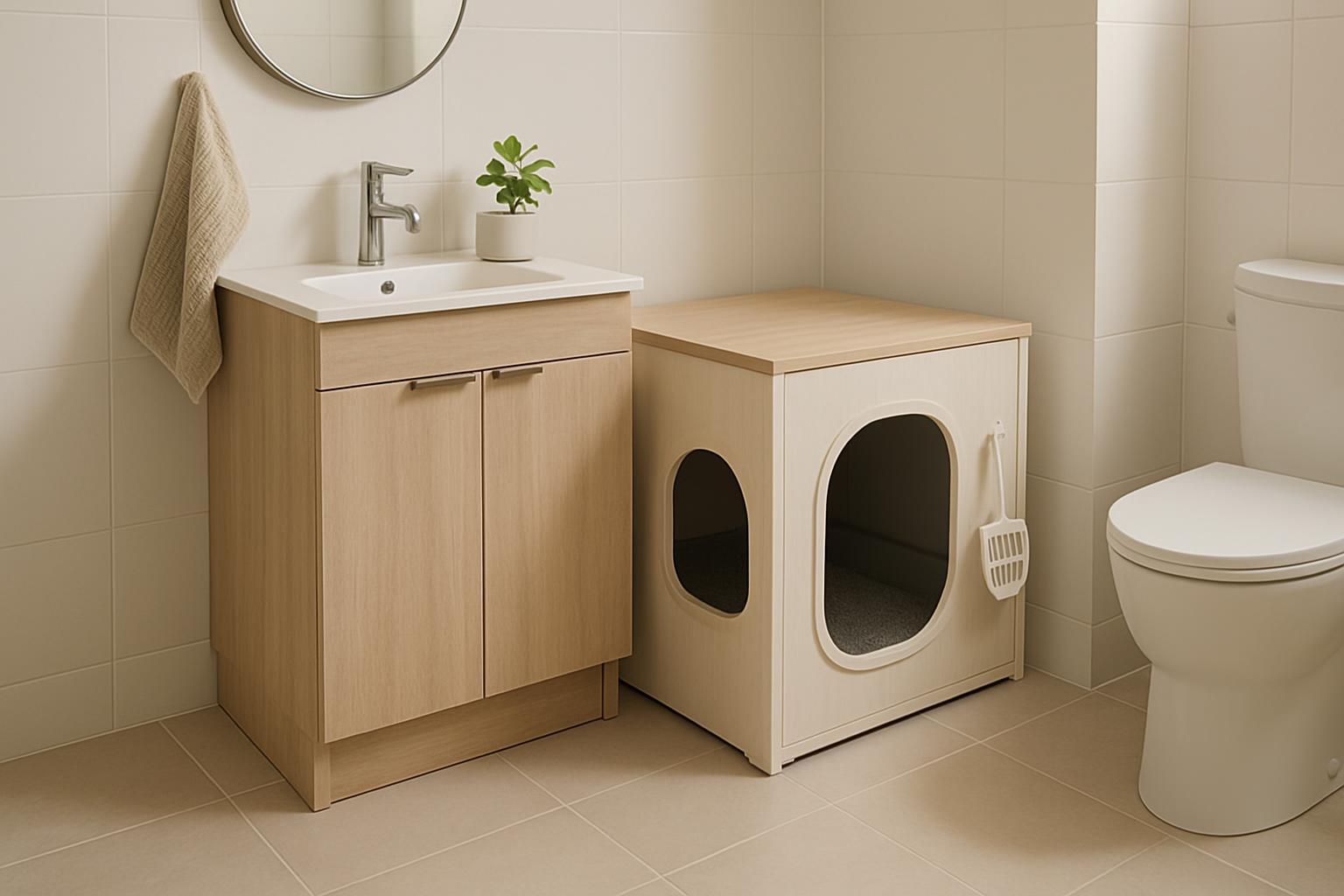
A few practical rules
- Provide enough boxes: A common guideline is one box per cat, plus one extra.
- Do not block escape routes: Your cat should not feel cornered while using the box.
- Prioritize cleanliness: In a smaller home, frequent scooping matters for both odor control and litter box acceptance.
- Use ventilation where possible: Good airflow helps, but safety comes first around windows and doors.
If you want the box to blend into your space, a litter box enclosure or discreet furniture-style cover can help, provided it still feels roomy and easy for your cat to use.
Give Your Cat Acceptable Places to Scratch
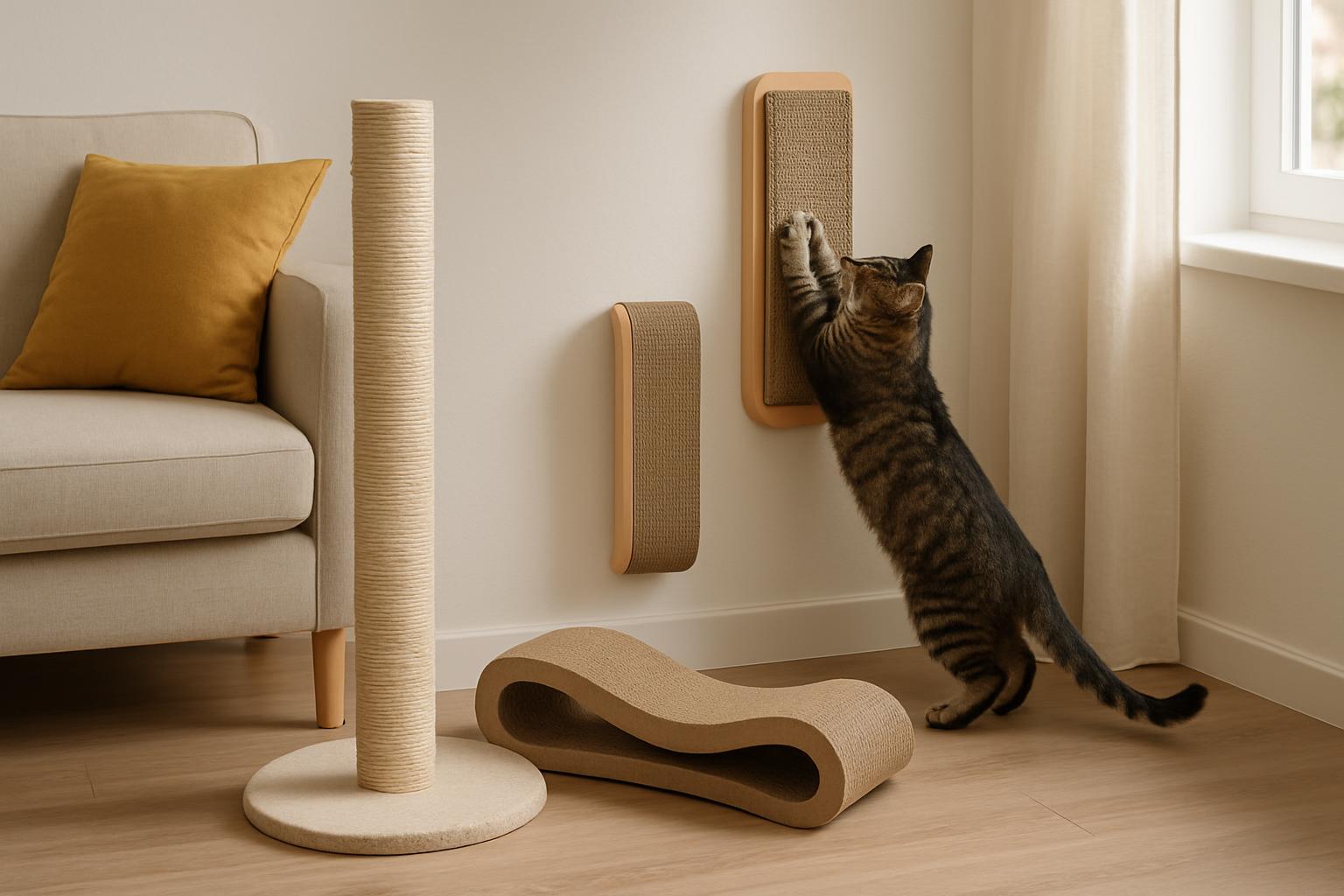
Scratching is normal and necessary. Cats scratch to stretch, maintain their claws, and mark territory. In an apartment, giving them proper scratching options can also help protect furniture.
Start with at least:
- one tall vertical scratching post
- one horizontal scratcher
What works best
- A vertical post should be tall enough for your cat to stretch fully.
- The base should be sturdy and not wobble.
- Place scratchers near sleeping areas, room entrances, or furniture your cat already shows interest in.
If your cat ignores a scratcher, the issue is often placement or style, not stubbornness.
Cat-Proof the Apartment Before Problems Start
In a small home, hazards are closer together and easier for cats to reach. A basic cat-proofing pass is worth doing early.
Check these areas first
- Windows and screens: Make sure screens are secure and in good condition.
- Electrical cords: Cover or route cords to reduce chewing risk.
- Toxic plants: Remove or avoid houseplants that are unsafe for cats.
- Small swallowable items: Put away hair ties, rubber bands, string, ribbon, and other objects that can cause intestinal blockage.
- Cleaning products and chemicals: Store them behind closed doors or secured cabinets.
If you are unsure whether a plant, product, or household item is safe, verify it with a reliable veterinary source.
Set Up Food and Water in a Calm, Consistent Spot
Cats usually do best when food and water are placed in a low-traffic area where they can eat without interruption.
A simple feeding station should include:
- easy-to-clean bowls
- fresh water at all times
- enough space so the area does not feel cramped
- a location away from the litter box
Some cats also do well with more than one water source in the apartment, especially if your home has multiple rooms.
Plan for Noise, Activity, and Neighbors
Cats are often a good fit for apartment living, but your setup still affects how peaceful the space feels.
Common apartment issues
- Nighttime activity: Many cats become active at dawn and dusk.
- Jumping noise: A heavy landing from a cat tree can sound louder in an apartment than you expect.
- Vocalizing: Some cats are naturally more talkative, while others may vocalize more when bored, stressed, or unwell.
What helps
- Schedule active play sessions daily, especially in the evening.
- Put cat trees or jumping zones on rugs or other sound-softening surfaces.
- If vocalization changes suddenly or seems excessive, speak with your veterinarian to rule out medical causes.
Essential Apartment Cat Supplies
You do not need a house full of gear. Start with the basics and add more as you learn your cat’s preferences.
Must-haves
- litter boxes
- unscented litter your cat accepts
- food and water bowls
- cat carrier
- scratching post or pad
- bed or resting area
- interactive toys
- grooming supplies appropriate for your cat
High-value upgrades
- cat tree
- window perch
- puzzle feeder
- additional scratching surfaces
- extra water station
In smaller homes, each item should earn its footprint. Choose sturdy, practical pieces over clutter.
If You Have More Than One Room, Create Zones
A multi-room apartment gives you more flexibility. Instead of scattering things randomly, create simple zones your cat can learn.
For example:
- rest zone: bed, soft blanket, quiet corner
- play zone: toys, cat tree, climbing area
- feeding zone: food and water in a consistent spot
- bathroom zone: litter boxes in calm, accessible locations
This makes the apartment easier for your cat to navigate and easier for you to keep organized.
Routine Matters More Than Space
Cats usually do best when life feels predictable. In an apartment, routine helps the space feel stable and lowers stress.
Try to keep these consistent:
- feeding times
- litter box cleaning
- play sessions
- quiet rest periods
- grooming or handling routines
Even a small apartment can feel like a secure territory when the daily pattern stays steady.
A Simple Apartment Setup Checklist
- At least one sturdy vertical climbing or perch option
- Quiet resting spots in more than one area
- Enough litter boxes, placed in calm and accessible locations
- At least two scratching options
- Cords, plants, and small hazards secured
- Food and water set up away from litter
- Daily interactive play built into your routine
- A safe carrier ready for vet visits or emergencies
Final Thoughts
A good apartment setup is not about squeezing cat gear into every corner. It is about making your space feel safe, usable, and enriching for an indoor cat.
If you focus on vertical territory, litter box placement, scratching options, safe resting spots, and daily routine, your apartment can support a happy and healthy cat life without feeling crowded or chaotic.