
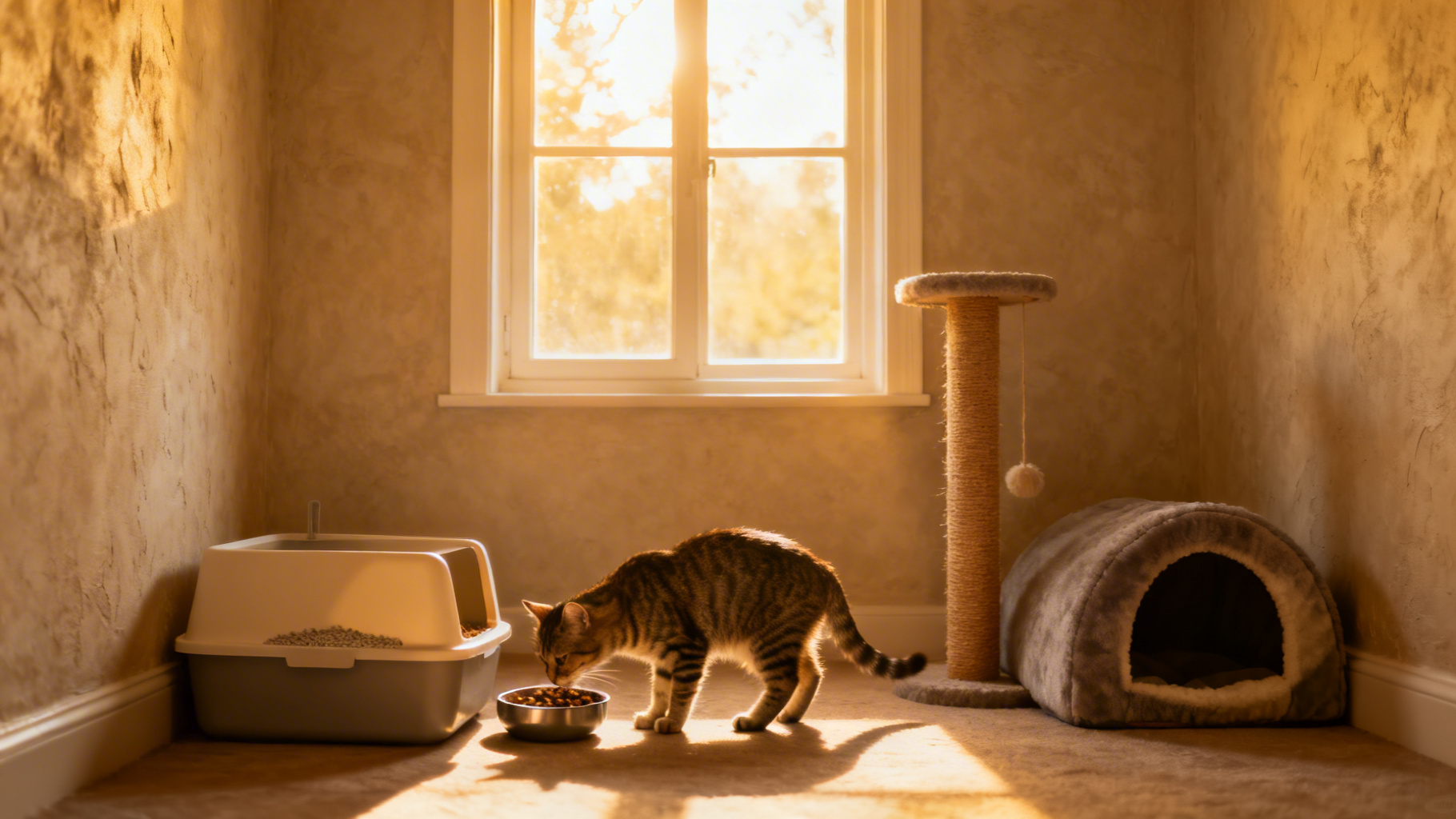
Before you bring a new cat home, set up one small, quiet room with the basics: an uncovered litter box, food, water, a safe hiding spot, a scratching surface, a bed or resting area, and a secure carrier nearby. A safe room gives a new indoor cat a predictable first territory so they can eat, rest, use the litter box, and build confidence before they have to process your entire home.
That matters more than many people realize. What looks kind to us, like giving a cat the full run of the house right away, can feel overwhelming to a cat that has just lost its old environment, routine, smells, and hiding places.
If you want a broader arrival plan after setup is done, bookmark our first week with your new indoor cat checklist. This guide stays focused on the room itself: how to choose it, what to put in it, what to avoid, and how to know when your cat is ready for more space.
What is a safe room for a new cat?
A safe room is a quiet, enclosed room where your new cat starts out for the first stage of settling in. It is not about punishment or isolation. It is about giving your cat a smaller territory that feels easier to understand.
In that room, your cat can:
- find the litter box without searching a whole house
- eat and drink in a low-stress space
- hide without disappearing into dangerous or inaccessible gaps
- learn your scent and routine gradually
- start feeling secure before exploring farther
For many cats, especially shy adult cats, recently adopted cats, and cats entering a home with other pets, this calmer start makes the transition smoother.
How to choose the best room for a new cat
The best safe room is usually a quiet room with a door, easy-to-clean floors, and no dangerous hiding gaps you cannot access.
Good options can include:
- a spare bedroom
- a home office
- a guest room
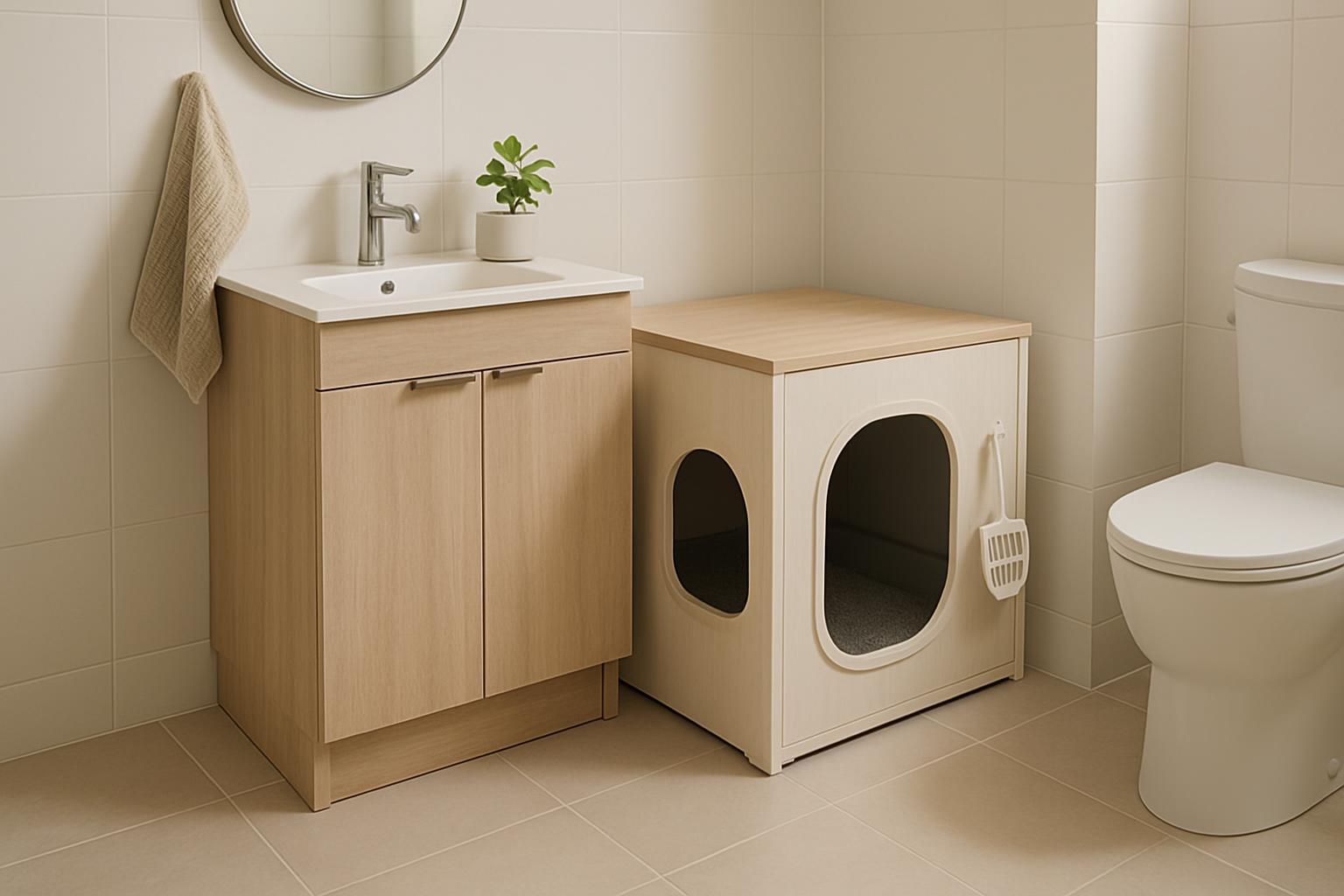
- a quiet bathroom, if it is not busy or noisy
- a spare bedroom or office that can stay low-traffic and closed off
A bathroom is sometimes suggested because it is small and easy to clean, but it is not automatically the best choice. If it is the bathroom everyone uses, if the fan is loud, or if the room feels cold and echoey, another room may be better.
In an apartment or small home
A small home can still work very well. The goal is not a large room. The goal is a calm one.
If you live in an apartment:
- choose the quietest room rather than the most convenient one
- avoid placing the cat right beside a busy front door
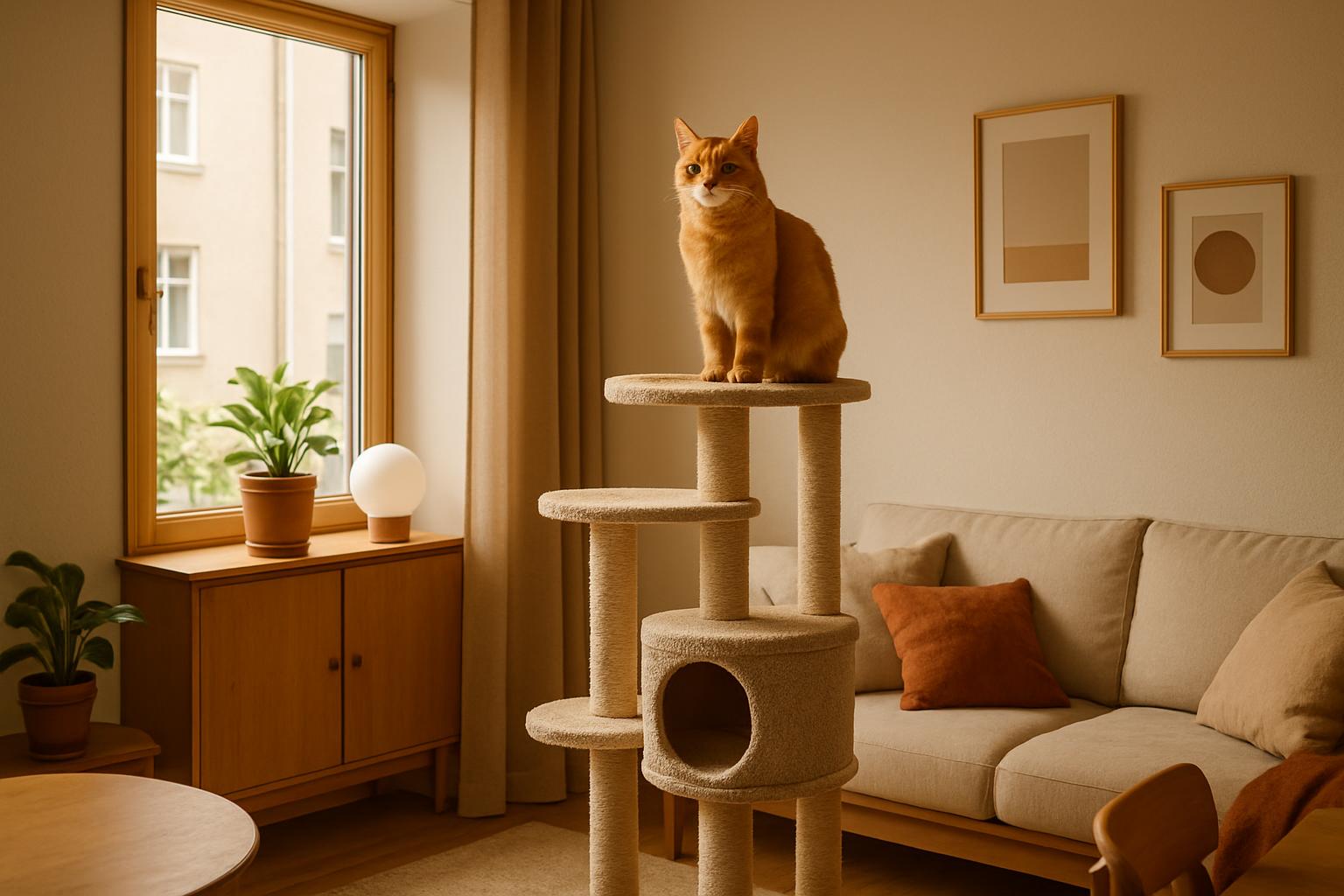
- use vertical space if possible, like a perch, sturdy window seat, or small cat tree
- block access to under-bed voids, appliance gaps, or torn box springs if you cannot safely reach your cat there
For more layout ideas in compact spaces, see our apartment cat setup guide.
What to put in a new cat safe room
A safe room does not need to be packed with products. It needs a few essentials placed thoughtfully.
1. An uncovered litter box
Start with a simple uncovered litter box in a quiet corner. Many cats adapt more easily to an open box than a covered one, especially in a brand-new environment.
Keep it easy to access and easy to scoop. Do not tuck it so far away that your cat has trouble finding it.
If you want more detail on litter placement and setup, our litter box setup guide goes deeper.
2. Food and water
Put food and water well away from the litter box. Cats generally do better when toileting space and eating space are separated.
If the room is small, separation does not have to mean opposite ends of a mansion. It just means not crowding bowls right beside the box.
3. A bed or soft resting spot
Some cats will use a cat bed right away. Others will ignore it and choose a folded blanket, towel, or the top of a carrier pad instead. That is normal.
Offer one or two soft resting options, but do not overcomplicate it.
4. A safe hiding place
This is one of the most important parts of the room.
A new cat should have an approved place to hide, such as:
- an open carrier with bedding inside
- a sturdy cardboard box on its side
- a cat cube or hide bed
- a covered nook you can still access easily
The key is that the hiding place should help your cat feel secure without letting them vanish into walls, under appliances, or into furniture you cannot safely move.
5. A scratching post or scratcher
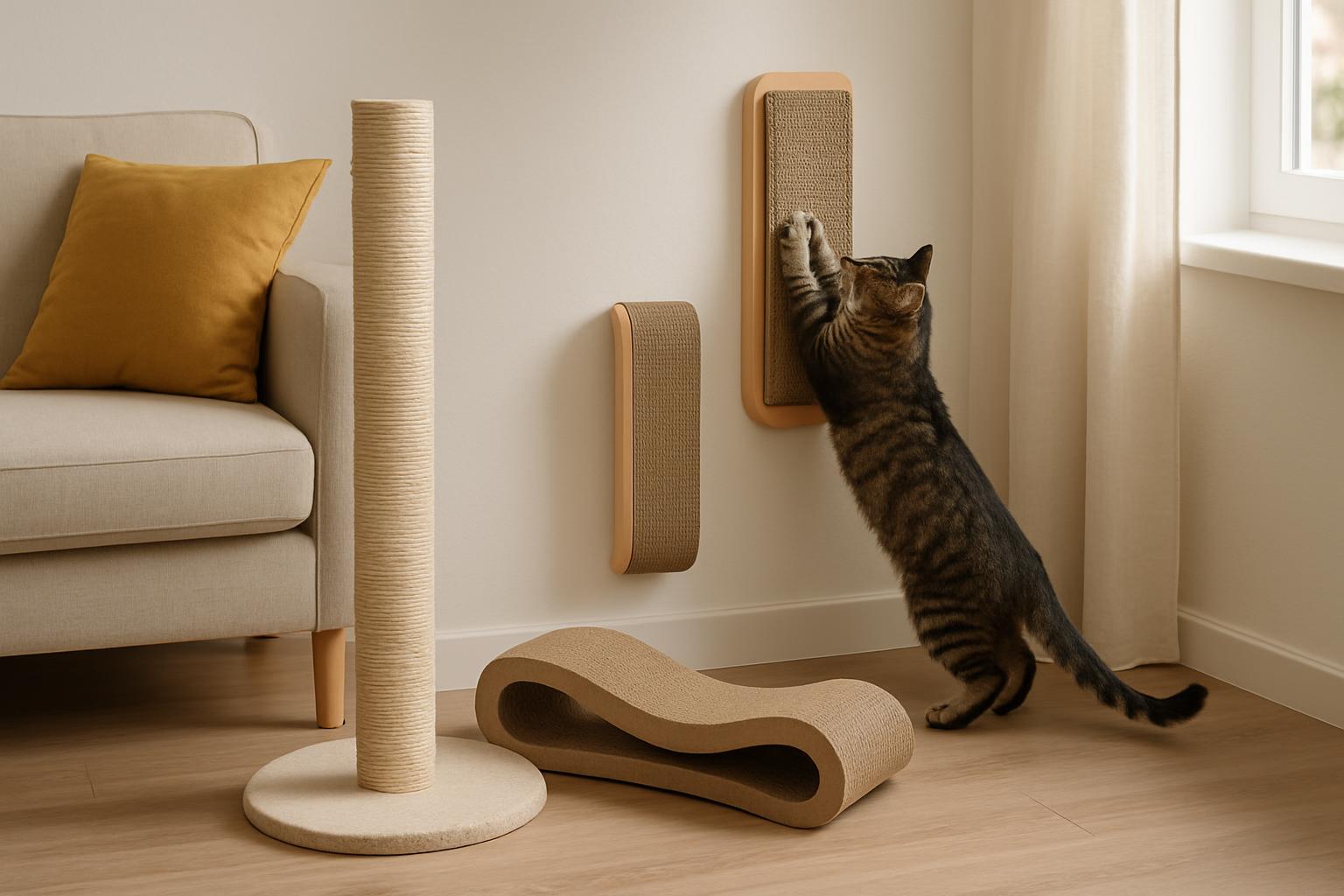
A scratching surface gives your cat a normal outlet for stretching, scent marking, and tension release. A tall, stable scratching post is ideal if you have one, but even a sturdy scratcher is better than nothing.
6. A perch or bit of vertical space if possible
Not every room can fit a full cat tree, but some cats relax faster when they can sit slightly up off the floor.
If the room allows, a low perch, sturdy cat tree, or secure window area can help. If you are building out vertical options later, our related content on apartment setups and indoor cat products can help you choose what is actually useful instead of buying filler.
7. A few simple toys
Keep toys minimal at first. A couple of small toys and a wand toy for supervised play are enough.
Do not leave string-style toys out for solo access. Use them with you, then put them away.
8. A secure carrier
Keep the carrier in or near the room instead of storing it in a closet somewhere else. It is easier for arrival day, easier for vet trips, and easier if you need to move quickly.
Where to place litter, food, and water
The simplest rule is this: do not cluster everything into one tight corner.
A better layout looks like this:
- litter box in one quiet area
- food and water in a separate area
- bed or resting spot away from the litter box
- hide spot somewhere the cat can retreat without being trapped
- scratching post near a resting area or near the room entrance
This does not need to be visually perfect. It just needs to make sense from the cat’s perspective.
If you only remember one placement rule, remember this one: keep the litter box away from food and water.
What to avoid in a new cat safe room
Some rooms create more stress than they solve.
Try to avoid:
- noisy laundry rooms with frequent machine use
- rooms with heavy foot traffic
- spaces with recliners, exposed springs, appliance gaps, or built-in hiding holes you cannot access
- forcing kids, guests, or other pets into the room right away
- using the room as storage overflow full of clutter and unstable objects
A safe room should feel boring in a good way: calm, predictable, and easy for the cat to map.
If you are unsure whether the space is truly safe, review your broader cat-proofing guide.
How long should a new cat stay in the safe room?
There is no single timeline that fits every cat.
Some cats settle within hours and seem curious quickly. Others need several days. Fearful cats, cats recovering from major life changes, and cats entering homes with resident pets may need a week or longer before expanding territory comfortably. Curiosity alone is not the green light; steady eating, litter box use, grooming, and relaxed behavior matter more than speed.
The better question is not, “How many days is correct?”
It is, “Is my cat acting settled in this room yet?”
Signs your cat is ready to explore more of the home
Many cats are ready for more space when they are doing most or all of the following consistently:
- eating and drinking normally
- using the litter box reliably
- grooming or resting in a relaxed way
- coming out of hiding on their own
- engaging in play or curiosity
- showing interest in the door or what is beyond it
When you see those signs, you can usually begin expanding access gradually instead of throwing the whole house open at once.
A simple next step is to let your cat explore one additional room at a time while keeping the safe room available as their home base.
What if your new cat just hides?
Hiding is common, especially in the first day or two.
Do not drag your cat out to “help them get used to people.” That usually increases stress instead of building trust.
Instead:
- keep the room quiet
- sit nearby without hovering
- offer food, water, and routine care calmly
- use gentle, supervised play if the cat seems receptive
- let the cat decide when to come forward
A cat that hides at first is not necessarily doing badly. Many are simply decompressing.
Using a safe room when you already have another cat or dog
A safe room is even more important when there are resident pets.
Your new cat needs a separate area with their own:
- litter box
- food and water
- bed and hiding spots
- scratching area
- play and rest space
This prevents immediate conflict and gives you time to manage scent, routine, and visual introductions more carefully.
If you already have another cat
Do not rush a face-to-face meeting. Start with separate spaces and controlled exposure.
If your new cat’s health history is unknown, keeping them separate from resident pets until a vet check is the safest approach. For the introduction process itself, see our guide to introducing a kitten to an adult cat as one example and our multi-cat home setup guide for broader household planning.
If you already have a dog
Keep the dog out of the safe room at first unless you are intentionally doing a calm, managed introduction later. Even friendly dogs can feel overwhelming to a new cat on day one.
The safe room should stay fully under the cat’s control.
Common new cat safe room mistakes
These are the mistakes most likely to make the transition harder:
Giving full-house access too soon
More space is not always more comfort. For many cats, it is just more uncertainty.
Putting litter, food, and water all together
This is common in small homes, but it usually creates a less comfortable setup.
Choosing a room with unsafe hiding gaps
A hiding spot is good. An inaccessible hiding void is not.
Forcing interaction
Trust grows faster when the cat has some control over contact.
Assuming every cat adjusts on the same schedule
A confident cat and a fearful cat do not need the same pace.
Overbuying instead of setting up well
A calm room with a few smart essentials is better than a crowded room full of unnecessary gear.
If you are shopping for basics, keep it simple. A secure carrier, a basic uncovered litter box, a sturdy scratching post, a wand toy for supervised use, and a plain bed or hide are all reasonable categories to prioritize. A pheromone diffuser may help in some homes, but it is optional, not mandatory, and not a guaranteed fix.
Quick safe room setup checklist
Before pickup day, make sure you have:
- one quiet room with a door
- an uncovered litter box
- food and water bowls placed away from litter
- a bed, blanket, or soft resting spot
- a safe hide like a box, cube, or open carrier
- a scratching post or scratcher
- one or two simple toys
- a secure carrier within reach
- dangerous gaps blocked off
- a plan to expand access gradually, not instantly
Final takeaway
The best safe room for a new indoor cat is simple, quiet, and easy for the cat to understand. If your new cat can eat, drink, rest, hide, scratch, and use the litter box in one calm space, you are already giving them a much better start.
Set the room up before pickup day, keep the first phase low-pressure, and let your cat’s behavior tell you when it is time to open up more of the home.
For what comes next, save our first week with your new indoor cat checklist so you have a clear plan once your cat is home.