
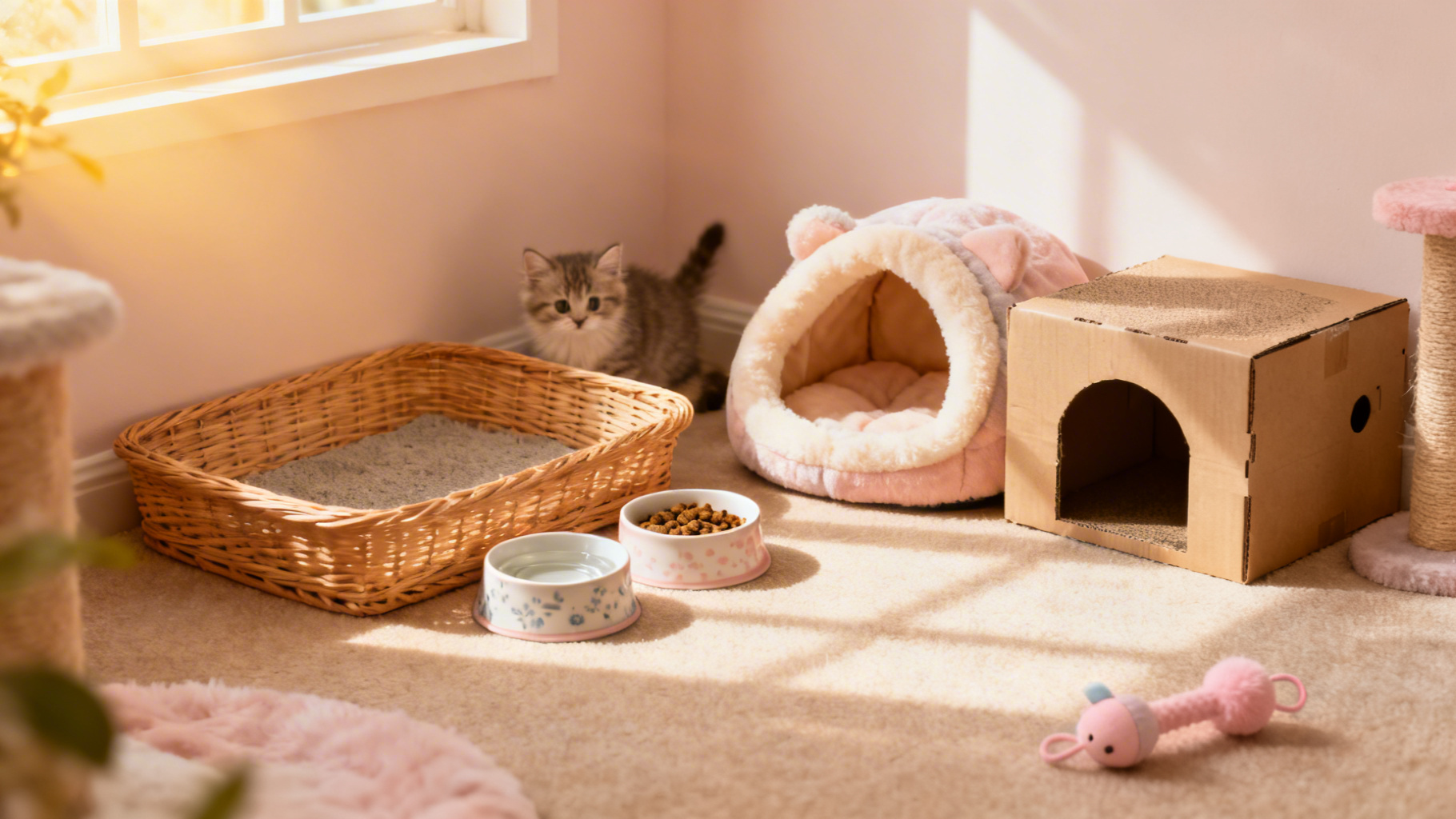
Before you bring a new indoor kitten home, the most important things to do are set up one calm starter room, remove the most common household hazards, and place litter, food, water, scratching, sleep, and hiding spots in sensible locations. A little prep before pickup day makes the first 24 hours safer, less stressful, and much easier to manage.
If you want a broader whole-house safety reset, bookmark our guide to cat-proofing your home. This guide is narrower: it is about preparing your space before pickup day so your kitten does not arrive to a home that still needs obvious fixes.
Start with one quiet starter room

A new kitten does not need full access to your home on day one. In most homes, a small, quiet starter room works better than giving a kitten the run of the house right away.
A starter room helps your kitten settle without too much noise, learn where the litter box is, eat and drink without confusion, and hide or nap at a comfortable pace. It also gives you a controlled space to watch for chewing, climbing, and stress signals before the kitten starts exploring everywhere.
- a litter tray in a quiet corner
- food and water in a separate area
- a bed or soft resting spot
- a covered hideaway or open box with a blanket
- a scratching post or scratcher
- a few safe toys
- a secure carrier kept nearby for transport or emergencies
A bathroom, office, guest room, or quiet bedroom corner can work well as long as it is safe, comfortable, and easy for you to supervise. The goal is not to confine your kitten forever. It is to make pickup day and the first night feel manageable instead of chaotic.
Kitten-proof the hazards that matter most
Kittens are small, fast, curious, and extremely good at finding the one thing you forgot to think about. You do not need a perfect home, but you do need to remove the highest-likelihood hazards before your kitten starts investigating.
Cords, strings, and dangling items
Pick up charger cables, headphone cords, rubber bands, thread, hair ties, ribbon, and string before pickup day. Tie blind pulls and curtain cords well out of reach, and bundle loose electrical cords where possible. These are not harmless little distractions for a kitten. They are exactly the kind of objects a playful kitten wants to chew, bat, chase, or swallow.
Wand toys can be great for bonding and exercise, but the string portion should only be used with supervision and then put away. This is worth saying clearly because it is one of the easiest mistakes new owners make.
Plants, cleaners, medications, and trash
Check every room for houseplants and cut flowers before your kitten comes home. Some plants are much more dangerous than others, so do not treat every leaf like the same level of emergency. But if you are not sure a plant is safe, remove it from kitten areas until you verify it.
Store cleaning products, detergents, essential oils, medications, vitamins, pest products, and small chewable items behind closed doors or inside secure cabinets. Use trash cans with lids in kitchens and bathrooms. Countertops should also be cleared of food, glass décor, candles, and anything a curious kitten could knock down or mouth.
Windows, screens, doors, and appliances
Check that windows latch properly and that screens are secure, but do not assume a screen alone makes an open window safe. It is safer to keep risky windows closed unless you are actively supervising the area.
Get in the habit of checking washer and dryer drums before use and keeping those doors closed when they are not in use. Watch exterior doors, balconies, and any room where a kitten could slip out underfoot during a busy moment.
Tiny hiding gaps and breakable items
Kittens can squeeze behind appliances, inside torn box springs, under recliners, and into narrow gaps you barely notice. Block off dangerous spaces that you cannot easily access. Pick up fragile decorations, pins, sewing supplies, and anything small enough to swallow or bat under furniture.
Set up the essentials before your kitten arrives
Your kitten does not need a mountain of gear. A simple, well-placed setup is more useful than an overflowing shopping cart.
Litter box
Choose a litter tray that is easy for a small kitten to enter. Place it in a quiet spot away from food and water, but not so hidden that the kitten cannot find it. If you want help with placement and litter-box basics, see our litter box setup guide.
Food and water
Use shallow bowls and keep them a little distance from the litter area. Many cats also do better when food and water are not crammed tightly together. The goal is a clean, calm feeding area your kitten can return to easily.
Sleep and hiding spots
A soft bed is helpful, but many kittens feel safest with a box, covered bed, or sheltered corner where they can hide part of their body while they rest. Hiding is normal adjustment behavior, not proof that something is going wrong.
Scratching area
Give your kitten at least one sturdy scratching surface in the starter room right away. This is less about saving your furniture on day one and more about giving the kitten an appropriate place to stretch, mark, and settle into the space.
Toys and enrichment
Start with a few simple toys instead of a huge pile. Lightweight toys, kicker toys, and supervised wand play are plenty at first. As your kitten settles in, you can build out climbing, window watching, and routine-based play using ideas from our indoor cat enrichment guide.
Carrier
Have a secure carrier ready before pickup day and leave it somewhere accessible once you get home. You do not want to hunt for it if you need a vet visit or an emergency trip.
How to prepare for a kitten in an apartment or small home
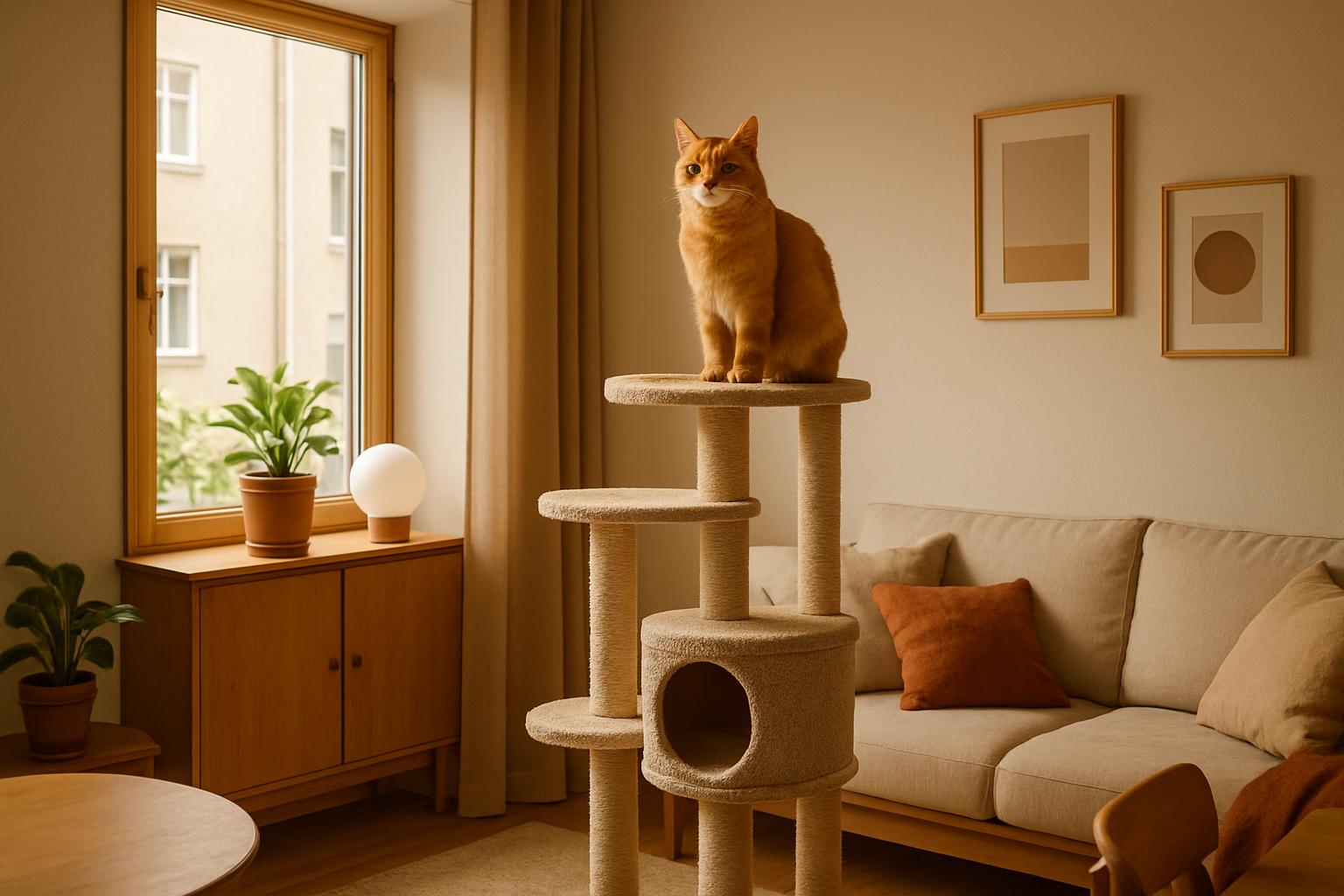
Small homes can work extremely well for kittens, but they reward good layout choices. The biggest mistake is squeezing litter, food, water, bed, and play space into one tiny corner just because the home is small.
If you live in a studio or one-bedroom apartment, create a starter zone instead of insisting on a fully separate room. That can mean using a bathroom for the first night, blocking off the bed frame underside, closing the closet, and setting up the kitten’s litter tray on one side of the space while food and water stay several feet away on the other.
- keep the litter area separate from feeding space, even if the separation is only across the room
- use vertical space with a small cat tree, shelf, or secure window perch instead of adding floor clutter
- treat laundry nooks, entryways, and recliners like hazard zones until you know the kitten’s habits
- store chargers, cosmetics, hair ties, and other small items in closed bins before the kitten arrives
- if the main room stays busy late, give the kitten a calmer sleep space for the first few nights
If you are setting up in a compact home, our apartment cat setup guide goes deeper on layout ideas that make small spaces work better for indoor cats.
If you already have an adult cat, prepare before they meet
If you have a resident cat, the biggest mistake is assuming they should work it out right away. Prepare as if the kitten will need separate territory for a while, because many do.
- set up the kitten in a separate room with its own litter, food, water, bed, and toys
- do not plan for shared bowls or a shared litter box
- make sure your adult cat still has quiet access to their usual resources
- think through door management so there are no accidental face-to-face encounters
- prepare for a gradual introduction, not an instant friendship
For the full step-by-step process, use our guide to introducing a kitten to an adult cat. The important prep step here is simple: do not wait until the kitten is home to decide where separation, feeding, and litter access will happen.
Your new indoor kitten checklist before pickup day
- Choose and prepare one quiet starter room or starter zone.
- Remove cords, strings, rubber bands, blind pulls, and swallowable clutter.
- Check plants, flowers, cleaners, medications, trash, and laundry areas.
- Make sure windows close securely and screens are intact.
- Block dangerous hiding gaps you cannot easily reach.
- Set up the litter tray, food, water, bed, hideaway, scratching post, and a few toys before you leave for pickup.
- Place a secure carrier where you can reach it quickly after you get home.
- If you already have a cat, decide in advance how you will keep the two separated at first.
What to do in the first 24 hours
Once you get home, keep things boring in the best possible way. A quiet first day usually works better than an exciting one.
- Take the carrier straight to the starter room or starter zone you prepared in advance.
- Open the carrier and let the kitten come out voluntarily instead of pulling them out for a tour.
- Show the kitten where the litter tray is, then give them space to explore at their own pace.
- Offer fresh water and a small meal, but do not panic if they do not eat right away.
- Keep visitors out, voices calm, and resident pets separated for now.
- Watch for basic adjustment signs: hiding, drinking, nibbling food, using the litter tray, or quietly observing.
- Skip the full-house introduction until the kitten seems settled in that first space.
If you want help with the next stage after arrival, save our first week with your new indoor cat checklist so you are not trying to remember everything once the kitten is already home.
When to call your vet or poison control
If your kitten may have chewed a cord, swallowed string, gotten into medication, or contacted a potentially toxic plant or chemical, do not wait to see if it turns into a clearer problem later.
- Move the item out of reach.
- Keep the packaging, plant name, or product label if you have it.
- Call your veterinarian, an emergency clinic, or poison control right away for next-step advice.
The goal is not to panic. It is to act early when the risk is real.
The best new indoor kitten setup is simple, calm, and ready before pickup day
You do not need a perfect Instagram-ready setup to give a kitten a strong start. You need a safe room, sensible resource placement, fewer hazards, and a plan that still works when you are tired on pickup day.
If you want the smartest next step, finish your pre-arrival setup now, then bookmark our first-week checklist and kitten-to-adult-cat introduction guide so you are ready for what happens after the carrier door opens.