
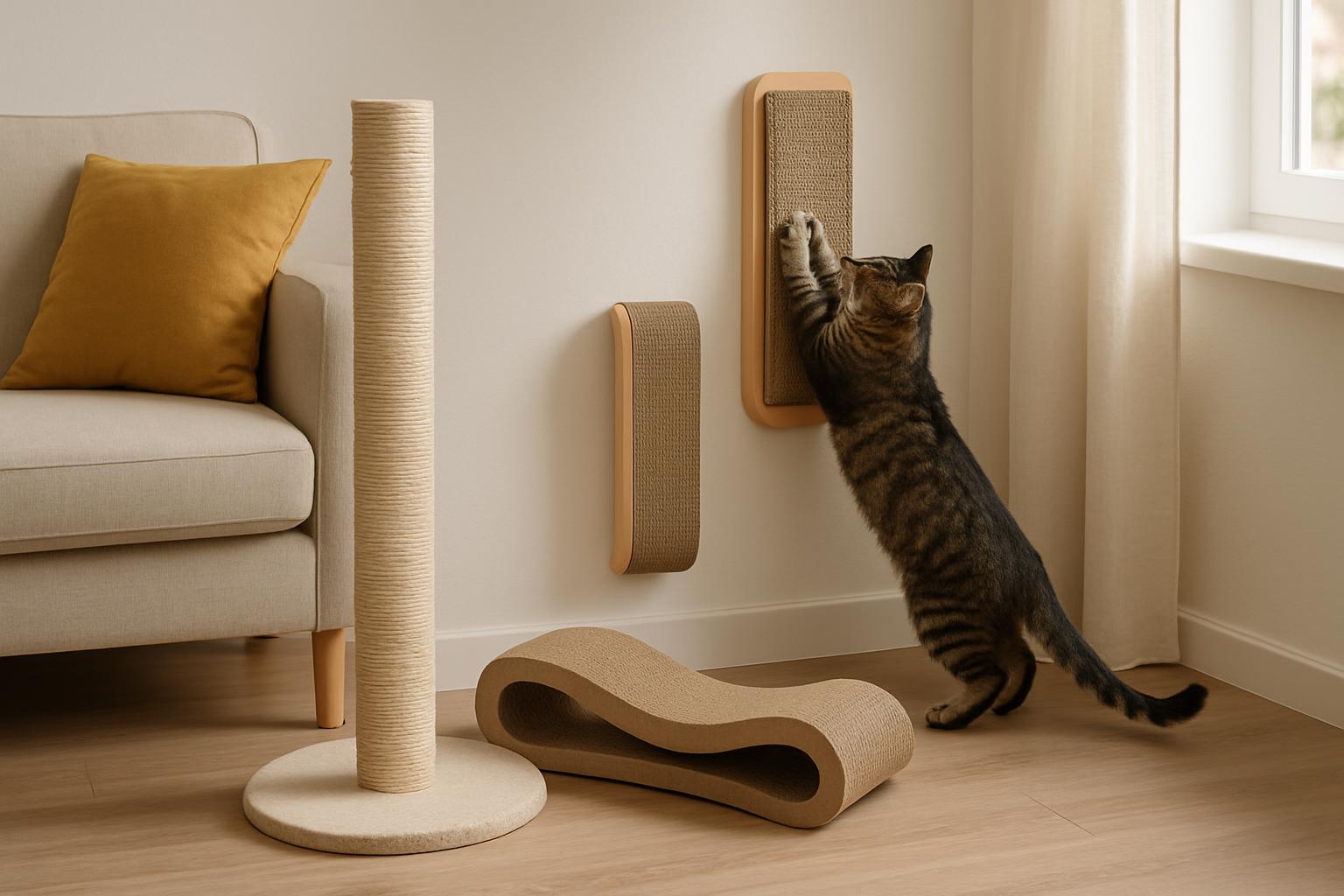
Scratching is not a behavioral problem — it’s a biological necessity. Cats scratch to maintain claw health, mark territory, and stretch their muscles. If they’re doing it on your couch, that’s not defiance; it’s because they don’t have anything better nearby. Give them something better, and the couch wins by default.
The challenge is that cats are picky about scratching surfaces. Some like vertical posts, others prefer horizontal pads. Some want sisal, others cardboard. Getting this wrong means an expensive scratcher sitting unused while your furniture pays the price. This guide covers the best cat scratchers for furniture protection, with attention to material, orientation, and placement to maximize the odds your cat will actually use it. For broader enrichment ideas, see our indoor cat enrichment guide.
Sisal vs. Cardboard vs. Carpet: Which Material Wins?
Sisal Rope and Sisal Fabric
Sisal is the gold standard for cat scratching. The natural plant fiber has a satisfying texture that cats instinctively prefer — it shreds in a way that feels good on their claws and encourages deep, full-extension scratching. Sisal rope (wrapped around a post) and sisal fabric (flat panels or angled pads) both work well. Sisal fabric tends to last longer and lay flatter than rope.
Cardboard
Corrugated cardboard is the other reliable option, especially for cats that prefer horizontal scratching. It’s cheap to replace, widely accepted by cats, and the scraping sensation is different from sisal — more of a shredding action. Many cats that ignore sisal posts will use cardboard lounge scratchers enthusiastically. The downside: it makes a mess of cardboard dust and needs replacing every few months.
Carpet
Carpet scratchers are the least recommended material. The main problem is that carpet scratchers teach cats that carpet is a valid scratching surface — which is the opposite of what you want if you have carpet floors or rugs. Unless the carpet on the scratcher is distinctly different in texture and color from your home flooring, avoid carpet as the primary scratching surface.
Vertical vs. Horizontal: Which Orientation Does Your Cat Prefer?
Watch your cat. If they scratch the side of your couch (vertical surface) or a doorframe, they’re a vertical scratcher. If they scratch rugs or the carpet at the base of furniture, they’re a horizontal scratcher. Many cats use both. Providing at least one of each type dramatically increases the chance that furniture stays unscratched.
For vertical scratchers, the post must be tall enough to allow full extension — typically 28–32 inches minimum for an average adult cat. Short posts are one of the most common reasons cats reject scratchers. For more on vertical space and cat furniture, see our guide to cat furniture and vertical space.
The 6 Best Cat Scratchers for Furniture Protection
1. SmartCat Ultimate Scratching Post — Best Vertical Sisal Scratcher
The SmartCat Ultimate Post is the benchmark vertical cat scratcher, and it earns that reputation by solving the two most common scratcher failures: it’s tall enough (32 inches) and stable enough that cats can scratch with full force without the post tipping. These two things alone disqualify most budget vertical posts.
The post is covered in woven sisal fabric (not rope), which lasts longer, doesn’t unravel, and has a texture most cats find irresistible. The base is 16″ x 16″ — heavy and wide enough that a vigorous scratcher won’t topple it. It stands standalone, meaning placement is flexible: next to the couch, near a doorframe, wherever your cat currently scratches.
For cats that scratch vertical furniture surfaces (couch arms, doorframes, curtains), placing the SmartCat Ultimate directly next to the targeted area and gradually moving it over time is the most effective furniture protection strategy. It’s straightforward, durable, and highly recommended by vets and behaviorists. A foundational piece of any indoor cat product setup.
Pros:
- 32-inch height allows full-body stretch for most cats
- Stable 16″ x 16″ base — won’t tip during use
- Woven sisal fabric — durable and cat-preferred
- Simple, effective vertical scratching target
- Works well for training cats away from furniture
Cons:
- No integrated perch or play features
- Takes up floor space
- Only one scratching surface (sisal fabric sides)
- Sisal fabric will eventually need replacing (though it lasts 1–2 years for most cats)
Best for: Vertical scratchers being redirected away from couches, doorframes, and other vertical furniture surfaces.
2. PetFusion Ultimate Cat Scratcher Lounge — Best Horizontal Cardboard Scratcher
The PetFusion Ultimate Cat Scratcher Lounge is the most popular horizontal cardboard scratcher on the market, and it deserves the title. The curved corrugated cardboard construction creates a lounging surface that doubles as a scratcher — cats can scratch, sit, and lounge on the same piece, which increases the time they spend near it and therefore the likelihood they use it for scratching.
The design is attractive enough to leave in a living room without embarrassment, unlike most cardboard scratchers that look like they came out of a recycling bin. The curved shape provides multiple scratching angles, accommodating cats that prefer different positions. At 34″ long, it’s large enough for most cats to stretch out fully while scratching.
Replacement cardboard inserts are available, extending the life of the lounge beyond the initial cardboard’s lifespan. For horizontal scratchers that are destroying rugs or carpet, this is the single most effective redirection tool available.
Pros:
- Large curved surface encourages horizontal scratching and lounging
- Attractive design suitable for living areas
- Replacement inserts extend product life
- Multiple scratching angles from curved shape
- Extremely popular — most cats accept it readily
Cons:
- Cardboard sheds — creates dust and debris
- Inserts need replacing every 2–4 months for active scratchers
- Not ideal for cats that exclusively prefer vertical scratching
- Can move around on smooth floors during use
Best for: Horizontal scratchers destroying rugs or carpet, and cats that like to lounge near their scratching area.
3. 4CLAWS Wall Mounted Scratching Post — Best Space-Saving Vertical Option
For apartments or small homes where floor space is limited, the 4CLAWS Wall Mounted Scratching Post is the smartest space-efficient solution. It mounts directly to the wall at whatever height suits your cat, taking up zero floor footprint while providing a stable, full-height sisal scratching surface.
The wall-mounted design has a key advantage over freestanding posts: it doesn’t move or tip. Cats that hesitate to scratch unstable posts often accept wall-mounted versions immediately because there’s no wobble or give. The sisal rope construction is tightly wound and durable, lasting longer than most freestanding rope-covered posts.
Installation requires a few screws into wall studs (instructions included), which is a barrier for renters but a non-issue for homeowners. For renters, Command strips or a furniture-anchored version using the included hardware work in many installations. For small-space setups, see our apartment cat setup guide for how to integrate wall-mounted cat furniture effectively.
Pros:
- Zero floor footprint — mounts to wall
- Doesn’t tip or wobble — more stable than freestanding
- Durable sisal rope construction
- Adjustable mounting height for different cat sizes
- Excellent for apartments and small homes
Cons:
- Requires wall mounting (screws or anchors)
- Potentially problematic for renters
- Smaller scratching surface area than large freestanding posts
- Some cats need encouragement to use wall-mounted positions
Best for: Small apartments where floor space is limited and a wall-mounting installation is possible.
4. Amazon Basics Sisal Cat Scratching Post — Best Budget Vertical Scratcher
The Amazon Basics Sisal Scratching Post is the budget option that actually works — as long as you choose the right size. The 25.6-inch height is slightly shorter than ideal (the SmartCat Ultimate at 32 inches is better for large cats), but for smaller cats or as a secondary scratcher in a multi-room home, it’s a solid performer at a fraction of the price.
The sisal rope wrap is tightly wound and durable, and the base is weighted sufficiently for most cats’ scratching force. The neutral tan color blends into most interiors. For households needing multiple scratchers positioned around the home — which is generally the most effective furniture protection strategy — the Amazon Basics allows you to cover more locations per dollar than any premium option.
The honest caveat: if you have a large cat (over 12 lbs) or a particularly vigorous scratcher, invest in the SmartCat Ultimate instead. Height matters enormously for full-stretch scratching satisfaction. For smaller or average cats, the Amazon Basics is genuinely good value.
Pros:
- Very affordable — lowest price per unit in this roundup
- Tightly wound sisal rope construction
- Adequate stability for most cats
- Neutral color blends with most décor
- Good option for covering multiple rooms on a budget
Cons:
- 25.6 inches — shorter than ideal for large cats
- Less stable than heavier premium options
- Rope can unravel at ends with heavy use
- Base may need weighing down for vigorous scratchers
Best for: Smaller cats, households needing multiple budget-friendly posts, or secondary scratchers in rooms where the primary furniture isn’t at high risk.
5. Pioneer Pet SmartCat Bootsie’s Combination Scratcher — Best Dual-Orientation Scratcher
The Pioneer Pet SmartCat Bootsie’s Combination Scratcher is designed for cats that can’t decide between vertical and horizontal scratching — which is most cats. The scratcher works in both orientations: stand it upright as a vertical post or lay it flat as a horizontal pad. The corrugated cardboard surface is accepted readily by most cats regardless of previous scratching preferences.
The design is compact and lightweight, making it easy to reposition and experiment with placement. For cats currently scratching a specific piece of furniture, trying different orientations of the same scratcher near the target surface quickly reveals which the cat prefers. Once you know, you can invest in a more robust dedicated scratcher for that orientation.
It’s also among the most affordable options here, which makes it an excellent first-scratcher purchase before committing to more expensive dedicated units. The cardboard will need replacing every few months for regular users.
Pros:
- Works both vertical and horizontal — identifies cat preference
- Affordable and widely available
- Easy to reposition for placement experiments
- Cardboard texture accepted readily by most cats
- Compact and lightweight
Cons:
- Not as durable or large as dedicated vertical posts
- Cardboard debris with heavy use
- Less stable than weighted freestanding posts
- Eventually needs replacement rather than refill
Best for: First-time scratcher buyers identifying their cat’s orientation preference before investing in a primary scratcher.
6. Hepper Hi-Lo Cat Scratcher — Best Premium Cardboard Lounge
The Hepper Hi-Lo is a premium cardboard scratcher that adjusts between three height configurations — low flat, medium angled, and tall lounge positions — letting you adapt to your cat’s preferences and use it as furniture in the process. The design is genuinely attractive: clean lines, neutral finish, something that actually looks good in a modern home.
The corrugated cardboard inserts are replaceable, and the aluminum frame is built to last for years. At its price point, it’s a considered lifestyle purchase rather than a disposable cat product — the aesthetic investment that keeps cats away from your actual furniture by giving them something they’d choose anyway. For cats that gravitate toward furniture for its scratch-and-lounge combination, this hits both needs.
Pros:
- Three adjustable height configurations
- Genuinely attractive — designed like furniture, not a cat product
- Aluminum frame lasts for years
- Replaceable cardboard inserts
- Appeals to both scratching and lounging instincts
Cons:
- High price point
- Cardboard debris with heavy scratching
- Not all cats accept cardboard over sisal
- Heavy to reposition
Best for: Design-conscious cat owners willing to invest in premium cat furniture that doubles as home décor.
How to Train Your Cat to Use a Scratcher
Place It Where They Already Scratch
Don’t put the scratcher where it’s convenient for you — put it where the cat already scratches. Next to the couch arm. Near the doorframe. At the base of the curtains. Once the habit transfers to the scratcher, gradually move it to a more preferred location over 2–4 weeks.
Use Catnip and Positive Reinforcement
Sprinkle dried catnip on the scratcher or rub catnip into the surface to attract initial interest. When your cat uses the scratcher, reward immediately with a treat or praise. Never punish furniture scratching — redirection, not punishment, is what changes the behavior.
Make Furniture Less Appealing
Double-sided tape (Sticky Paws) on furniture surfaces temporarily discourages scratching while the cat builds a habit with the new scratcher. Remove it once the habit is established. This one-two punch of making the furniture unappealing and the scratcher appealing is the most effective approach.
Provide Multiple Scratchers
One scratcher isn’t enough for most homes. Cats scratch in multiple locations, and having a scratcher in each area they frequent significantly reduces furniture risk. Think of scratchers as furniture protection in each room, not a single dedicated cat accessory.
Frequently Asked Questions
Why won’t my cat use the scratcher I bought?
The most common reasons: wrong material (try the other — sisal vs. cardboard), wrong orientation (try vertical if they ignored horizontal), insufficient height (the post may be too short), or poor placement (it’s not near where they want to scratch). Start by moving the scratcher to exactly where the cat currently scratches furniture.
How long do cat scratchers last?
Sisal fabric posts: 1–2 years. Sisal rope posts: 6–18 months depending on use. Cardboard: 2–4 months for active scratchers, with replaceable inserts extending total life. Premium loungers with replaceable inserts can last for years.
Is sisal or cardboard better?
Sisal is generally preferred for vertical posts; cardboard for horizontal. Many cats use both. If your cat ignores the scratcher you have, try the other material before assuming scratchers don’t work for your cat.
Can I protect furniture while training my cat to use a scratcher?
Yes. Double-sided tape (Sticky Paws), aluminum foil, or plastic furniture guards on the targeted furniture surface make it temporarily unappealing while the scratcher habit develops. Remove deterrents once the cat reliably uses the scratcher.
Do scratchers help with indoor enrichment?
Yes. Scratching is an important behavioral outlet for indoor cats — it provides physical exercise, stress relief, and territory marking. Combined with other enrichment, a good scratcher is part of a complete indoor cat environment. See our indoor enrichment guide for more ideas.
Our Top Recommendations
For most cats, start with the SmartCat Ultimate Post for vertical scratching and the PetFusion Ultimate Cat Scratcher Lounge for horizontal — one of each covers the majority of cats’ scratching preferences. If space is limited, the 4CLAWS Wall Mounted Post eliminates the floor footprint. On a budget, the Amazon Basics Post handles multiple rooms affordably. And if you’re not sure what your cat prefers, the Pioneer Pet Combination Scratcher is the lowest-stakes way to find out.
The most important thing: put the scratcher where the cat wants to scratch, not where you want it to be. That single adjustment — positioning over product — is what makes furniture protection actually work.