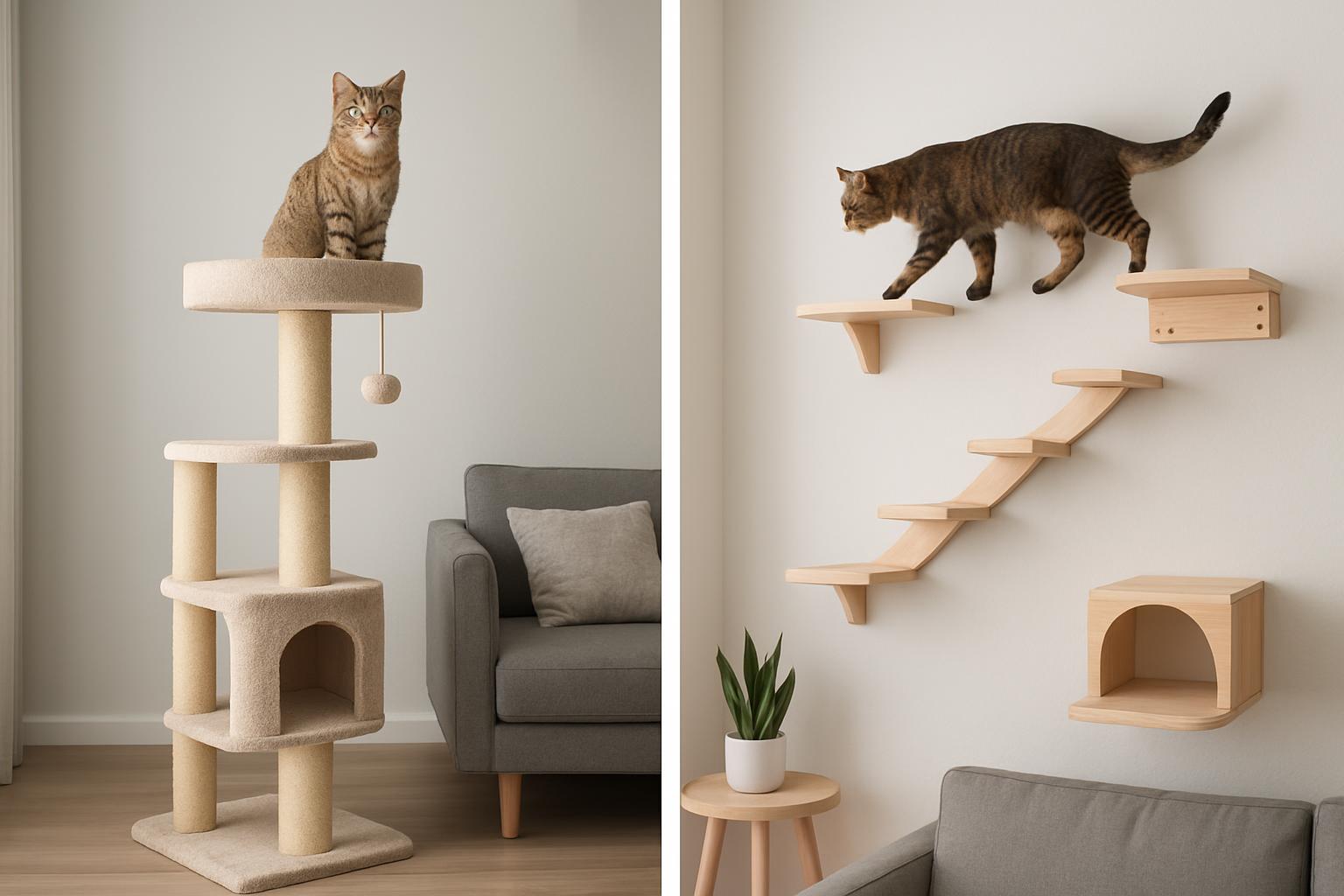
When it comes to adding vertical territory for your indoor cat, the two main options are cat trees and wall-mounted shelves. Both give cats the height they crave, but they solve different problems and work better in different spaces. Here’s how to choose — or why you might want both.
Cat Trees: The All-in-One Solution
What They Do Well
- No installation required: Place it, done. No drilling, no wall damage, no tools. This is the biggest advantage for renters.
- Multi-function: A good cat tree combines scratching posts, platforms, hideaways, and sometimes dangling toys in one piece
- Scratching surfaces: Built-in sisal posts satisfy scratching needs and save your furniture
- Movable: Rearrange your room? The cat tree moves with you. Wall shelves don’t.
- Immediate use: Cats usually start using a new tree within hours
Limitations
- Floor space: Even compact models take up 2-4 square feet of floor space — significant in small apartments
- Height ceiling: Most max out at 5-6 feet. Ceiling-height options exist but are expensive and bulky.
- Aesthetics: Most cat trees look like… cat trees. Modern designs exist but cost more.
- Wear and tear: Carpet platforms and sisal posts degrade and eventually need replacement
Best picks: See our best cat trees for apartments for compact, high-quality options.
Wall Shelves: Maximum Space Efficiency
What They Do Well
- Zero floor space: Everything is on the wall. In a 400 sq ft studio, this matters enormously.
- Unlimited height: You can go all the way to the ceiling — higher than any cat tree
- Cat highways: Multiple shelves create connected routes along walls and between rooms — enrichment that a single tree can’t match
- Modern aesthetics: Well-designed cat shelves look like intentional home decor. Companies like CatastrophiCreations make beautiful systems.
- Customizable: Add shelves one at a time, arrange them however you want, create routes that fit your exact space
Limitations
- Installation required: You need to drill into walls with proper anchors. Not possible in some rentals (though damage-free options exist).
- No scratching surface: Shelves don’t include sisal — you’ll still need a separate scratcher
- No hideaway: Open shelves don’t provide enclosed spaces. Some cats want a cozy cave, not just a platform.
- Cat training: Some cats take weeks to discover and trust wall shelves, especially if they’ve never had elevated options before
- Permanent placement: Once drilled in, you’re committed to that layout (or patching holes)
Best picks: See our best wall shelves and window perches guide.
Head-to-Head Comparison
| Factor | Cat Tree | Wall Shelves |
|---|---|---|
| Floor space needed | 2-4 sq ft | None |
| Max height | 5-6 ft typical | Ceiling height |
| Installation | None (freestanding) | Drilling required |
| Renter friendly | ⭐⭐⭐⭐⭐ | ⭐⭐ (varies) |
| Cost | $50-200 | $30-60 per shelf |
| Includes scratcher | Yes | No |
| Enrichment potential | Good | Excellent (highways) |
Which Should You Choose?
Get a Cat Tree If:
- You’re renting and can’t drill into walls
- You want a quick, no-installation solution
- Your cat needs a scratcher (most do)
- You have floor space to spare
- You want something your cat will use immediately
Get Wall Shelves If:
- Floor space is extremely limited (studio apartments)
- You want maximum height and cat highway potential
- Aesthetics matter — you want the space to look intentional
- You have multiple cats (shelves multiply territory more effectively)
- You own your home or have landlord permission to drill
Get Both If You Can
The ideal setup combines a cat tree as the “launch pad” with wall shelves extending the vertical route. The tree provides easy floor-to-height access plus scratching, while the shelves create highways and additional resting spots. This combination gives cats the most enriching vertical environment possible.
For more on maximizing vertical space, see our Cat Furniture and Vertical Space Guide and how to create vertical territory in a small apartment. For apartment-specific advice, check our Apartment Cat Setup Guide.