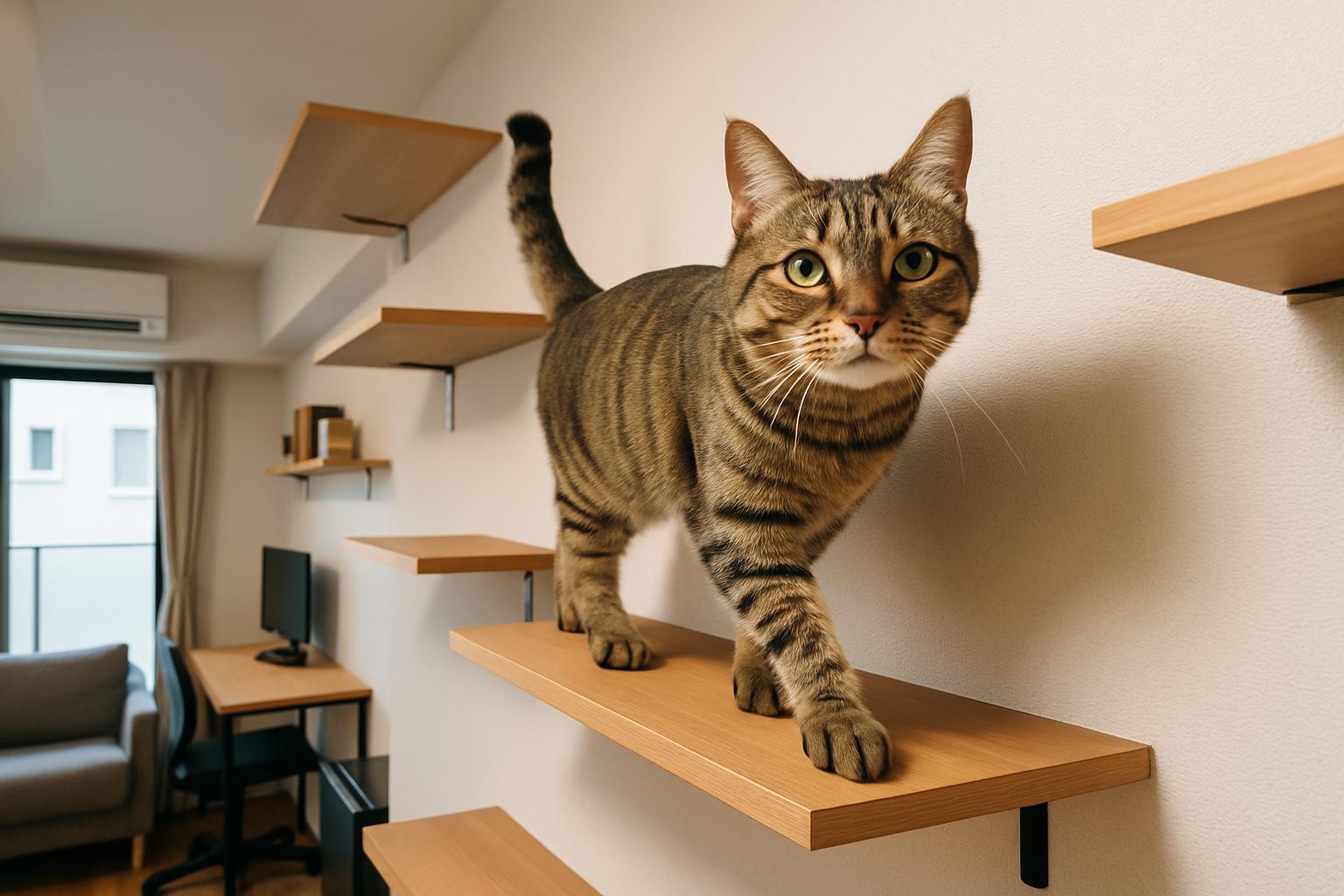
Walk into any home where a cat lives and you’ll likely find them in one of two places: the highest spot available, or a cozy hidden corner. That’s no accident. Cats are hardwired to seek elevation — it gives them a sense of security, control over their territory, and a safe vantage point to observe the world below.
For apartment cats especially, vertical space is one of the most important elements of a healthy, enriching environment. But what if you’re working with a 600-square-foot studio or a small rental where you can’t bolt things into walls? The good news: there are more options than ever, and creating a satisfying vertical world for your cat doesn’t require a lot of square footage — just a little creativity.
Why Cats Need Vertical Space
Vertical territory isn’t just a nice-to-have — for indoor cats, it serves important psychological functions. In multi-cat households, height creates a natural hierarchy that reduces conflict. Cats who feel threatened or overwhelmed can escape upward, which lowers stress and prevents confrontations. Even for single cats, having high perches provides a sense of safety and environmental control that contributes to overall wellbeing.
Cats who lack vertical options often compensate in less desirable ways: stress behaviors, hiding under furniture, aggression, or persistent attempts to access counters and shelves (which are frustrating for everyone). Giving cats legitimate height options redirects those instincts appropriately. For more context on why this matters, this guide to cat furniture and vertical space goes deeper into the behavioral science behind it.
Wall-Mounted Cat Shelves
Wall shelves are one of the most space-efficient solutions for small apartments. They don’t take up any floor space, they can be installed at multiple heights to create a climbing “highway,” and they look surprisingly stylish in modern designs.
The challenge for renters: putting holes in walls. Some options:
- Command Strip-mounted shelves: Several cat furniture brands now offer shelves designed specifically for adhesive mounting. Weight limits are real constraints, so check the ratings carefully — most support up to 15–25 lbs when installed correctly.
- Floating shelves on existing furniture: A shelf that rests on top of a bookcase or armoire can extend vertical height without wall mounting.
- Negotiate with your landlord: Many landlords will allow wall-mounting if you agree to patch holes before leaving. It never hurts to ask.
The best wall-mounted shelves and perches for cats breaks down top options by style, weight capacity, and installation method — including renter-friendly picks.
What to Look for in Cat Wall Shelves
Not all shelves are created equal for cats. Look for:
- Adequate width (at least 10–12 inches so a cat can turn around comfortably)
- Non-slip surfaces — carpet, sisal, or rubberized pads
- Weight ratings appropriate for your cat’s size
- A layout that creates a walkable path rather than isolated islands
Cat Trees for Small Spaces
Traditional cat trees can be bulky, but the market has shifted significantly toward sleeker, space-conscious designs. Modern cat trees for apartments tend to be taller and narrower — using vertical space rather than horizontal footprint.
Key features to look for in a small-space cat tree:
- Small base footprint: Look for trees under 20″ x 20″ at the base
- Multiple platforms at varying heights: More platforms = more enrichment value per square foot
- Integrated scratching posts: Sisal-wrapped posts let you consolidate furniture functions
- Stability: Taller trees with small bases can tip — check that the design anchors appropriately
For a curated breakdown, the best cat trees for apartments covers size, style, and stability ratings across popular options.
Window Perches
Few things enrich an indoor cat’s day more than a good view of the outside world. Window perches provide both height and sensory stimulation — birds, squirrels, weather, passersby — and they’re among the easiest additions to make in a rental.
Most window perches attach via suction cups or hang from the window frame, leaving zero permanent marks. They’re also affordable, often running $20–$50 for quality options.
For maximum enrichment value, place the perch where there’s outdoor activity: near a bird feeder, a tree, a busy sidewalk, or even just where afternoon sun streams in. Cats are perfectly happy watching the same squirrel drama play out every morning.
Door-Mounted Options
Over-the-door cat perches are an underutilized solution for small apartments. These hang over standard interior doors and provide a secure, elevated resting spot without any drilling or adhesives. They work well in homes where wall space is limited, and they’re easy to move from door to door as needed.
They’re especially useful in multi-cat households, where having resting spots at multiple heights throughout the home reduces territorial tension.
DIY Vertical Space Ideas
If you’re handy or budget-conscious, DIY options can create impressive vertical setups for relatively little money:
- Repurposed bookshelves: A tall IKEA bookcase with carpet squares or sisal mats on the shelves becomes an instant cat tree. Secure it to the wall (most rentals allow this for safety reasons) and add a perch on top.
- Stacked furniture: A dresser topped with a sturdy basket or box gives a cat a natural high point without any construction.
- Floating wood planks: Simple wooden boards cut to 12″ wide, wrapped in carpet remnants, and mounted with adjustable-tension shelf brackets can create a custom shelf system with minimal wall damage.
Placement Tips That Make a Difference
Where you put vertical elements matters as much as having them at all:
- Near windows: Elevation plus a view is the gold standard for cat contentment
- Connected pathways: Create a route rather than isolated spots — cats love traversing a room at height
- Away from high-traffic areas: Perches where cats get startled repeatedly are quickly abandoned
- Multiple rooms: Don’t put all your vertical resources in one room; spread them throughout the home so your cat has options
Building a Complete Small-Apartment Cat Setup
Vertical space is one piece of a larger puzzle. The complete apartment cat setup guide covers how to combine vertical territory, enrichment activities, litter placement, and daily routines into a cohesive environment that works for both you and your cat — even in a studio or one-bedroom.
The goal isn’t to turn your apartment into a cat obstacle course. It’s to give your cat enough options that they feel at home in their territory: secure, stimulated, and genuinely happy to be an indoor cat. With a little planning, even the smallest space can become a genuinely enriching world for a curious, vertical-minded feline.