
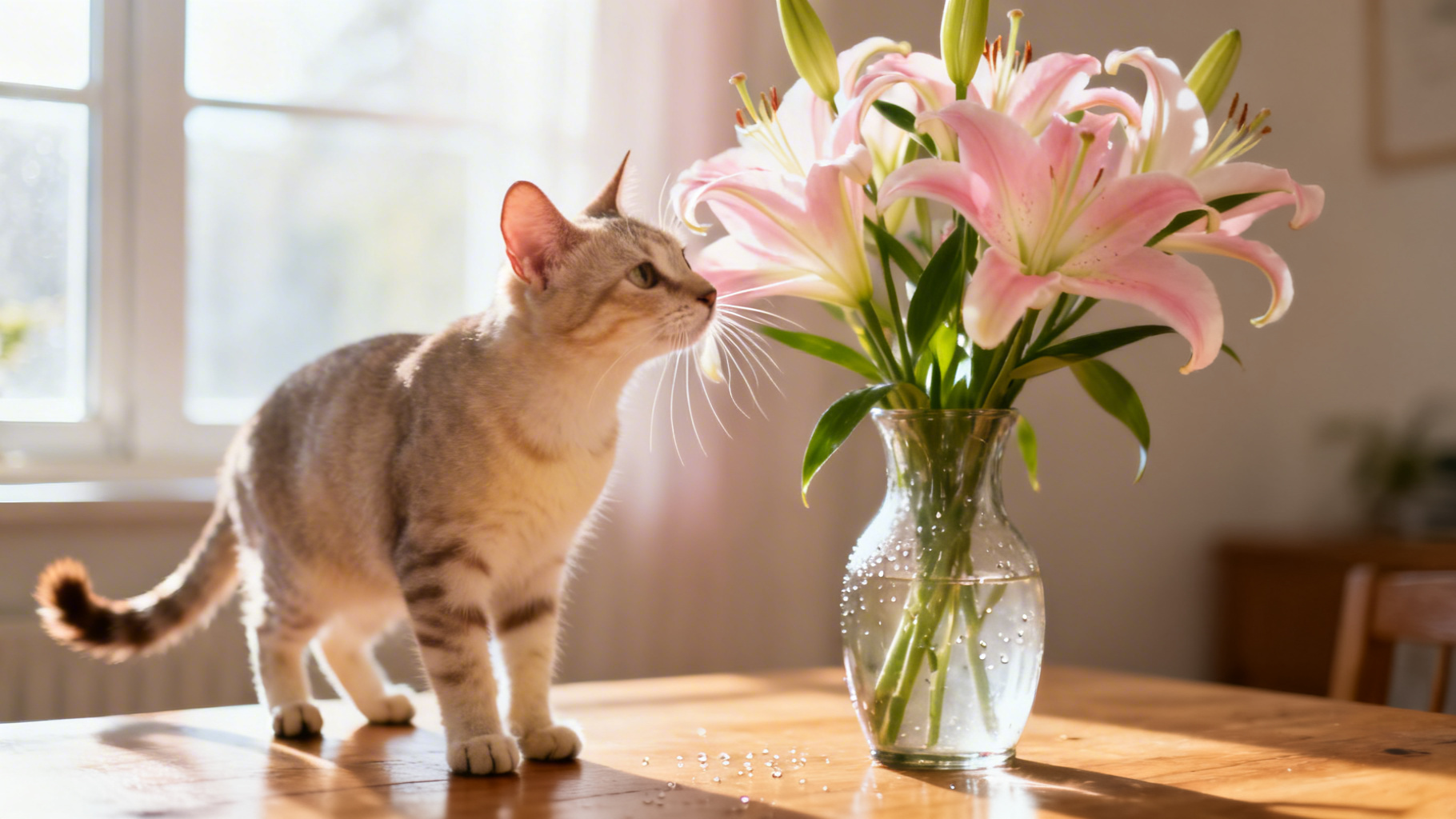
Spring is great for open windows, fresh flowers, and a deep-cleaned home—but for indoor cats, the season also brings a few hazards that are easy to underestimate. March and April are when bouquets start showing up on kitchen counters, Easter lilies appear in grocery stores, and stronger cleaners come out for spring cleaning. The tricky part is that some of the most beautiful seasonal touches can be dangerous for cats, even when exposure seems minor.
If you live with an indoor cat, this is the time to do a quick seasonal safety reset. A curious sniff of a bouquet, pollen on a paw, or a freshly mopped floor can turn into a same-day vet call. The good news: you do not need to make your home feel sterile or joyless. You just need to know which spring items are worth taking seriously, which signs mean “call the vet now,” and how to set up your home so your cat stays safe.
Why spring can be riskier for indoor cats
Indoor cats are often very interested in anything new that enters the home. A new bouquet, a pot of bulbs, a vase on a low table, or a recently disinfected floor all invite investigation. Cats also groom constantly, which means they can ingest toxins not only by chewing a plant, but also by getting pollen, sap, or chemical residue on their fur and paws and then licking it off.
Cornell’s Feline Health Center notes that lilies are especially dangerous because even tiny amounts can trigger life-threatening kidney failure. ASPCApro also warns that documented cases of acute kidney injury have occurred from exposure to lily pollen alone. That detail matters for indoor cats because they may brush against a bouquet without obviously eating it.
This is also one of those areas where “my cat never bothers plants” is not enough of a safety plan. Cats are creatures of habit right up until they are not. A stressed cat, a bored cat, or simply a cat intrigued by a new smell can behave differently than usual. If you want a broader home-safety baseline, this is also a good time to revisit How to Cat-Proof Your Home: A Complete Safety Guide.
The biggest flower danger: lilies
If you only remember one thing from this article, make it this: true lilies and daylilies should not come into a home with cats.
According to Cornell, many lilies can cause kidney failure in cats, and Pet Poison Helpline warns that even 1-2 leaves or exposure to pollen can be enough to cause severe poisoning. ASPCApro specifically identifies Lilium species and Hemerocallis species as the highest-risk lilies because all parts of the plant are toxic.
That includes:
- Flowers
- Leaves
- Stems
- Pollen
- Water from the vase
Common examples include Easter lilies, tiger lilies, Asiatic lilies, Japanese Show lilies, and daylilies. Around March and April, Easter-themed arrangements make this especially relevant for indoor cat owners.
One confusing point: not every plant with “lily” in the name causes the same kind of poisoning. ASPCApro notes that peace lilies and lily of the valley are also toxic, but in different ways. Peace lilies typically cause oral irritation rather than the same kidney toxicity associated with true lilies, while lily of the valley can affect the heart. That means you should not assume any “lily” is safe just because it is not a true lily.
Other spring plants and décor to think twice about
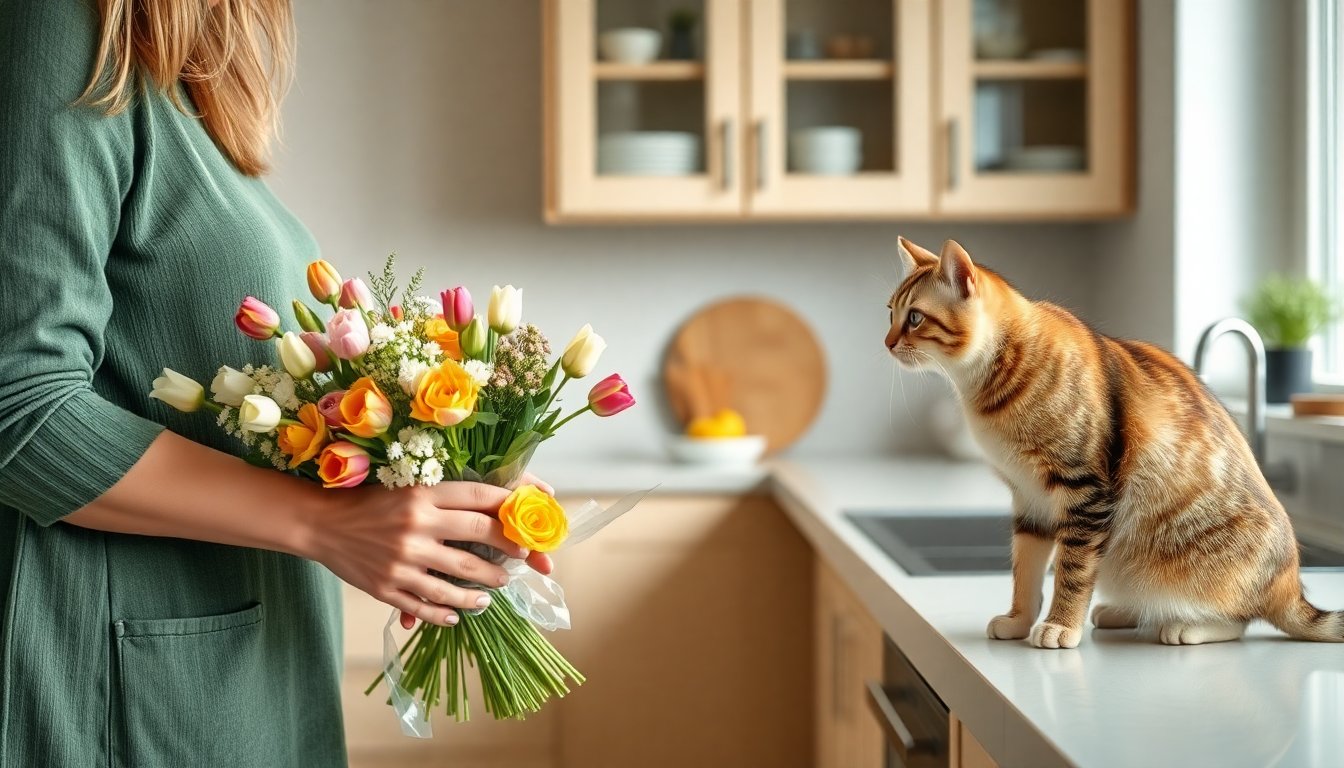
Lilies deserve top billing, but they are not the only seasonal problem. Cornell also lists tulips, hydrangeas, amaryllis, philodendron, holly, mistletoe, foxglove, and poinsettias among plants that can make cats sick. Toxicity varies across these plants—some are more likely to cause oral irritation or stomach upset, while others can be more serious—but they are all worth screening before you bring home spring arrangements or potted plants.
A simple house rule helps: if a new bouquet or plant is coming home, identify it before it comes inside. Do not rely on a florist card that just says “spring mix.” If you cannot confirm what is in the arrangement, keep it out of a cat household.
Also watch decorative filler and seasonal extras. Cornell specifically warns about artificial Easter grass, which can act like a linear foreign body if swallowed and may become life-threatening. Ribbon, raffia, twine, and thin plastic wrap are also tempting to many cats and belong in the same mental category: pretty for humans, risky for cats.
Spring cleaning products can be a hidden hazard too
Flowers get more attention, but cleaning products are a quieter risk during spring. International Cat Care warns that many disinfectants and antibacterial products contain cationic detergents such as benzalkonium chloride or DDAC. These products can cause poisoning when cats walk on treated surfaces and then groom their paws or fur.
Signs of disinfectant exposure may include:
- Drooling
- Red or painful mouth
- Reduced appetite
- Skin irritation
- Coughing or breathing difficulty
One thing I like about International Cat Care’s guidance is how practical it is: keep your cat out of freshly treated areas until surfaces are dry, clean spills promptly, and store products out of reach. If your cat may have contacted a disinfectant, wash the product off with water and call your veterinary team right away.
This fits well with a basic home setup routine. If you are updating your supplies this season, it is also worth checking your Essential First Aid Kit for Indoor Cats: What Every Owner Needs so you are not scrambling if your cat gets into something they should not.
Symptoms that should never be “wait and see”
With many toxins, timing matters. ASPCApro notes that once treatment is delayed past roughly 18 hours after true lily exposure, kidney damage may become irreversible. Pet Poison Helpline similarly notes that early signs can begin within 6 to 12 hours, while kidney injury develops over the next 24 to 72 hours.
If your cat may have been exposed to lilies or another toxin, do not wait for dramatic symptoms. Call your veterinarian, an emergency clinic, or poison control as soon as you realize exposure may have happened.
Urgent signs can include:
- Vomiting
- Sudden lethargy
- Loss of appetite
- Excessive thirst or not drinking
- Changes in urination
- Drooling or mouth pain
- Difficulty breathing
- Disorientation, tremors, or seizures
If your cat is acting “off” and you are unsure whether it is illness or possible poisoning, this guide on How to Tell If Your Indoor Cat Is Sick: 10 Warning Signs Every Owner Should Know can help you spot red flags—but possible toxin exposure always moves the situation into same-day vet-call territory.
What to do immediately if you suspect exposure
Here is the calm, useful version of the emergency plan:
- Remove access to the source. Take the bouquet, plant, cleaner, or decorative material away from your cat.
- Do not induce vomiting unless a veterinarian or poison expert tells you to. Cornell specifically advises against making your cat vomit unless you are directed to do so.
- Save the label or plant information. Bring the bouquet tag, cleaner bottle, or a photo of the plant with you.
- Rinse visible residue if appropriate. If your cat walked through cleaner or has pollen on the coat, gently wash it off with water and prevent further grooming while you call for help.
- Call for veterinary advice immediately. Do not wait until tomorrow morning if the exposure happened tonight.
It is also smart to keep emergency contacts somewhere obvious, not buried in your phone. If your cat gets plant pollen or cleaner residue on the coat, gently rinse or wipe it off while you are getting veterinary advice so they do not swallow more during grooming.
A safer spring setup for cat households
You do not have to ban every seasonal habit. Most homes just need a few smarter defaults:
- Skip lilies and unknown mixed bouquets entirely.
- Choose cat-safe greenery or non-toxic flowers from a verified source.
- Keep plants and bouquets off surfaces your cat can reach—though for truly toxic plants, the best move is still not bringing them home.
- Dump vase water where your cat cannot access it.
- Store cleaning products high up and locked away if possible.
- Keep cats out of cleaned rooms until surfaces are fully dry.
- Throw out ribbons, plastic grass, and string immediately after decorating.
If you live with children, guests, or a partner who loves buying flowers, consider making one household rule: no plant or bouquet enters the home until someone checks whether it is cat-safe. That one habit will prevent more problems than any clever storage hack.
The bottom line
Spring should be fun for you and boring for your cat—and in this case, boring is good. The biggest hazards are also the easiest to prevent: do not bring true lilies into a cat home, be cautious with all spring bouquets, treat disinfectants as paw-level toxins, and act fast if exposure may have happened.
If you want your home to feel fresh this season, lean into safer swaps: pet-safe greenery, tidy storage, and a cleaning routine that keeps chemicals off the floor until dry. Your cat does not care whether the bouquet is trendy. They do care whether the home stays safe.
Before you finish your spring reset, take five minutes today to check your flowers, toss risky décor, and save your emergency vet number somewhere visible. Future you will be glad you did.
Sources
- Cornell Feline Health Center: Easter Peril—Look Out for Lilies and Other Items
- Cornell Feline Health Center: Common Cat Hazards
- ASPCApro: How to Spot Which Lilies Are Dangerous to Cats & Plan Treatment
- International Cat Care: Disinfectant Poisoning in Cats
- Pet Poison Helpline: Easter Lilies Are Poisonous to Cats