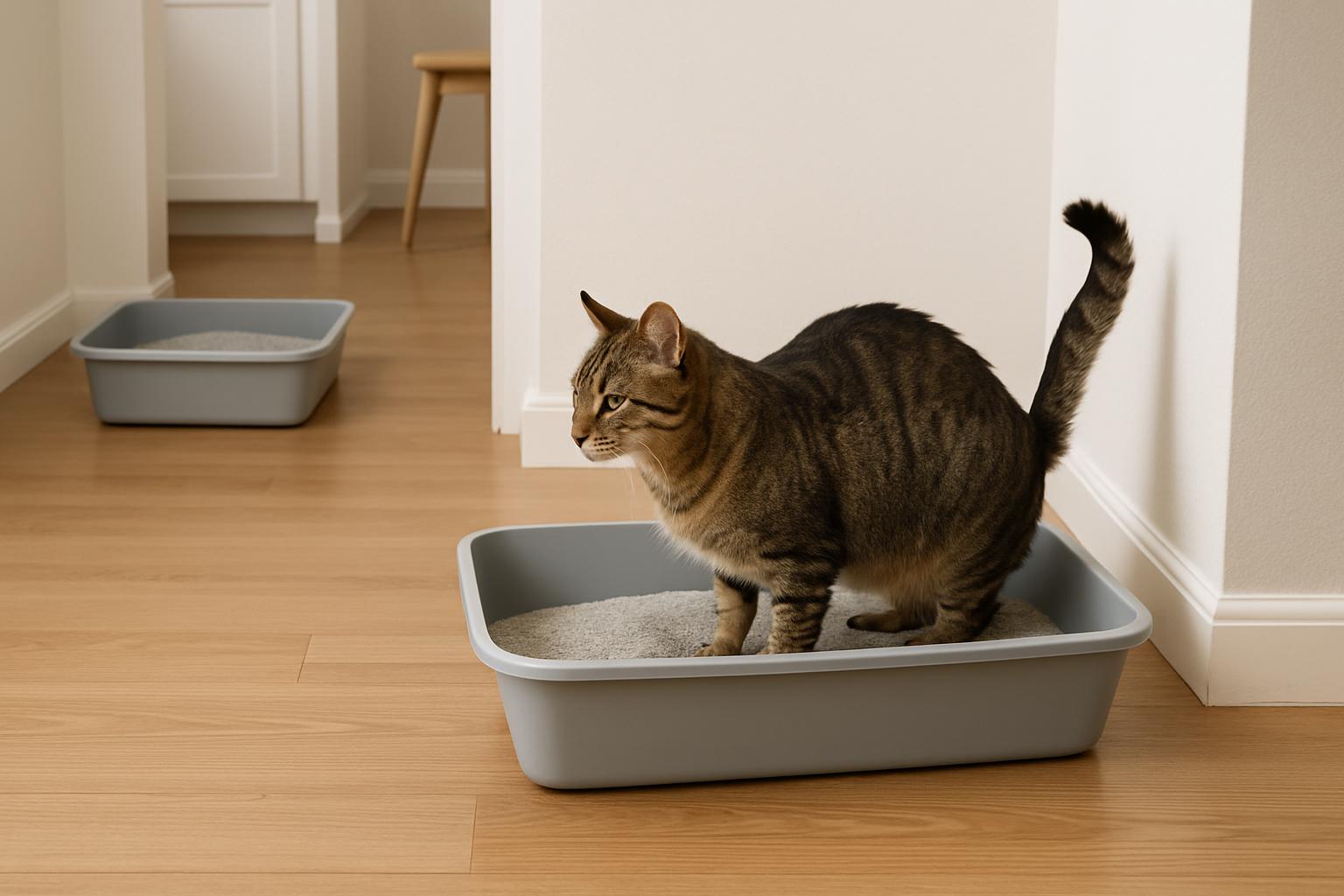
If you’ve recently adopted a second cat — or you’re planning to — one of the most practical questions you’ll face is: how many litter boxes do you actually need? It might seem like a minor logistical detail, but litter box setup in multi-cat homes has a surprisingly large impact on harmony, health, and happiness.
The answer most veterinarians and feline behaviorists agree on is rooted in a simple formula: the n+1 rule. It’s easy to remember, easy to implement, and genuinely makes a difference.
The N+1 Rule Explained
The n+1 rule is straightforward: you need one litter box per cat, plus one extra. For two cats, that means three litter boxes minimum.
This isn’t arbitrary. It’s based on feline behavior research and decades of veterinary observation. Cats are territorial animals, and the litter box is a particularly charged piece of territory. Even cats that seem to get along perfectly well during playtime can become deeply stressed when forced to share elimination spaces.
Three boxes for two cats ensures that each cat always has an available option — even if one box is being used, recently soiled, or being “guarded” by a more dominant cat. For a full breakdown of setup and strategy, the litter box setup guide covers everything from box selection to cleaning schedules.
Why It Matters: Territory and Stress
From a cat’s perspective, the litter box isn’t just a bathroom — it’s territory that carries their scent and signals their presence in the home. When two cats are forced to share too few boxes, several problems can develop:
Litter Box Guarding
More assertive cats sometimes “guard” litter boxes, physically blocking subordinate cats from using them. Even without overt aggression, the subordinate cat may feel too anxious to use a box that smells strongly of the dominant cat. Over time, this leads to the subordinate cat holding their waste, which causes serious urinary and digestive health problems.
Litter Box Avoidance
When cats feel uncomfortable at the litter box — whether due to territorial stress, a negative experience, or simple dislike of a dirty or shared box — they start looking for alternatives. Your laundry pile, a corner of the bedroom, or a rarely-used guest room suddenly becomes an appealing option. Once avoidance behavior is established, it can be genuinely difficult to reverse.
Inter-Cat Conflict
Litter box competition is a leading cause of conflict between cats who otherwise coexist reasonably well. Resource scarcity — and cats absolutely experience too-few litter boxes as resource scarcity — generates stress that bleeds into every other aspect of their shared life. Providing adequate boxes often reduces overall tension in a multi-cat household. Setting up a multi-cat home thoughtfully from the start can prevent months of behavioral headaches.
Placement Strategy: Don’t Cluster Them
Having three litter boxes means nothing if all three are in the same corner of the laundry room. From a cat’s perspective, three boxes in the same location are essentially one location — a timid cat who’s being blocked from that area has no real alternatives.
Spread litter boxes across different rooms and different zones of your home. The goal is to ensure that no single cat can ever control access to all of them. Practical placement tips:
- One box on each level of a multi-floor home (more on this below)
- Boxes in at least two different rooms, ideally three
- Avoid placing boxes near each other, even in the same room — adjacent boxes often function as a single “station” in a cat’s mental map
- Don’t place boxes near food and water bowls (cats strongly prefer separation)
For apartment-specific placement ideas, litter box placement in small homes covers creative solutions that work even in limited square footage.
Multi-Floor Homes: One Per Floor Minimum
If your home has more than one floor, the guidance is clear: at least one litter box per floor. Cats — especially older cats, cats with mobility issues, or simply cats who get very absorbed in activity — may not always make it upstairs or downstairs in time if that’s the only option. Having a box on each floor prevents accidents and reduces stress.
In practice, this means a two-story home with two cats should have at least two boxes per the n+1 rule, with at least one on each floor — and ideally one extra for a total of three spread across both floors.
Exceptions to the N+1 Rule
Like most guidelines, the n+1 rule has nuance. There are situations where you may need even more boxes than the rule suggests:
- High conflict between cats: If your cats have significant territorial tension, more boxes reduce competition even further. Four or five boxes for two cats isn’t overkill in a high-conflict household.
- Senior or mobility-limited cats: Older cats or those with joint pain may need boxes on every floor and in every room they frequent, regardless of how many cats are in the home.
- Cats recovering from illness: A cat recovering from a urinary tract infection or other health issue may need increased access to avoid accidents.
- Very large homes: In a large house, the physical distance between rooms means effective access requires more boxes than the formula strictly requires.
Signs You Need More Litter Boxes
Even if you’re following the n+1 rule, watch for these signals that your current setup isn’t working:
- Elimination outside the litter box (especially in corners, closets, or on soft surfaces)
- One cat spending an unusual amount of time near the litter box (possible guarding behavior)
- One cat visibly hesitating, circling, or avoiding the litter box area
- More frequent litter box conflicts or ambushes near the box location
- A previously box-trained cat suddenly having accidents
Any of these signs warrants adding a box before trying other interventions. It’s one of the lowest-effort, highest-impact changes you can make. The best litter boxes for multi-cat households reviews top-rated options across different styles, sizes, and budgets so you can find what works for your setup.
Getting the Setup Right from the Start
If you’re setting up a new multi-cat home, starting with the right number of boxes (and the right placement) saves you significant trouble later. Behavioral issues rooted in litter box competition can take weeks or months to resolve even after the underlying problem is fixed. Prevention is dramatically easier than correction.
Three boxes for two cats, spread across multiple locations, cleaned at least once daily — that’s the baseline for a harmonious multi-cat litter setup. It’s a small investment that pays off in a calmer, healthier household for everyone.