
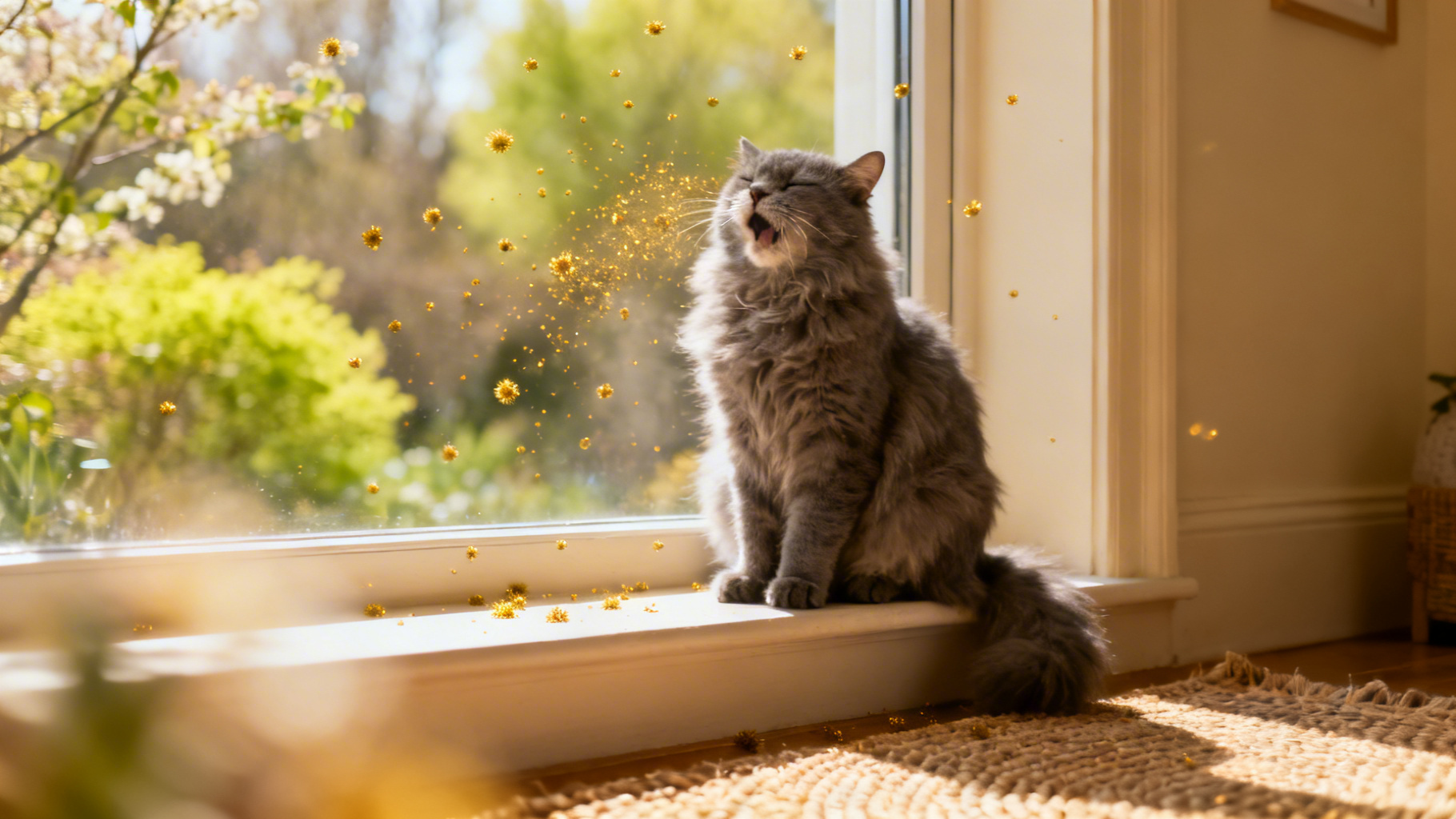
Spring is great for fresh air and sunlight, but it also brings pollen, dust, mold, and other irritants into your home. Even cats that never set paw outside can react to seasonal allergens. That surprises a lot of indoor cat owners. If your cat starts overgrooming, scratching more than usual, or sneezing after the windows go up, allergy season may be part of the picture.
The tricky part is that cats do not always show allergies the way humans do. Instead of obvious hay fever symptoms, many cats develop itchy skin, hair loss, scabs, ear irritation, or flare-ups that look like a grooming problem rather than a seasonal one. Some cats also show respiratory signs, especially if they already have sensitive airways.
This guide walks you through how to prep your indoor cat for allergy season, what signs to watch for, how to make your home easier on sensitive cats, and when it is time to call your vet.
Why indoor cats can still have seasonal allergies
Indoor living lowers a cat’s exposure to many hazards, but it does not create a sealed bubble. Tree pollen, grass pollen, weeds, mold spores, dust, and dust mites can still make their way inside on open windows, shoes, clothes, screens, fabrics, and HVAC systems. According to VCA Animal Hospitals, cats with atopy can react to many of the same environmental allergens that bother people, including pollens, molds, and dust mites. Merck Veterinary Manual also notes that airborne allergens can trigger skin inflammation in cats and, in some cases, nasal inflammation or asthma.
That is why spring can be a rough time even for a fully indoor cat. The home environment changes quickly: windows open more often, fans run, people spend more time outside and track allergens back in, and seasonal cleaning products may be used more heavily. If your cat is prone to skin irritation or respiratory sensitivity, those shifts can be enough to trigger a flare.
What allergy season looks like in cats
One of the biggest reader traps here is assuming a cat with allergies will mainly sneeze. That can happen, but skin signs are often more obvious. VCA describes chronic or recurrent itching as a common pattern, and Cornell’s Feline Health Center notes that environmental allergies can be difficult to diagnose because they overlap with parasites, food issues, and skin infections.
Common signs to watch for include:
- Frequent scratching, licking, or chewing at the skin
- Overgrooming, especially on the belly, legs, or inner thighs
- Hair loss or thin patches of fur
- Small scabs, irritated skin, or redness
- Recurring ear irritation
- Sneezing or nasal irritation
- Coughing, wheezing, or faster breathing in more serious cases
If your cat is also shedding more right now, it can be easy to miss the difference between normal spring coat change and an allergy problem. A useful rule of thumb: regular shedding should not leave the skin inflamed, create bald patches, or trigger frantic licking. If coughing, wheezing, or faster breathing are part of the picture, do not treat that as a simple seasonal issue since feline asthma can overlap with allergy season and needs veterinary attention. If you need help sorting that out, our Spring Shedding Tips for Indoor Cats guide can help you compare what is normal versus what deserves a closer look.
How to prepare your home before symptoms ramp up
You cannot remove every allergen, and you do not need to. The goal is to lower the background load in your cat’s environment so their skin and airways have less to cope with. Small changes done consistently usually matter more than one giant deep-cleaning day.
1. Keep floors, fabrics, and favorite cat zones cleaner than usual
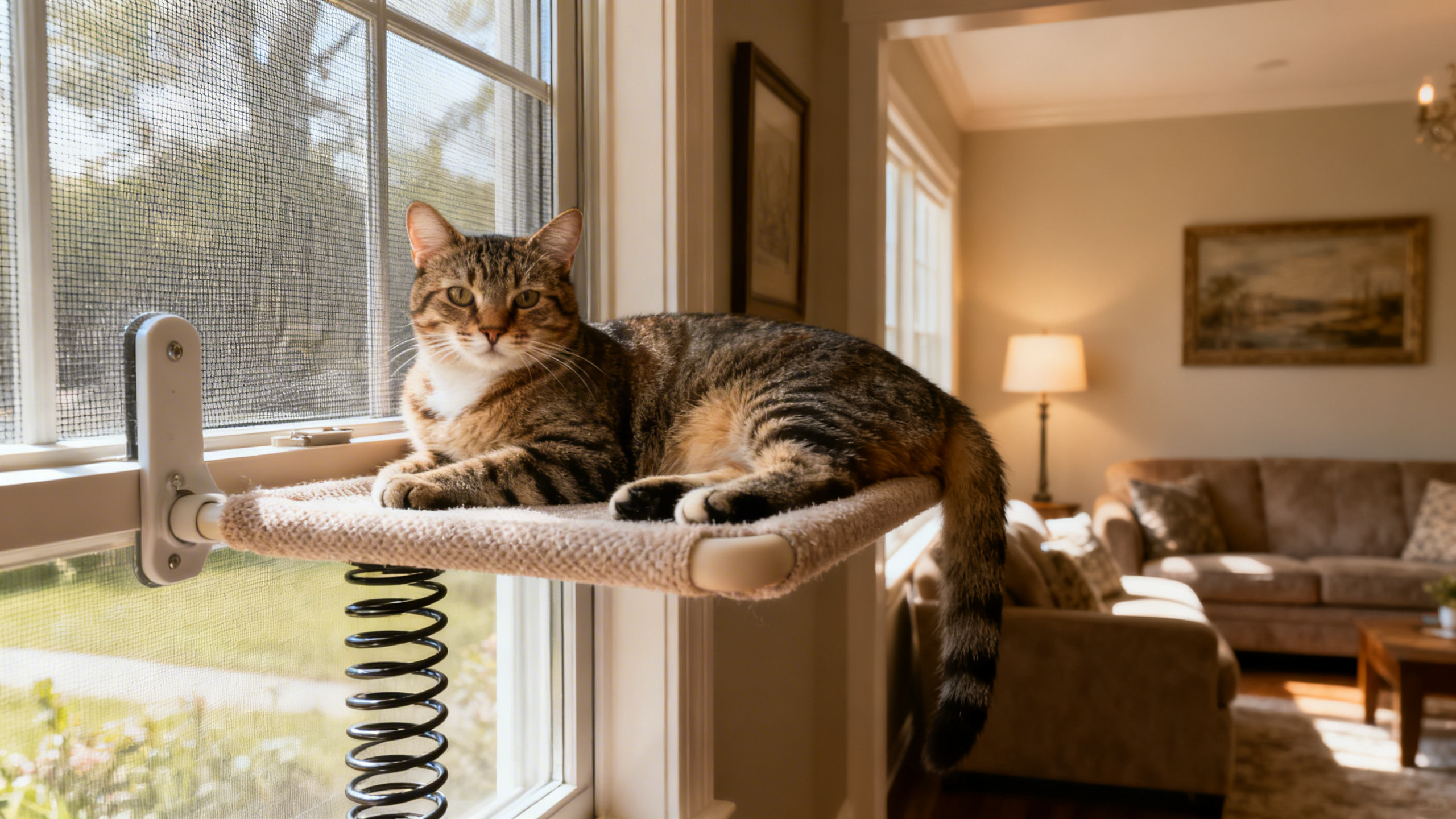
Pollen and dust settle where your cat actually lives: window perches, rugs, sofa arms, blankets, cat trees, and beds. Vacuuming soft surfaces, washing bedding, and wiping down hard perches can reduce what ends up on your cat’s coat. This is especially helpful for cats that nap in sun puddles near open windows.
Focus on the spots your cat uses every day rather than trying to sanitize the entire house at once. A quick wipe of a favorite perch and a weekly bedding wash is more realistic and usually more effective than an occasional marathon clean.
2. Brush strategically, not aggressively
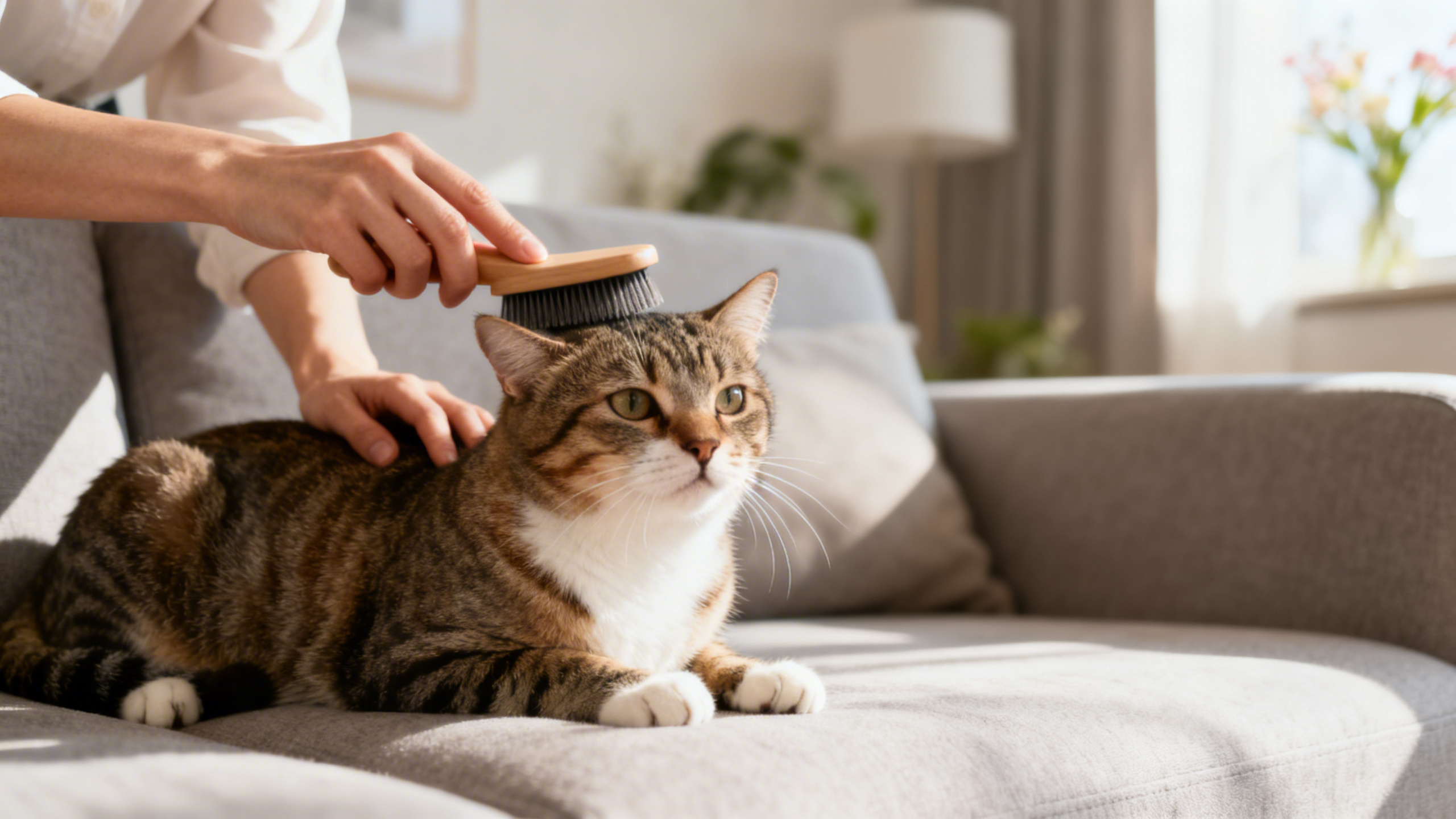
Gentle grooming can help remove pollen, dust, and loose hair before your cat swallows it during self-grooming. It also gives you a chance to notice scabs, redness, or thinning fur early. But brushing should feel soothing, not irritating. If the skin is already inflamed, over-brushing can make the problem worse.
Short, calm sessions work best. Use the tool your cat already tolerates well, and stop if you notice discomfort. Our Indoor Cat Grooming Guide is a good companion if you want to fine-tune your routine.
3. Improve indoor air quality in the cat-safe ways that actually matter
If your cat is sensitive during spring, indoor air quality deserves attention. Cornell notes that suspected feline asthma triggers can include pollen, mold, dust mites, smoke, and vapors from household cleaners or aerosol sprays. That does not mean every cat needs expensive gadgets. Usually, the highest-value moves are the simplest:
- Change HVAC filters on schedule
- Vacuum regularly with a machine that handles fine particles well
- Use fragrance-free cleaning products when possible
- Avoid scented sprays, plug-ins, candles, and heavy air fresheners near cat areas
- Keep litter dust as low as possible
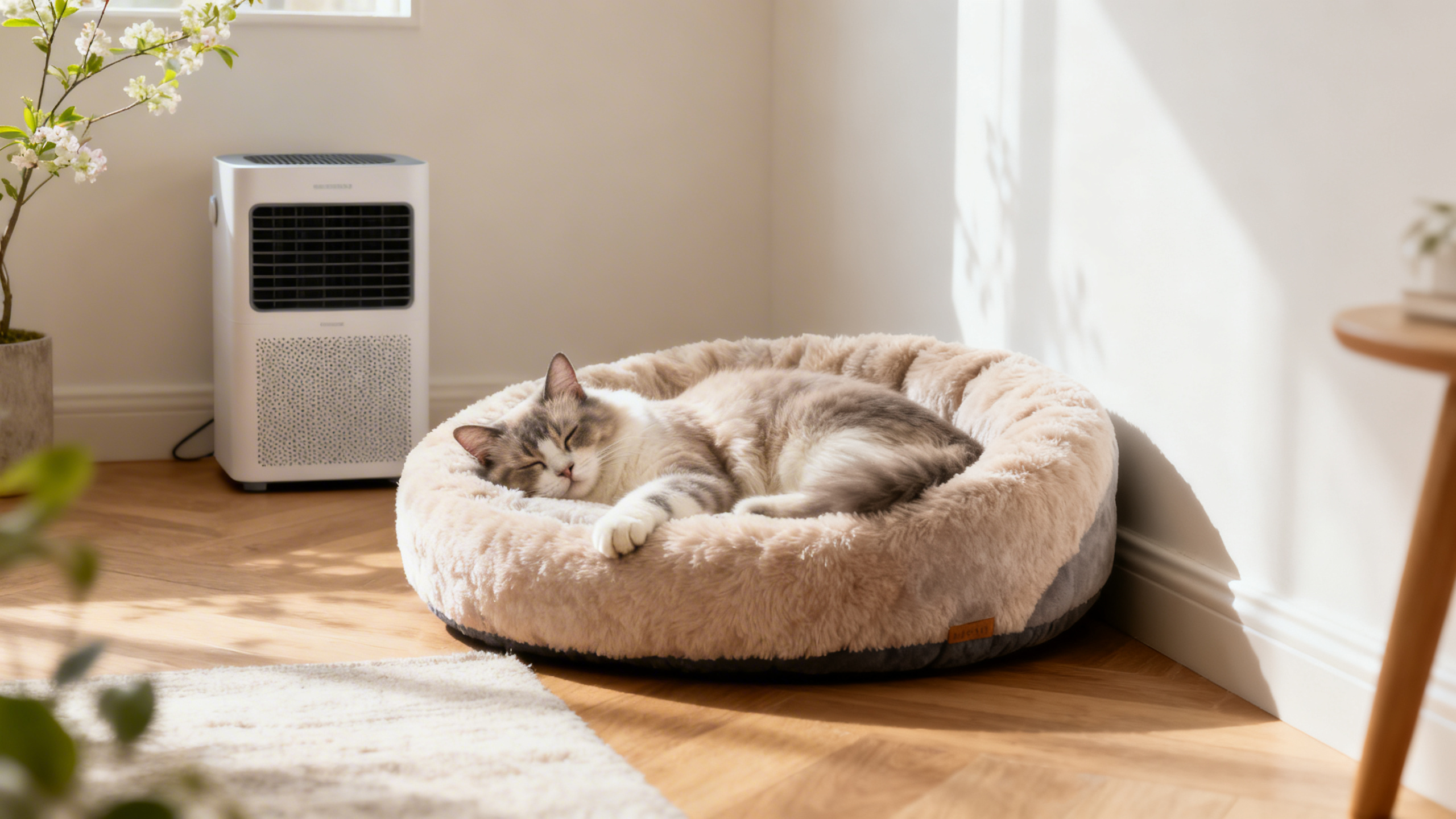
If you use a purifier, place it where your cat spends time most often instead of hiding it in a room nobody uses.
4. Be careful with spring cleaning products
Spring cleaning often overlaps with spring allergy flare-ups, and sometimes the products are part of the problem. Strong fragrances, aerosolized cleaners, and lingering fumes can irritate sensitive cats, especially if they already have itchy skin or reactive airways. Choose unscented or lightly scented cleaners when you can, ventilate well, and keep your cat away until surfaces are dry and the smell has dissipated.
This is also a good season to review general safety habits around flowers, cleaning products, and open windows. Our cat-proofing guide covers several common indoor hazards that tend to show up during seasonal resets.
5. Reduce dusty hotspots
Dust is not just a housekeeping issue. For some cats, it is part of the allergy picture. Pay special attention to:
- Closet corners and under-bed storage
- Behind litter boxes and feeding stations
- Fabric cat tunnels and older plush beds
- Window blinds, screens, and sills
If your cat has a favorite lookout spot, cleaning that one area more often can make a meaningful difference.
A practical allergy-season checklist for indoor cat owners
If you want a simple plan, start here:
- Wash your cat’s bedding and favorite blankets once a week during peak pollen season.
- Wipe down window perches, shelves, and cat trees every few days.
- Brush your cat gently on a routine that matches their tolerance and coat type.
- Swap heavily fragranced cleaners and air fresheners for low-irritant options.
- Keep litter boxes scooped and the surrounding area dust-controlled.
- Track when symptoms show up so you can tell your vet whether the pattern seems seasonal.
This kind of routine pairs nicely with a broader wellness check-in. If you want a bigger-picture refresher, the Indoor Cat Wellness Guide is a solid next read.
When to call the vet
Because allergy signs overlap with parasites, infections, food sensitivity, and pain-related overgrooming, you should not assume every itchy cat has seasonal allergies. Cornell and VCA both emphasize that feline atopy is usually diagnosed by ruling other problems out rather than through one simple yes-or-no test.
Call your vet if you notice any of the following:
- Persistent scratching, licking, or chewing that lasts more than a few days
- Bald spots, broken hair, scabs, or red skin
- Recurring ear irritation or head shaking
- Sneezing that keeps returning or comes with nasal discharge
- Coughing, wheezing, open-mouth breathing, or labored breathing
- Symptoms that return around the same season each year
If your cat is having respiratory trouble, treat that as more urgent. Cornell’s feline asthma guidance notes that wheezing, rapid breathing, or obvious effort to breathe should not be brushed off as “just allergies.”
Use this next-step sequence if you are unsure:
- Remove any obvious irritant, such as a scented spray, dusty item, or freshly used cleaner.
- Move your cat to a calm, well-ventilated room.
- Note the symptoms, when they started, and whether they seem linked to grooming, open windows, cleaning, or litter dust.
- Call your veterinarian for guidance, especially if skin changes or repeat flare-ups are involved.
- Seek urgent veterinary care immediately for wheezing, open-mouth breathing, blue gums, collapse, or severe distress.
Consult your vet before trying supplements, over-the-counter antihistamines, or any home remedy. Medications that are fine for humans are not automatically safe or useful for cats, and dosing mistakes are not worth the risk.
What your vet may recommend
Treatment depends on what is actually driving the symptoms. Merck explains that long-term management may include allergen avoidance where possible, improving coat hygiene, controlling flare factors such as fleas or secondary infections, and in some cases immunotherapy. Your vet may also recommend diagnostics to rule out skin parasites, fungal disease, food reactions, or infection before labeling the problem environmental.
That matters because “allergies” is really a category, not a diagnosis all by itself. One cat may mainly need environmental control and a skin-care plan. Another may need a workup for asthma. Another may turn out to have fleas, mites, or a food issue that only looked seasonal at first.
The goal is a lower-stress, lower-irritant spring
You do not need a perfect house to help your cat through allergy season. You just need a smarter setup: less dust, less fragrance, cleaner favorite spots, gentle grooming, and a quick response if symptoms move beyond normal shedding or mild sneezing.
Start with the practical basics, then pay attention to your cat’s pattern. If spring always seems to bring itching, overgrooming, or respiratory changes, that is worth discussing with your vet before the next flare gets worse.
For a useful next step in managing indoor cat spring allergies, read Spring Shedding Tips for Indoor Cats if coat changes are your biggest concern, or review the Cat Hydration Guide if you are trying to support overall wellness during seasonal stress.