
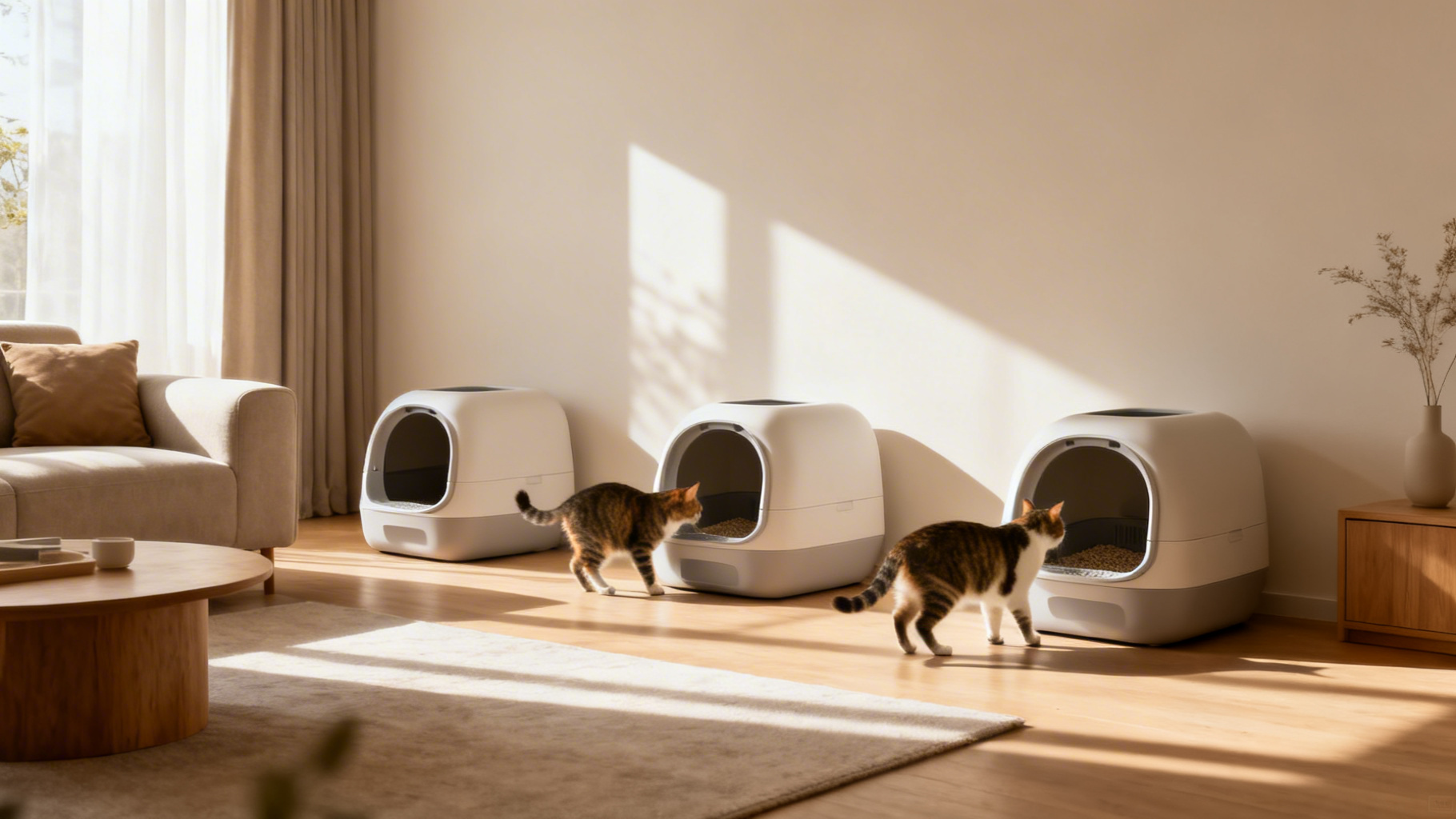
How Many Litter Boxes Do You Need in a Multi-Cat Home?
If you have more than one cat, the best starting point is one litter box per cat, plus one extra.
That means:
- 2 cats = 3 litter boxes
- 3 cats = 4 litter boxes
- 4 cats = 5 litter boxes
This article is about the part owners usually struggle with most: what that rule means in real homes, especially when you do not have unlimited space. The goal is not to memorize a formula. The goal is to understand why the rule works, when it matters most, and which tradeoffs to make first if your home cannot comfortably fit the ideal setup.
A lot of owners hope they can get away with fewer. Sometimes they can, especially in smaller homes with calm cats and excellent daily scooping. But in multi-cat households, litter box problems often start when there are too few boxes, the boxes are too close together, or one cat feels blocked from using them.
Why litter box count matters in a multi-cat home
The number of litter boxes in your home is not just about waste volume. It is also about comfort, access, and social stress.
Cats do not always want to share
Even cats that get along well can have different litter box habits. One cat may prefer a quiet box in a low-traffic spot. Another may avoid a box that smells used. A more confident cat may claim a favorite location without obvious fighting, while the other cat quietly starts holding it too long or going somewhere else.
That is one reason the “one per cat, plus one” rule works so well: it gives cats options.
Access matters as much as the total number
A home can technically have the “right” number of boxes and still have a bad setup. If all the boxes are lined up in one laundry room, many cats will treat that as a single litter area rather than multiple separate choices.
In real homes, extra boxes help when:
- one box is dirty before you can scoop it
- one cat corners another near the box
- a cat dislikes a certain location or style
- one floor of the home is too far away when a cat needs to go
How many litter boxes for 2 cats, 3 cats, or more?
Two-cat homes
For 2 cats, 3 litter boxes is the standard recommendation.
This is the setup that gives you the best chance of avoiding everyday friction, especially if:
- one cat is more shy or easily stressed
- the cats are still adjusting to each other
- one cat is picky about cleanliness
- you are gone for long workdays
- you live in a home where one box location is noisy or busy
That said, a lot of two-cat households start with two boxes and only realize it is not enough once they see subtle problems: lingering near the box, hesitation, one cat waiting for the other to leave, or occasional accidents outside the box.
Three-cat homes and larger groups
Once you get to 3 cats or more, the reason for the extra box becomes even clearer.
More cats usually means:
- faster box buildup between scoopings
- more chance that one cat dislikes another cat’s bathroom habits
- more competition for preferred locations
- more need for boxes spread across the home
For 3 cats, start with 4 boxes. For 4 cats, start with 5 boxes. If you have a large home with multiple floors, spreading those boxes out usually matters just as much as the total.
What if you live in a small apartment or small house?
This is where many owners hesitate. Three litter boxes for two cats can sound excessive in a small home.
The good news: you do not need a giant house to create a workable setup. You just need to think carefully about placement, box size, and daily cleaning.
If the full rule feels unrealistic
If you cannot fit the ideal number right away, treat the standard rule as the best starting point, then build the best compromise you can.
In a smaller home, the most useful way to think about compromise is in this order:
- separation first: two boxes in one room often do not feel like two true options to a timid cat
- size second: bigger boxes usually buy you more real usability than tiny boxes chosen only to save floor space
- cleanliness third: if you are running a tighter setup, scooping frequency matters more, not less
- count fourth: if you still see tension or avoidance after improving separation, size, and cleanliness, add the extra box
That sequence matters because many apartment setups fail for layout reasons before they fail for pure box count. What usually does not work well is squeezing several tiny boxes into one cramped corner and hoping the number alone solves the problem.
A practical two-cat small-home example
For 2 cats in a small apartment, a realistic setup might look like this:
- one large uncovered box in a quiet bathroom
- one large high-sided box in a bedroom corner or closet nook with easy access
- one backup box in a separate area, such as a laundry nook, office corner, or another low-traffic space
That third box does not have to dominate the room. In small homes, this is where choosing a box shape that fits the space well can help. A large but simple open box often works better than a fancy design that is too cramped for daily use.
If you are working with limited square footage, it can also help to read our guide to the best litter boxes for small apartments, especially if your challenge is fit rather than total willingness to add another box.
Placement rules that matter more than people think
Good placement can make a barely workable setup much better. Bad placement can make even a generous box count fail.
Try to:
- place boxes in different parts of the home, not side by side
- keep at least one box in a quiet, low-traffic area
- avoid putting every box near loud appliances
- make sure a cat cannot be easily trapped or ambushed on the way in or out
- keep at least one box on each floor in a multi-level home when possible
Many owners underestimate how important separation is. If all the boxes are in one room, a timid cat may still treat them as one shared litter zone rather than multiple safe choices.
For a more complete room-by-room setup approach, our litter box setup guide goes deeper into placement, privacy, and traffic flow.
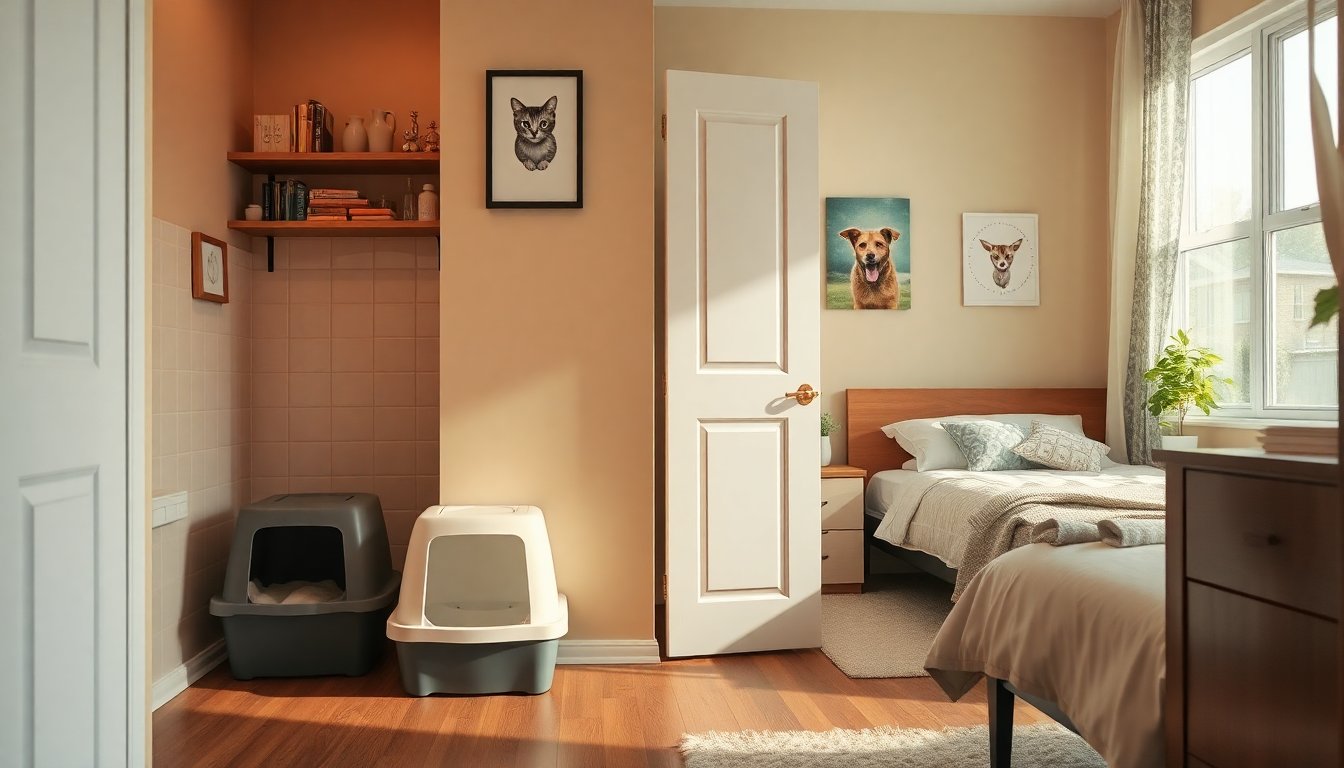
Separate litter areas usually work better than clustering every box in a single corner.
Signs you may not have enough litter boxes
Your cats do not need to be having constant accidents for the setup to be failing.
Watch for signs like:
- one cat waiting outside the box area
- hesitation before entering
- frequent sniffing, then walking away
- peeing or pooping just outside the box
- accidents in bathtubs, laundry piles, rugs, or corners
- increased tension between cats near litter areas
- one cat rushing to use a freshly cleaned box, which can be one clue that the current setup feels crowded or not clean enough during the day
These signs do not always mean the number of boxes is the only problem, but they are strong clues that the current setup needs work.
If a cat suddenly stops using the litter box, strains, urinates frequently, or seems uncomfortable, do not assume it is just a setup issue. Litter box avoidance can also have a medical cause, and that is when a prompt vet check matters. This article on warning signs your indoor cat may be sick is a useful next step if the behavior feels sudden or unusual.
Can fewer boxes work if they are bigger, cleaner, or automatic?
Sometimes, yes. But those factors help most when they support a good setup rather than replace it entirely.
Box size
A larger box gives a cat more room to turn, dig, and choose a clean spot. In multi-cat homes, that extra space can matter a lot.
If you are trying to make a smaller number of boxes work, undersized boxes make that much harder.
Covered vs. uncovered
Some owners prefer covered boxes for odor control or appearance, but many cats are more comfortable with open designs. In a multi-cat home, that matters because a covered box can feel more confining, and some cats dislike entering an enclosed space if another cat may be nearby.
If you are still deciding which style fits your home, covered vs. uncovered litter boxes is a useful comparison.
Cleanliness
The fewer boxes you have, the less margin for error you get.
A multi-cat home with spotless boxes may function better than a home with the “right” number of boxes that are not cleaned often enough. If you are trying to keep a smaller setup working, scooping frequency becomes even more important.
Do robotic litter boxes count?
An automatic litter box can help with cleanliness, but it should not automatically be treated as a full replacement for extra boxes in every home.
Some cats love them. Some avoid them. Some households use one robotic box successfully as part of the overall setup, while others still need several traditional boxes because not every cat will use the automatic one comfortably.
It is better to think of a robotic litter box as a tool that may improve maintenance, not a magic pass to ignore the need for access and choice.
If you are comparing box types for a shared household, our guide to the best litter boxes for multiple cats can help you narrow down which styles make sense.
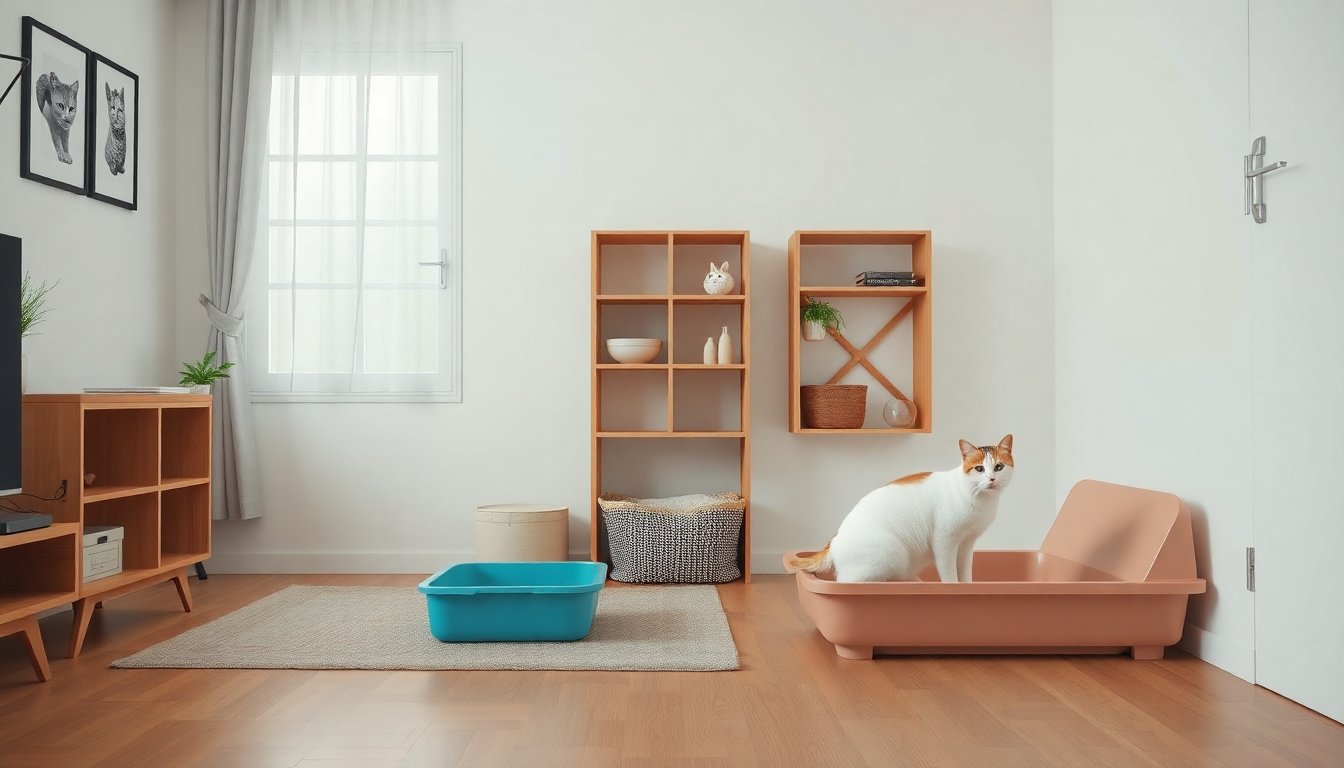
In smaller homes, separation, size, and cleanliness often matter before adding decorative complexity.
A simple checklist for your current setup
Your current setup is probably on the right track if:
- each cat has more than one reasonable bathroom option
- boxes are in separate areas, not all clustered together
- the boxes are large enough for comfortable use
- they stay acceptably clean throughout the day
- no cat seems to guard, block, or avoid the litter area
- you are not seeing near-miss accidents, hesitation, or stress around bathroom routines
If your setup is not working and you cannot make a big change all at once, fix things in this order:
- spread boxes farther apart
- swap cramped boxes for larger ones
- increase scooping frequency
- add the extra box if problems continue
If several of those points are missing, adding a box or improving placement is often the simplest next fix.
If your household still feels tense around litter routines, the Multi-Cat Home Setup Guide is a helpful companion piece because litter box success is often tied to the bigger home layout.
Final takeaway
For most multi-cat homes, one litter box per cat plus one extra is still the best starting point.
It is not about following a rule for the sake of it. It is about giving cats enough access, privacy, and flexibility that bathroom habits stay boring, predictable, and low-stress.
If you live in a small home, do not panic if the ideal setup takes some creativity. Start with the rule, spread the boxes out as much as you can, keep them clean, and watch how your cats actually behave. Their comfort will tell you whether your current setup is working.