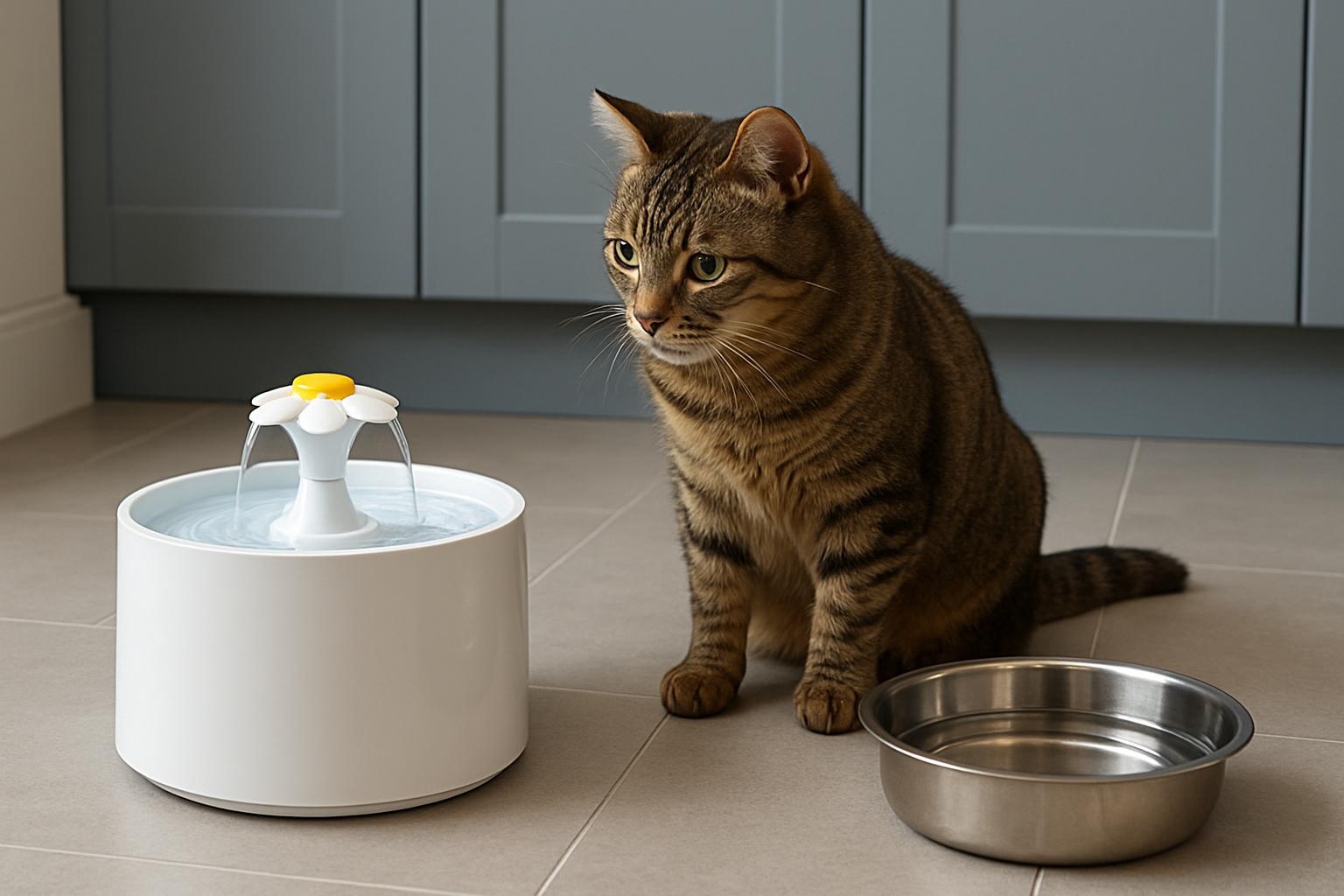
If you’ve ever watched your cat nudge a water glass off the counter or paw at a dripping faucet, you already know they have opinions about water. The debate between cat fountains and water bowls is real — and the answer isn’t as simple as “just get the fancier thing.” Both options have genuine strengths and specific situations where they shine. Let’s break it all down so you can make the best choice for your cat.
Why Hydration Matters So Much for Cats
Cats evolved in arid environments and historically got most of their moisture from prey. Today’s dry-kibble-fed cats often don’t drink enough water on their own, which can contribute to kidney disease, urinary tract problems, and chronic dehydration. Whether you choose a fountain or a bowl, encouraging your cat to drink more is one of the most impactful things you can do for their long-term health.
Before you decide, check out our complete cat hydration guide to understand how much water your cat actually needs each day.
Cat Water Fountains: Pros and Cons
The Case for Fountains
Cat fountains continuously circulate water, which does two important things: it aerates the water (adding oxygen, which many cats prefer) and it keeps water moving so it feels “fresh.” Many cats are instinctively drawn to running water — it signals freshness in the wild.
Key advantages of cat fountains:
- Cats often drink more. Studies and anecdotal evidence from vets alike suggest cats with fountains tend to consume more water overall.
- Built-in filtration. Most fountains include carbon filters that remove chlorine, sediment, and odors — giving your cat cleaner water than a bowl left out all day.
- Great for cats with kidney issues. Vets frequently recommend fountains for cats with chronic kidney disease or urinary problems, since hydration is critical.
- Ideal for picky drinkers. If your cat ignores still water, a fountain is often the solution.
Downsides of Cat Fountains
- Higher upfront cost. A decent fountain runs $25–$80. Premium ceramic or stainless models can top $100.
- Ongoing maintenance required. Filters need regular replacement (usually every 2–4 weeks), and the fountain needs weekly deep cleaning to prevent biofilm buildup.
- Noise. Most fountains make some noise — from a gentle trickle to a louder gurgle depending on design and water level. Some cats (and owners) find this calming; others find it annoying.
- Power dependency. They need an outlet and stop working if the power goes out.
If you’re interested in the best options on the market, our best cat fountains guide covers top picks across every budget and material.
Traditional Water Bowls: Pros and Cons
The Case for Bowls
Don’t underestimate the humble water bowl. It’s simple, reliable, and requires no power or filters. For many cats — especially those who aren’t picky — a clean, wide, regularly refreshed bowl works perfectly fine.
Key advantages of water bowls:
- Low upfront cost. A quality ceramic or stainless steel bowl costs $5–$20.
- Zero maintenance complexity. Rinse and refill daily, wash weekly — that’s it.
- Silent. No motor, no noise.
- No power required. Bowls work everywhere, always.
- Travel-friendly. Easy to pack and use anywhere.
Downsides of Water Bowls
- Water goes stale faster. Still water accumulates dust, saliva, and bacteria more quickly than circulating water.
- Some cats refuse to drink from them. Especially cats who’ve become accustomed to running water.
- Require frequent refilling. If you’re away for long stretches, a bowl may run low.
Hygiene Comparison: Which Is Cleaner?
This is where it gets nuanced. A well-maintained fountain is significantly cleaner than a neglected bowl — but a consistently cleaned bowl beats a poorly maintained fountain every time.
Bowls: Without daily rinsing and weekly scrubbing, bowls develop biofilm (that slippery coating you feel inside a water dish) and bacteria. Plastic bowls are the worst offenders — they scratch easily and harbor germs. Stick to ceramic or stainless steel.
Fountains: The filter helps, but biofilm still builds up in tubing, on the pump, and in crevices. Fountains that aren’t cleaned weekly can actually become less hygienic than a freshly washed bowl. Learn the right routine in our guide to how to clean a cat fountain.
Bottom line: Either option can be hygienic — it’s about your commitment to maintenance.
Cost Analysis: Fountain vs. Bowl
Upfront Costs
- Bowl: $5–$25 for a quality ceramic or stainless bowl
- Fountain: $25–$120+ depending on material and brand
Ongoing Costs
- Bowl: Essentially free (just water and dish soap)
- Fountain: Filter replacement packs cost $10–$20 every 1–3 months, plus minimal electricity (~$1–3/year for most models)
Over a year, a fountain costs roughly $40–$80 more than a bowl in ongoing costs. Whether that’s worth it depends on your cat’s health needs and drinking habits.
Material Matters: Choosing the Right Build
Regardless of which type you choose, material is critical:
- Plastic: Cheapest, but scratches easily and can cause or worsen feline acne. Best avoided for long-term use.
- Ceramic: Non-porous, easy to clean, heavy enough that cats can’t tip it easily. Our top picks are in the best ceramic cat fountains roundup.
- Stainless Steel: Durable, hygienic, dishwasher-safe. Great for multi-cat households. See our best stainless steel cat fountains guide for recommendations.
Noise Considerations
Fountain noise varies a lot by model. A nearly empty fountain can sound like a sputtering drain. A well-filled fountain might produce a gentle, white-noise trickle. If you’re light-sensitive to sound in the bedroom (where many cats prefer their water), go for a model with adjustable flow or a quiet pump — or choose a bowl instead.
Some cats are actually attracted to the sound of a fountain. It can double as an auditory enrichment cue that reminds them to drink.
Which Is Right for Your Situation?
Choose a Fountain If:
- Your cat has kidney disease, urinary crystals, or a vet-recommended need to increase water intake
- Your cat ignores their water bowl
- You’re away from home for 8+ hours daily
- You want a set-it-and-maintain-it solution
Choose a Bowl If:
- Your cat is a reliable drinker with no health concerns
- You prefer simplicity and hate the idea of cleaning a pump
- You’re traveling or need a portable solution
- Budget is a priority
- Your cat is noise-sensitive
Final Verdict
For most cats — especially indoor-only cats on dry food — a fountain is the better long-term investment. The hydration benefits alone can help prevent expensive vet bills down the road. But a fresh, clean, appropriately sized ceramic or stainless bowl is never a bad choice, especially for easygoing drinkers.
The worst option? A dirty bowl or a never-cleaned fountain. Whichever you choose, consistent cleaning makes all the difference.
🐱 Free Indoor Cat Enrichment Checklist
Get our printable daily enrichment checklist — designed for busy cat owners who want to keep their indoor cats happy and healthy.
Coming soon — check back for the download link!