
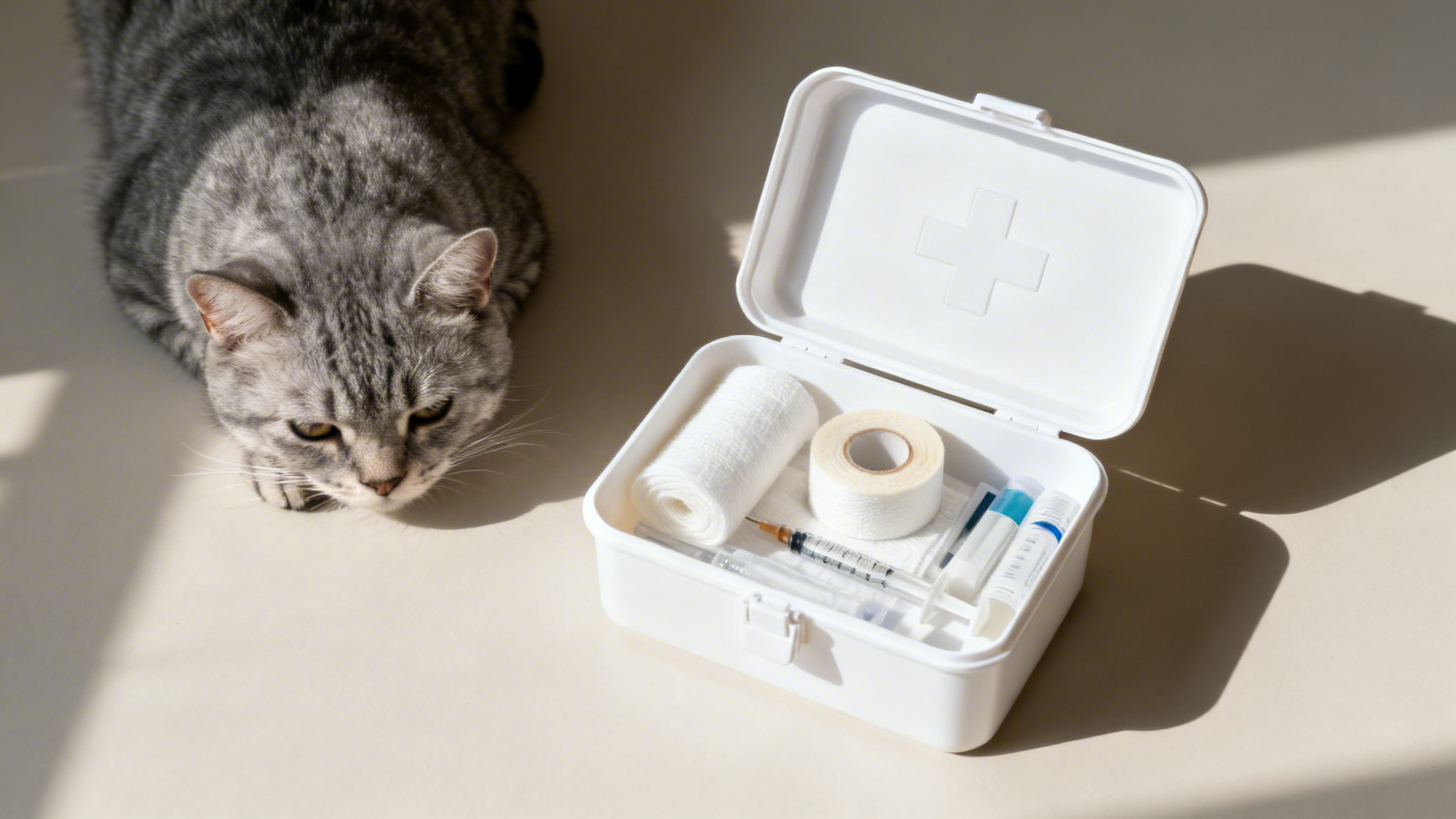
Even the safest indoor environment can’t prevent every accident or illness. From minor cuts to sudden illness, having a well-stocked first aid kit can make the difference between a minor incident and a veterinary emergency. Let’s build the perfect cat first aid kit and learn when to use it.
Why Indoor Cats Need First Aid Kits
You might think indoor cats face fewer risks than outdoor cats—and you’d be right. But indoor cats still encounter hazards: they can cut themselves on broken glass, ingest something toxic, develop sudden allergic reactions, or experience health emergencies like seizures or difficulty breathing.
Having supplies on hand means you can:
- Stabilize your cat before reaching the vet
- Treat minor injuries at home
- Respond quickly to emergencies when every second counts
- Avoid panicked late-night searches for supplies
The Complete Indoor Cat First Aid Kit
Here’s everything your kit should contain, organized by category:
Basic Medical Supplies
- Gauze pads (various sizes, sterile) – for wounds and pressure application
- Gauze rolls – to secure bandages
- Medical tape – both adhesive and non-adhesive (Vet Wrap)
- Cotton balls and swabs – for cleaning wounds
- Sterile saline solution – for flushing wounds and eyes
- Hydrogen peroxide (3%) – ONLY to induce vomiting if directed by a vet
- Antibiotic ointment – plain, without pain relievers (many are toxic to cats)
- Styptic powder – stops bleeding from nail trims gone wrong
Restraint and Safety
- Thick towels or blanket – to safely restrain an injured or frightened cat
- Muzzle or E-collar – even gentle cats may bite when in pain
- Cat carrier – always have one accessible for emergency vet trips
Tools and Instruments
- Digital thermometer – rectal thermometers are most accurate for cats
- Tweezers – for splinters or ticks
- Scissors – blunt-tipped for safety
- Nail clippers – in case of torn nails
- Flashlight – to examine mouth, ears, and wounds
- Syringe or eyedropper – for administering oral medications or fluids
Medications (Vet-Approved Only)
Important: Never give human medications without explicit veterinary approval. Many are toxic to cats. Only include these if your vet has prescribed them:
- Any prescribed medications your cat currently takes
- Antihistamine (like diphenhydramine, vet-approved dose only)
- Anti-diarrheal (as directed by your vet)
Reference Materials
- Your vet’s contact information – plus after-hours emergency number
- Nearest emergency vet clinic – name, address, phone, directions
- Pet Poison Control – ASPCA: (888) 426-4435 or Pet Poison Helpline: (855) 764-7661
- Cat’s medical records – vaccination history, medication list, known allergies
- Cat first aid guide – printed or bookmarked on your phone
Optional But Helpful
- Glucose or corn syrup – for diabetic emergencies
- Activated charcoal – if directed by poison control
- Instant cold pack – for swelling or heat stroke
- Emergency heating pad – for shock or hypothermia
- Petroleum jelly – for rectal thermometer use
- Disposable gloves – for sanitary treatment
How to Use Your First Aid Kit
Having supplies is only half the battle. You need to know when and how to use them.
Minor Cuts and Scrapes
When to treat at home: Small, superficial cuts with minimal bleeding
How to treat:
- Gently restrain your cat with a towel if needed
- Flush the wound with sterile saline solution
- Pat dry with clean gauze
- Apply a thin layer of antibiotic ointment (plain, no pain relievers)
- Monitor for signs of infection: redness, swelling, discharge, or if your cat licks excessively
When to see the vet: Deep cuts, puncture wounds, or any wound that won’t stop bleeding after 5 minutes of pressure
Nail Bleeding (From Over-Trimming)
Treatment:
- Apply styptic powder directly to the bleeding nail
- Apply gentle pressure with gauze for 30 seconds
- If no styptic powder, use flour or cornstarch
- Keep your cat calm and confined for 30 minutes to prevent re-bleeding
Taking Your Cat’s Temperature
Normal cat temperature: 100.5-102.5°F (38-39°C)
How to do it:
- Lubricate the thermometer tip with petroleum jelly
- Have someone gently restrain your cat
- Lift the tail and insert about 1 inch into the rectum
- Hold in place for 2 minutes (or until digital thermometer beeps)
- Clean the thermometer with alcohol after use
When to call the vet: Temperature above 103°F or below 99°F
Eye Flushing
For debris, dust, or minor irritation:
- Gently restrain your cat
- Use sterile saline solution
- Flush from inner corner outward
- Do not touch the eye directly
Vet visit required: Any eye injury, cloudiness, severe redness, or if your cat keeps the eye closed
When to Use First Aid vs. Go to the Vet
This is the most critical knowledge. First aid is for stabilization and minor issues—not replacement for veterinary care.
Minor Issues (First Aid May Be Sufficient)
- Small, superficial cuts
- Minor nail bleeding
- Small splinters you can easily remove
- Brief, isolated vomiting (no blood, no repeated episodes)
- Minor eye irritation from dust
Urgent Vet Visit (Same Day)
- Wounds that won’t stop bleeding
- Deep cuts or punctures
- Limping or signs of pain
- Vomiting or diarrhea lasting more than 24 hours
- Not eating for 24+ hours
- Excessive drinking and urination
- Straining to urinate with little output
Emergency Vet NOW (Don’t Wait)
- Difficulty breathing – open-mouth breathing, wheezing
- Suspected poisoning – call poison control first for guidance
- Seizures – especially if lasting more than 2 minutes or multiple seizures
- Trauma – falls from height, being stepped on, etc.
- Bleeding that won’t stop – after 5 minutes of direct pressure
- Severe lethargy or unresponsiveness
- Urinary blockage – straining with no urine output (life-threatening in male cats)
- Bloated, hard abdomen with signs of distress
- Pale or blue gums
- Temperature above 105°F or below 98°F
Golden Rule: When in doubt, call your vet. They can help you determine whether you need to come in or can monitor at home.
Emergency Contact Information
Keep these numbers saved in your phone AND posted on your refrigerator:
Primary Contacts
- Your regular veterinarian: _____________
- After-hours emergency clinic: _____________
- Backup emergency clinic: _____________
Poison Control
- ASPCA Animal Poison Control: (888) 426-4435 (consultation fee applies)
- Pet Poison Helpline: (855) 764-7661 (consultation fee applies)
Your Cat’s Information
Keep a card with:
- Cat’s name, age, breed
- Current medications
- Known allergies
- Microchip number
- Your contact information
This information is crucial if someone else needs to take your cat to the vet in an emergency.
Where to Store Your Kit
Your first aid kit is useless if you can’t find it in an emergency. Store it:
- In an easily accessible location
- Where everyone in the household knows to find it
- Away from curious cats (who might ingest medications)
- In a portable container (in case you need to grab it and go)
Consider keeping a smaller “travel kit” in your car for trips to the vet or if you travel with your cat.
Maintenance: Keep Your Kit Current
Set a recurring calendar reminder every 6 months to:
- Check expiration dates on medications and ointments
- Replace used items
- Update contact information
- Verify your emergency vet clinic is still operating at that location
- Update your cat’s medical information
- Test your thermometer battery
Special Considerations for Multi-Cat Households
If you have multiple cats:
- Stock extra gauze, bandages, and towels
- Keep separate medical records for each cat
- Have multiple carriers available (you may need to take more than one cat to the vet)
- Label any individual medications clearly
First Aid Training for Cat Owners
Consider taking a pet first aid course. Many organizations offer online or in-person training:
- American Red Cross Pet First Aid
- Local animal hospitals or rescue organizations
- Online courses through veterinary associations
These courses teach CPR, the Heimlich maneuver for cats, wound care, and emergency response protocols.
Final Thoughts: Preparedness Brings Peace of Mind
Your first aid kit is like insurance: you hope you never need it, but you’re grateful when you do. The small investment of time and money to assemble a comprehensive kit pays dividends in emergency situations.
Remember, first aid is exactly that—first aid. It’s what you do before professional veterinary care, not instead of it. Your kit helps you respond calmly and effectively, potentially saving your cat’s life or preventing a minor issue from becoming a major one.
Take an hour this weekend to assemble your kit. Your future self (and your cat) will thank you.