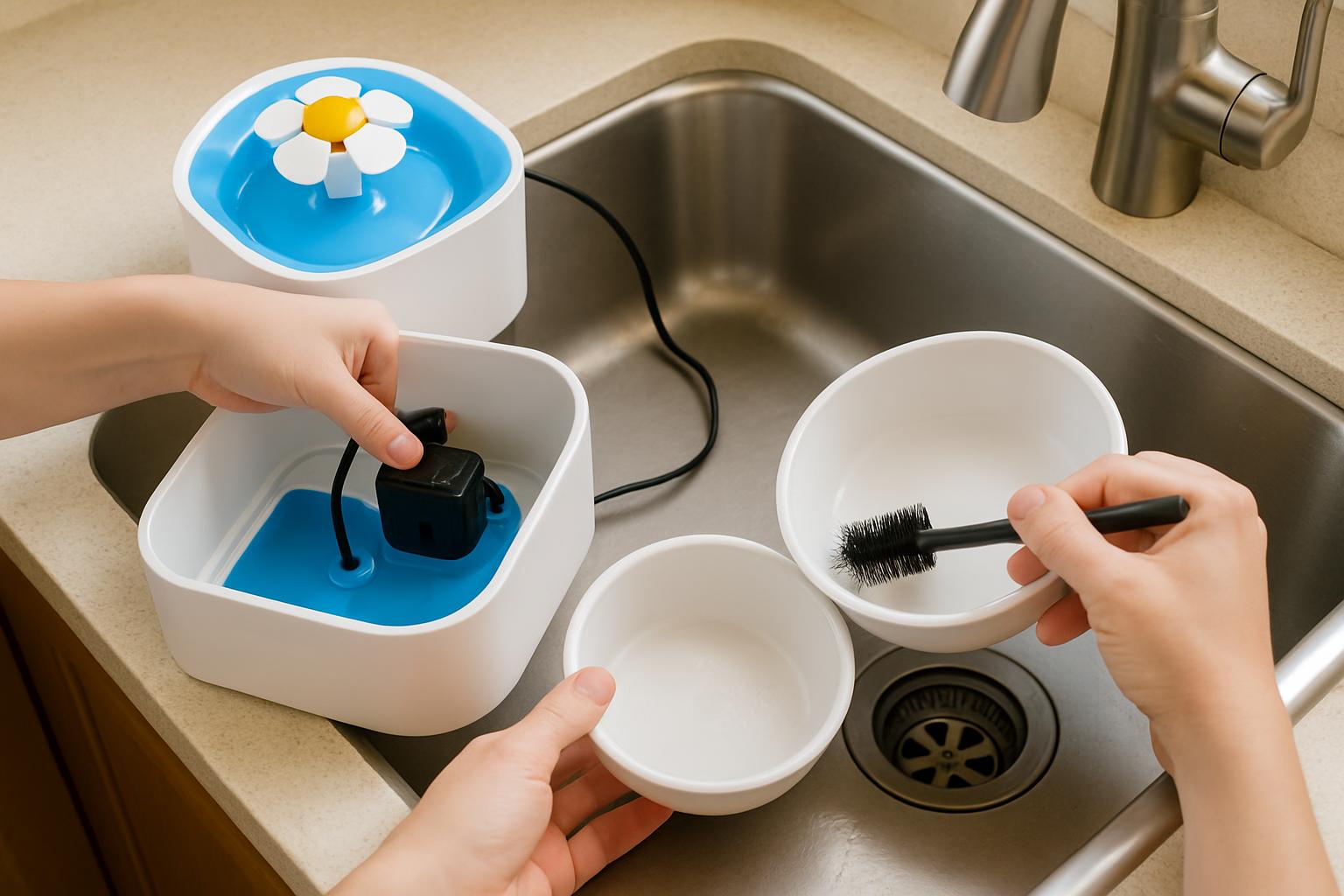
Cat fountains are fantastic for keeping your cat hydrated — but only when they’re clean. A neglected fountain can harbor bacteria, mold, and biofilm that make your cat sick or drive them to avoid the water source entirely. The good news: with the right schedule, fountain maintenance takes less time than you think.
Here’s exactly how often you should clean your cat fountain, what to do at each interval, and what signs mean you should clean it right now.
Why Cleaning Schedule Matters
Cat saliva, airborne dust, shed fur, and food particles all find their way into your fountain. Without regular cleaning, these materials feed bacterial growth and create biofilm — that slippery film you feel when you run your fingers along the inside of a water dish. Biofilm isn’t just unpleasant; it can contain harmful bacteria like Pseudomonas and E. coli.
Even with a good filter, biofilm develops on surfaces the filter doesn’t directly touch. Regular physical cleaning is non-negotiable. Need to better understand how hydration affects your cat’s health overall? Our cat hydration guide covers the full picture.
Daily Fountain Care
Quick daily tasks take under two minutes and make a significant difference:
- Top off the water level. Low water causes pump strain, louder noise, and can burn out the motor.
- Visually inspect the water. Look for floating debris, cloudiness, or discoloration.
- Rinse the top tray or bowl area if your fountain has removable upper sections.
- Give it a quick sniff. If the water smells off, it’s time for an immediate clean — don’t wait for your scheduled day.
Weekly Cleaning Routine
Every 7 days, do a thorough clean of all accessible parts:
- Unplug the fountain before touching anything.
- Disassemble fully. Remove the pump, filter, trays, and any other parts.
- Rinse all parts under warm running water to remove loose debris.
- Scrub with a soft brush or sponge and mild, unscented dish soap. Use a small bottle brush or pipe cleaner for narrow tubing and crevices.
- Rinse thoroughly. Soap residue can deter cats from drinking.
- Clean the pump separately. Open the pump housing (most have a simple latch), remove any fur or debris from the impeller, and rinse well.
- Reassemble, refill, and plug in.
If you’re in the market for a fountain that’s easier to clean, check out our best cat fountains guide — we note which models are dishwasher-safe and disassemble most easily.
Monthly Deep Cleaning
Once a month, go deeper:
- Soak components in white vinegar solution. Mix equal parts white vinegar and water and let all parts soak for 15–30 minutes. Vinegar dissolves mineral deposits (limescale) that regular cleaning misses.
- Scrub all surfaces again after soaking, paying attention to any visible white mineral buildup.
- Run a cleaning cycle: After reassembly, fill with clean water and run the fountain for 10 minutes before draining to flush out any remaining vinegar.
- Inspect the pump impeller for wear and buildup that a weekly rinse didn’t catch.
- Check the tubing for discoloration or sliminess — if it can’t be fully cleaned, replace it.
For comparison on how fountain cleaning compares to the simplicity of a water bowl, see our fountain vs bowl breakdown.
Filter Replacement Timing
Filters don’t last forever — and running a clogged filter is worse than running no filter at all. Here’s a general guide:
- Activated carbon filters: Replace every 2–4 weeks. Carbon loses its effectiveness quickly once saturated with chlorine and organics.
- Foam/sponge pre-filters: Rinse weekly, replace every 4–8 weeks.
- Ion exchange resin filters: Replace every 4–6 weeks.
Always follow your specific fountain manufacturer’s recommendation. If your tap water is hard (high mineral content), replace filters on the shorter end of the range. If you have multiple cats, replace more frequently — more saliva means faster saturation.
Signs your filter needs immediate replacement:
- Water has a noticeable odor or odd taste (your cat refuses to drink)
- The filter looks visibly brown, clogged, or compressed
- Flow rate has slowed significantly
Signs Your Fountain Needs Immediate Cleaning
Don’t wait for your scheduled cleaning day if you notice any of these:
- Slimy feeling inside the bowl or tray — biofilm has established itself
- Cloudy or discolored water — bacteria or mineral bloom
- Unusual or unpleasant odor — bacterial growth
- Pink or orange tinge — this is Serratia marcescens, a bacteria common in bathrooms and kitchens that loves wet surfaces
- Visible mold spots — black or green specks anywhere
- Your cat suddenly stops using it — cats smell problems before you see them
- Louder than usual pump noise — debris may be caught in the impeller
Health Risks of a Dirty Fountain
A neglected fountain is not just off-putting — it’s a genuine health risk. Contaminated water sources can contribute to:
- Upper respiratory infections from airborne contaminants settling in standing water
- Urinary tract infections (UTIs) — bacteria consumed through water can affect the urinary system
- Gastrointestinal upset — vomiting or diarrhea after drinking from a contaminated source
- Feline acne — particularly with plastic fountains that harbor bacteria near the chin
- Dehydration from avoidance — cats will stop drinking rather than drink foul water, leading to serious secondary conditions
Material-Specific Cleaning Tips
Plastic Fountains
Plastic is the hardest material to keep clean. It scratches easily (even from normal use), and those micro-scratches harbor bacteria that scrubbing can’t fully remove. Use only soft sponges — never abrasive pads. Consider replacing plastic fountains every 1–2 years even with good cleaning habits. This is one reason many cat owners upgrade to ceramic or stainless steel.
Ceramic Fountains
Ceramic is non-porous and resists bacterial buildup far better than plastic. Most ceramic fountains are dishwasher-safe (top rack), making weekly cleaning much easier. Check for chips or cracks — a cracked glaze can trap bacteria just like plastic scratches. Our best ceramic cat fountains roundup highlights the most durable options.
Stainless Steel Fountains
Stainless steel is highly hygienic, resists biofilm, and is typically dishwasher-safe. Watch for cheap grades of stainless — food-grade 304 stainless is what you want. Avoid abrasive scrubbing pads that can scratch the surface and create bacteria-harboring grooves. Stainless fountains are among the easiest to maintain over the long term.
Quick Reference: Fountain Cleaning Schedule
- ✅ Daily: Top off water, visual inspection, quick rinse of upper tray
- ✅ Weekly: Full disassembly, soap-and-water scrub, pump cleaning, reassemble
- ✅ Monthly: Vinegar soak, deep mineral deposit removal, full component inspection
- ✅ Every 2–4 weeks: Replace carbon filters
- ✅ Immediately: Any time you see slime, smell odor, see discoloration, or your cat stops drinking
A clean fountain is one of the simplest, highest-impact things you can do for your cat’s long-term health. Get into the habit and it becomes second nature — just like any other part of your cat care routine.