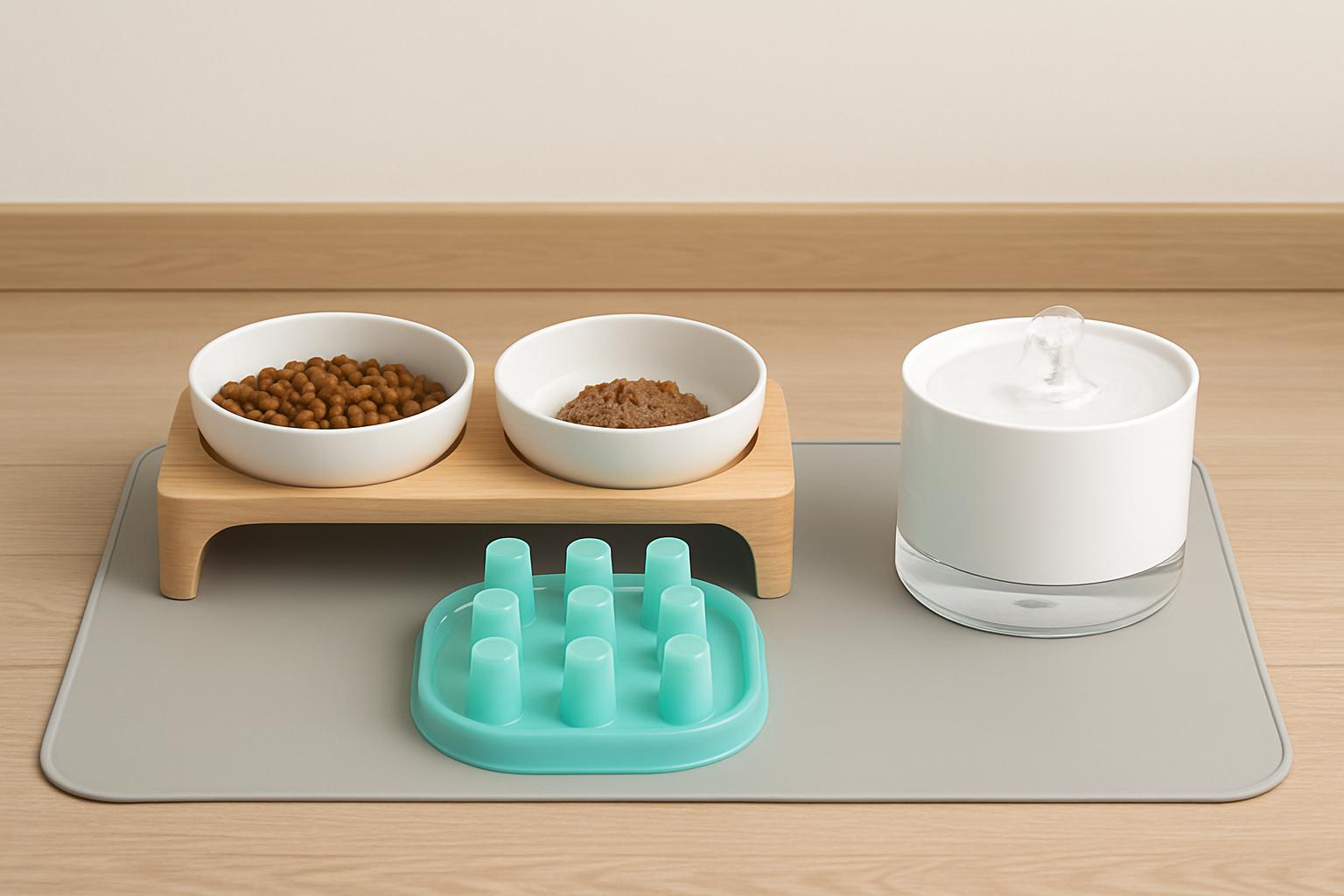
A feeding station sounds fancy, but at its core it’s just a thoughtful, dedicated space where your cat eats, drinks, and feels comfortable doing both. Getting this right makes a bigger difference than most owners realize — it can reduce stress, prevent resource guarding in multi-cat homes, improve digestion, and make mealtime something your cat looks forward to rather than approaches with hesitation.
Let’s build a better one together.
The Basics: What a Good Feeding Station Needs
Before getting into specifics, here’s what every effective feeding station should have:
- Appropriate bowl(s) — wide and shallow to avoid whisker discomfort (see our guide on whisker fatigue and bowl selection)
- A defined, consistent location — cats are creatures of habit and prefer their food in the same spot
- Easy-to-clean surfaces — a mat beneath bowls protects floors and is easy to shake out or wipe
- Separation from the litter box — at minimum, in a different room; ideally on a different floor
- Access without ambush risk — cats need to see their surroundings while eating, especially in multi-cat homes
Elevated vs. Floor Feeding: Which Is Better?
This is one of the most debated topics in cat nutrition and welfare. Here’s the honest breakdown:
Arguments for Elevated Feeding
- Can reduce neck and shoulder strain, particularly for older cats or those with arthritis
- Some cats eat more comfortably with a slight upward angle
- Keeps bowls more visible and accessible
- May reduce regurgitation in cats who eat quickly (though evidence is mixed)
Arguments for Floor Feeding
- Natural eating position for most cats — in the wild, cats eat prey on the ground
- Some vets argue elevation can increase aerophagia (air swallowing) and gas
- Floor feeding is universally accessible for cats of all ages and mobility levels
The practical answer: If your cat eats comfortably and without issues, floor feeding is fine. If your cat is a senior, has mobility issues, or regularly vomits after meals, try a modest elevation of 2–4 inches. You don’t need anything dramatic — a thick book under the mat works as a test.
Ideal Placement for a Feeding Station
Location matters more than most owners realize:
- Quiet, low-traffic area: Avoid placing bowls in busy hallways, near appliances that make sudden noises (dishwasher, dryer), or in spots where children or dogs frequently pass through.
- Corner or wall-adjacent position: Cats feel safer eating when their back is protected and they can see the room. A corner spot with sightlines to the door is ideal.
- Away from the litter box: Cats instinctively avoid eating near where they eliminate. A common mistake is placing both in the same small laundry room.
- Consistent location: Don’t move the feeding station. Cats establish strong location memories and unexpected changes cause stress.
Multi-Cat Feeding Strategies
In a multi-cat home, feeding stations require more thought. Resource competition is one of the most common sources of stress and conflict in multi-cat households.
Separation by Space
The gold standard: each cat eats in a separate room with the door closed at mealtime. This eliminates competition entirely. Yes, it takes more coordination — but for cats with food aggression or significant size differences, it’s the most humane approach.
Separate Stations in the Same Space
If full separation isn’t practical, space feeding stations well apart (at least 4–6 feet) and orient them so cats eating at adjacent stations aren’t facing each other. Side-by-side facing bowls can increase tension even in cats that normally get along.
Vertical Feeding Separation
In multi-level homes, use different floors for different cats. A dominant cat often claims the ground floor; a more timid cat can eat comfortably on an upper level without stress. Our multi-cat home setup guide covers this in depth.
Timed/Scheduled Feeding
Free-feeding (leaving food out all day) in multi-cat homes almost always leads to one cat overeating and others being underfed. Scheduled meals — two to three times per day — let you monitor intake and separate cats at mealtime. Pair this with automatic feeders for two cats to maintain schedules even when you’re away.
Puzzle Feeders and Slow Feeders
If your cat is a fast eater (common in cats who were strays, had food competition as kittens, or are simply enthusiastic), a puzzle or slow feeder at the station serves double duty: it slows eating to reduce vomiting and provides mental stimulation at every meal.
Types to consider:
- Maze feeders: Food sits in a tray with low walls or dividers. Cats must use their paws or nose to maneuver pieces out.
- Slow feeder bowls: Raised ridges and bumps in the bowl surface force cats to eat around obstacles.
- Licki mats: Great for wet food — spread food across the textured mat surface for extended engagement.
- Snuffle mats: Dry kibble hides in fabric folds; cats use their nose to find it.
Our guide to the best puzzle feeders for cats has tested recommendations across price points.
Important note: Choose puzzle feeders with openings wide enough to avoid whisker contact. Deep, narrow channels can cause whisker fatigue even in a puzzle context.
The Water-Near-Food Debate
Conventional wisdom says keep water away from food — and there’s real logic behind it. In the wild, cats instinctively avoid water sources near carcasses (prey), since decomposing prey near water could signal contamination. Some cats apply this instinct to their bowls: food and water too close together can cause some cats to drink less.
The general recommendation is to place water at least 3–4 feet from the food bowl, ideally in a different corner of the room or in another room entirely. Many cats drink more when their water station is treated as a separate destination.
That said: some cats don’t care. Watch your cat’s drinking behavior. If they’re drinking well with water next to food, don’t overthink it. For more on optimizing hydration, visit our indoor cat wellness guide.
DIY Feeding Station Ideas
You don’t need to spend a lot to build a great feeding station:
- Bamboo cutting board + silicone mat: A raised cutting board with a silicone mat on top creates an elevated, easy-clean surface for under $20.
- Small wooden step stool: A basic wooden step stool from a thrift store becomes a perfect two-level station — food on top, water on the lower step (or the reverse, if you want water nearby).
- Repurposed tray with non-slip mat: A shallow wooden or metal tray under the bowls catches spills and crumbs, keeps the area defined, and makes floor cleaning effortless.
- Built-in cabinet nook: If you’re handy, a small cabinet cubby at floor level creates a cozy, contained feeding space that hides the “mess” aesthetically.
- Ikea hack station: The RÅSKOG rolling cart or similar makes a portable, multi-level feeding station that’s easy to move and clean.
Final Feeding Station Checklist
- ✅ Wide, shallow bowls (5+ inches, low sides)
- ✅ Quiet, low-traffic location with sightlines
- ✅ Away from litter box (different room minimum)
- ✅ Water placed separately from food
- ✅ One bowl per cat plus one extra in multi-cat homes
- ✅ Easy-clean mat beneath bowls
- ✅ Scheduled meals rather than free-feeding
- ✅ Puzzle or slow feeder if cat eats too fast
Small improvements to your feeding setup can have an outsized impact on your cat’s stress levels, digestion, and willingness to eat. Start with the basics and build from there — even just swapping the bowl and moving the location can make a difference you’ll notice within a week.
🐱 Free Indoor Cat Enrichment Checklist
Get our printable daily enrichment checklist — designed for busy cat owners who want to keep their indoor cats happy and healthy.
Coming soon — check back for the download link!