
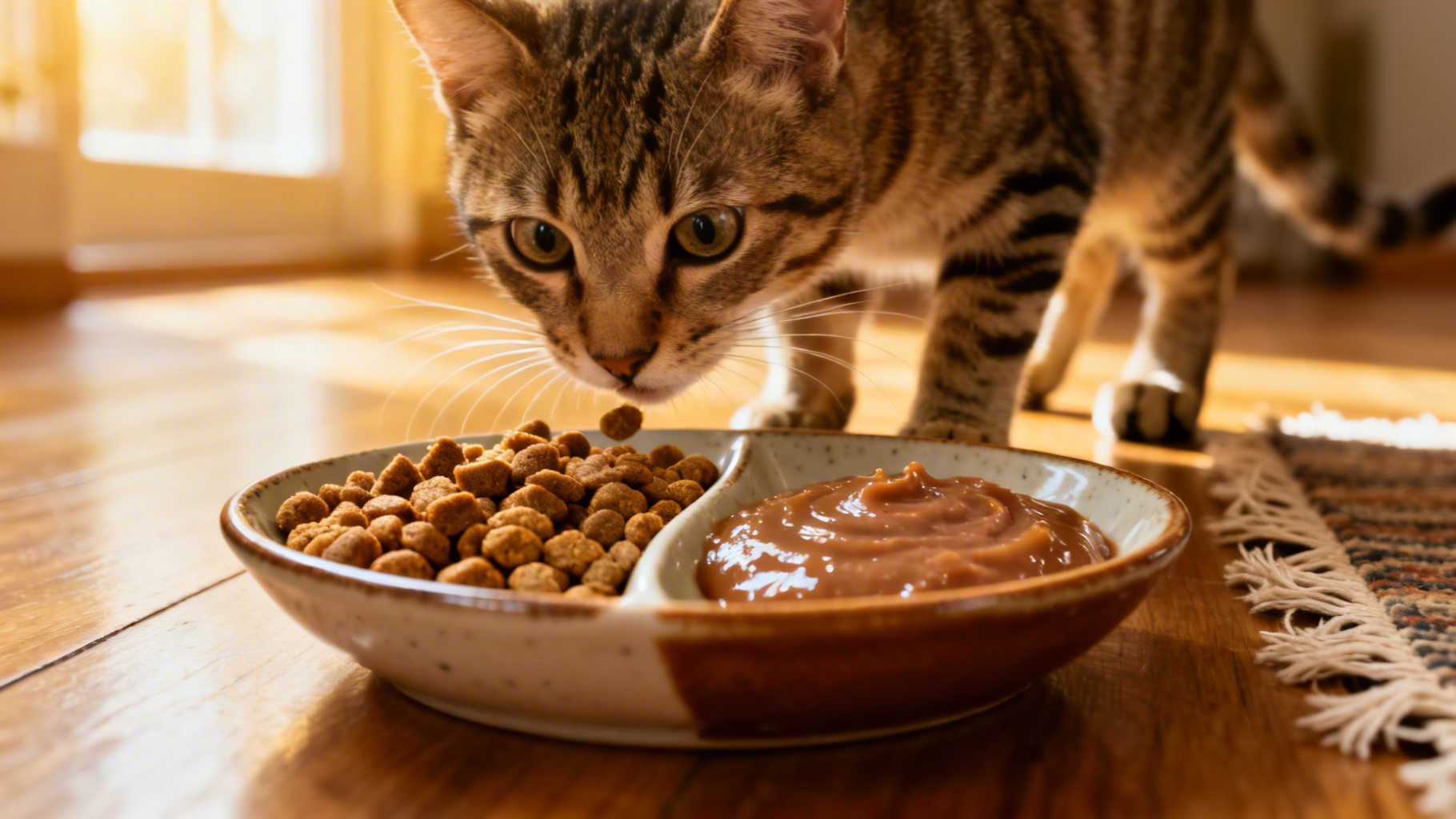
Walk down the cat food aisle and you’ll face an overwhelming decision: dry kibble or wet food? Both have passionate advocates, and the debate rages on in vet offices, online forums, and among cat owners everywhere. The truth? There’s no one-size-fits-all answer. The best choice depends on your cat’s individual health needs, your lifestyle, and often, a combination of both. Let’s break down the nutritional science, practical considerations, and what really matters for your indoor cat’s health.
The Nutritional Breakdown
Understanding the fundamental differences between dry and wet food helps you make an informed decision.
Moisture Content: The Biggest Difference
Dry food: 6-10% moisture
Wet food: 70-80% moisture
This isn’t a trivial difference—it’s the single most significant distinction and affects everything from hydration to calorie density.
Protein Content
When comparing protein percentages, you must account for moisture content.
Example comparison:
- Dry food: 30% protein (as-fed basis)
- Wet food: 10% protein (as-fed basis)
This looks like dry food wins, right? Wrong. You must calculate protein on a dry matter basis (removing water from the equation).
Dry matter basis calculation:
- Dry food: 30% ÷ (100% – 10% moisture) = 33% protein
- Wet food: 10% ÷ (100% – 75% moisture) = 40% protein
On a dry matter basis, quality wet foods often contain MORE protein than dry foods. Cats are obligate carnivores and thrive on high-protein diets, so this matters.
Carbohydrate Content
Cats have little nutritional need for carbohydrates. In the wild, their diet contains less than 5% carbs.
Typical carbohydrate content:
- Dry food: 30-50% carbohydrates (needed to hold kibble together)
- Wet food: 3-15% carbohydrates
High-carb diets are linked to obesity and diabetes in cats. Wet food’s lower carb content more closely mimics a cat’s natural diet.
Fat Content
Both dry and wet foods can provide adequate fat, though quality varies by brand. Look for:
- Named animal fats (chicken fat, fish oil) rather than generic “animal fat”
- Omega-3 and omega-6 fatty acids for skin and coat health
- Adequate fat for energy (cats need fat for calories, especially when eating low-carb)
Hydration: Wet Food’s Biggest Advantage
Cats evolved in desert environments and have a low thirst drive. They’re designed to get most of their moisture from prey (which is about 70% water—similar to wet food).
Why Hydration Matters
Chronic mild dehydration in cats contributes to:
- Kidney disease – The leading cause of death in senior cats
- Urinary crystals and stones – More common in males; can be life-threatening
- Constipation – Especially in senior and long-haired cats
- Bladder infections – Concentrated urine provides an environment for bacteria
Cats on Dry Food Don’t Drink Enough
Studies show cats on dry food don’t compensate by drinking more water. Even with constant access to fresh water, they remain in a state of mild dehydration.
Example:
- A cat eating 100g of wet food gets about 75ml of water from food
- A cat eating 100g of dry food gets only 10ml of water from food
- The dry-food cat would need to drink an additional 65ml to match the wet-food cat’s hydration
- Most don’t drink this much extra
Bottom line: Wet food significantly improves hydration, which is especially important for indoor cats with kidney issues or urinary problems.
Weight Management and Calorie Control
Indoor cats are prone to obesity—estimates suggest 50-60% of pet cats are overweight or obese. Food choice plays a major role.
Wet Food Advantages for Weight Management
Volume and satiety: Wet food provides more volume for fewer calories due to high water content. A cat can eat a larger portion and feel fuller while consuming fewer calories.
Example:
- 100 calories of dry food ≈ 1/4 cup (tiny portion)
- 100 calories of wet food ≈ 1 full can (satisfying portion)
Cats on wet food are less likely to beg or feel deprived.
Lower carbohydrates: High-carb diets promote fat storage. Wet food’s lower carb content helps with weight control.
Portion control: Wet food comes in discrete portions (cans/pouches), making it easier to control exactly how much your cat eats.
When Dry Food Might Help
Puzzle feeders: Dry kibble works well in puzzle feeders and slow-feeder toys, which can slow down fast eaters and provide mental enrichment.
Measured portions: With careful measuring and discipline, dry food can be part of a weight management plan—but many owners free-feed dry food, leading to overeating.
Dental Health: The Dry Food Myth
One of the most persistent myths in cat care is that dry food cleans teeth. Let’s address this directly.
The Reality
Dry food does NOT significantly clean teeth. Here’s why:
- Most cats swallow kibble whole or with minimal chewing
- When cats do chew, kibble often shatters, providing minimal abrasive action
- The parts of teeth that contact kibble (tips) aren’t where tartar typically accumulates
- Kibble doesn’t reach below the gum line where periodontal disease starts
- Many dry foods contain carbohydrates that can actually promote bacterial growth
What Actually Works for Dental Health
- Tooth brushing – The only truly effective home dental care
- Dental treats – Specifically designed dental treats with VOHC (Veterinary Oral Health Council) seal of approval
- Professional cleanings – Regular veterinary dental cleanings under anesthesia
- Special dental diets – Prescription dental foods designed with larger, denser kibble and specific coatings (these DO work, but regular dry food doesn’t)
The verdict: Don’t choose dry food for dental health. Choose it for other reasons, but commit to real dental care like brushing and professional cleanings.
Cost Comparison: What’s the Real Difference?
Dry food is cheaper per pound, but is it cheaper per calorie? Let’s break it down.
Example Cost Analysis
Premium dry food:
- $3.00/lb, 400 calories per cup
- 10-lb indoor cat needs ~200 calories/day = $0.38/day
- Monthly cost: ~$11.40
Premium wet food:
- $2.00 per 5.5 oz can, 150 calories per can
- 10-lb indoor cat needs ~200 calories/day = 1.33 cans = $2.66/day
- Monthly cost: ~$80.00
Result: Wet food costs approximately 7x more per day than dry food for the same caloric intake.
Ways to Make Wet Food More Affordable
- Buy in bulk – Many retailers offer cases at discounts
- Look for sales – Stock up when your preferred brands are on sale
- Subscribe and save – Online auto-ship programs often provide 5-15% discounts
- Mix with dry food – Even partially incorporating wet food provides benefits (see hybrid approach below)
- Choose store brands – Some store-brand wet foods offer good quality at lower prices
Consider this: The extra cost of wet food might be offset by fewer vet bills for urinary issues, kidney disease, and obesity-related problems.
Convenience and Lifestyle Factors
Dry Food Advantages
- Can be left out – Won’t spoil for hours (though not recommended to free-feed)
- Easy storage – Keeps for months, doesn’t require refrigeration
- Less mess – No liquids, easier cleanup
- Travel-friendly – Easier to pack and doesn’t require coolers
- Automatic feeders – Works well with timed feeders for scheduled feeding
- Less odor – Doesn’t smell as strong as wet food
Wet Food Challenges
- Spoilage – Must be refrigerated after opening, can’t sit out more than 1-2 hours
- Storage – Requires pantry space and refrigerator space
- Messier – More dishes to wash, potential for spills
- Stronger odor – Some people find the smell off-putting
- Waste – Cans and packaging create more trash
- Picky eaters – Some cats won’t eat cold food from the fridge (needs warming)
Picky Eater Considerations
Cats Refusing Wet Food
If your cat has only eaten dry food, transitioning can be challenging.
Strategies to transition:
- Start by mixing tiny amounts of wet food with dry (like 90% dry, 10% wet)
- Gradually increase wet food proportion over 2-4 weeks
- Try different textures: pate, chunks in gravy, shreds, mousse
- Warm wet food to body temperature (enhances aroma)
- Try different protein sources (chicken, fish, beef, turkey)
- Add a small amount of tuna juice or low-sodium chicken broth as a topper
- Hand-feed a tiny amount to create positive association
- Don’t give up after one refusal—it can take 10-15 exposures for acceptance
Important: Never starve your cat into accepting new food. Cats that don’t eat for 24-48 hours can develop hepatic lipidosis (fatty liver disease), which is life-threatening. If your cat refuses food, offer their regular food and try again more gradually.
Wet Food Preference Cats
Some cats become so accustomed to wet food that they refuse dry. This can be problematic if you travel or need emergency backup food.
Maintain flexibility by:
- Occasionally offering dry food as treats
- Using dry food in puzzle feeders for enrichment
- Keeping dry food as an emergency backup option
The Hybrid Approach: Best of Both Worlds
Many veterinarians and cat nutritionists recommend a combination diet. This provides benefits of both food types while mitigating downsides.
Common Hybrid Feeding Strategies
Option 1: Wet food primary, dry food supplemental
- Feed wet food for breakfast and dinner
- Leave a small amount of dry food available for snacking
- Provides hydration benefits of wet food with convenience of dry
Option 2: 50/50 split
- Mix wet and dry food together at meal times
- OR feed wet food for one meal, dry for another
- Balances cost, hydration, and convenience
Option 3: Primarily dry with wet food toppers
- Feed measured portions of dry food
- Add a spoonful of wet food on top
- More affordable than pure wet while still increasing moisture intake
Calculating Portions for Hybrid Feeding
When mixing, track total calories, not just volume.
Example for a 10-lb indoor cat needing 200 calories/day:
- One 5.5 oz can of wet food (150 calories) + 1/8 cup dry food (50 calories) = 200 calories
- OR 1/2 can wet food (75 calories) + 1/4 cup dry food (125 calories) = 200 calories
Always read the feeding guidelines on your specific products and adjust based on your cat’s weight and activity level.
Special Situations: When One Is Clearly Better
Wet Food Is Better For:
- Cats with kidney disease – Hydration is critical
- Cats with urinary issues – Dilute urine prevents crystal formation
- Diabetic cats – Low carb helps regulate blood sugar
- Overweight cats – Higher volume, lower calories, more satisfying
- Constipated cats – Increased moisture helps
- Cats with dental disease – Easier to eat when chewing is painful
- Senior cats – Often need extra hydration and softer food
- Cats who don’t drink enough water – Wet food compensates
Dry Food Might Be Better For:
- Owners with very limited budgets – Affordability matters when it’s the difference between adequate nutrition and no food
- Frequent travelers – If you need cat-sitters and wet food storage/prep is too complicated
- Cats who need dental prescription diets – Some specific dental formulas do work, but only the prescription varieties
- Multi-cat households with complicated feeding schedules – Dry food’s flexibility can simplify logistics
Quality Matters More Than Type
A high-quality dry food is better than a low-quality wet food. Regardless of type, look for:
Ingredients to Seek
- Named animal protein as first ingredient (chicken, turkey, salmon, not generic “meat”)
- High protein content (at least 30% dry matter basis)
- Low carbohydrates (under 10% is ideal, though hard to find in dry food)
- Named fat sources (chicken fat, salmon oil)
- No artificial colors, flavors, or preservatives
- Taurine – Essential amino acid cats can’t produce (should be in all complete cat foods)
- AAFCO statement – Confirms the food is complete and balanced
Red Flags
- Generic terms like “meat by-products” or “animal digest” as primary ingredients
- Corn, wheat, or soy as primary ingredients
- Excessive carbohydrate fillers
- Artificial colors (Red 40, Yellow 5—these are for humans, not cats)
- No AAFCO statement (means the food isn’t guaranteed to be nutritionally complete)
What Do Veterinarians Recommend?
Most veterinarians lean toward wet food for indoor cats, especially as cats age. The hydration benefits and lower carbohydrate content align better with feline biology.
However, good vets acknowledge that practical considerations matter. A high-quality dry food that a cat will eat and an owner can afford is better than premium wet food that sits uneaten or creates financial stress.
The veterinary consensus: If possible, incorporate wet food into your cat’s diet, even if it’s not 100%. Some wet food is better than none.
Making Your Decision
Consider these questions:
- Does my cat have any health issues? (Kidney disease, diabetes, urinary problems, obesity → wet food strongly recommended)
- What’s my budget? (Honest assessment—can you afford wet food long-term?)
- What’s my lifestyle like? (Home often for feeding times, or need convenience of dry?)
- What will my cat actually eat? (The best food is the one your cat will consume)
- Can I do a hybrid approach? (Often the sweet spot for health and practicality)
The Bottom Line
If we’re looking purely at what’s biologically optimal for cats, wet food wins. It better mimics their natural diet, provides essential hydration, and helps prevent common feline health issues.
But optimal isn’t always practical. Dry food offers undeniable convenience and affordability advantages.
The ideal solution for most indoor cats: A combination approach that leans toward wet food (at least 50% of diet) while using dry food strategically for convenience and enrichment.
Whatever you choose, prioritize:
- Quality ingredients over food type
- Portion control to prevent obesity
- Fresh water always available
- Regular vet checkups to monitor the effectiveness of your feeding strategy
Your cat’s individual health needs should always take priority over general rules. Work with your veterinarian to determine the best feeding plan for your specific cat—because ultimately, the “best” food is the one that keeps your feline friend healthy, happy, and thriving for years to come.