
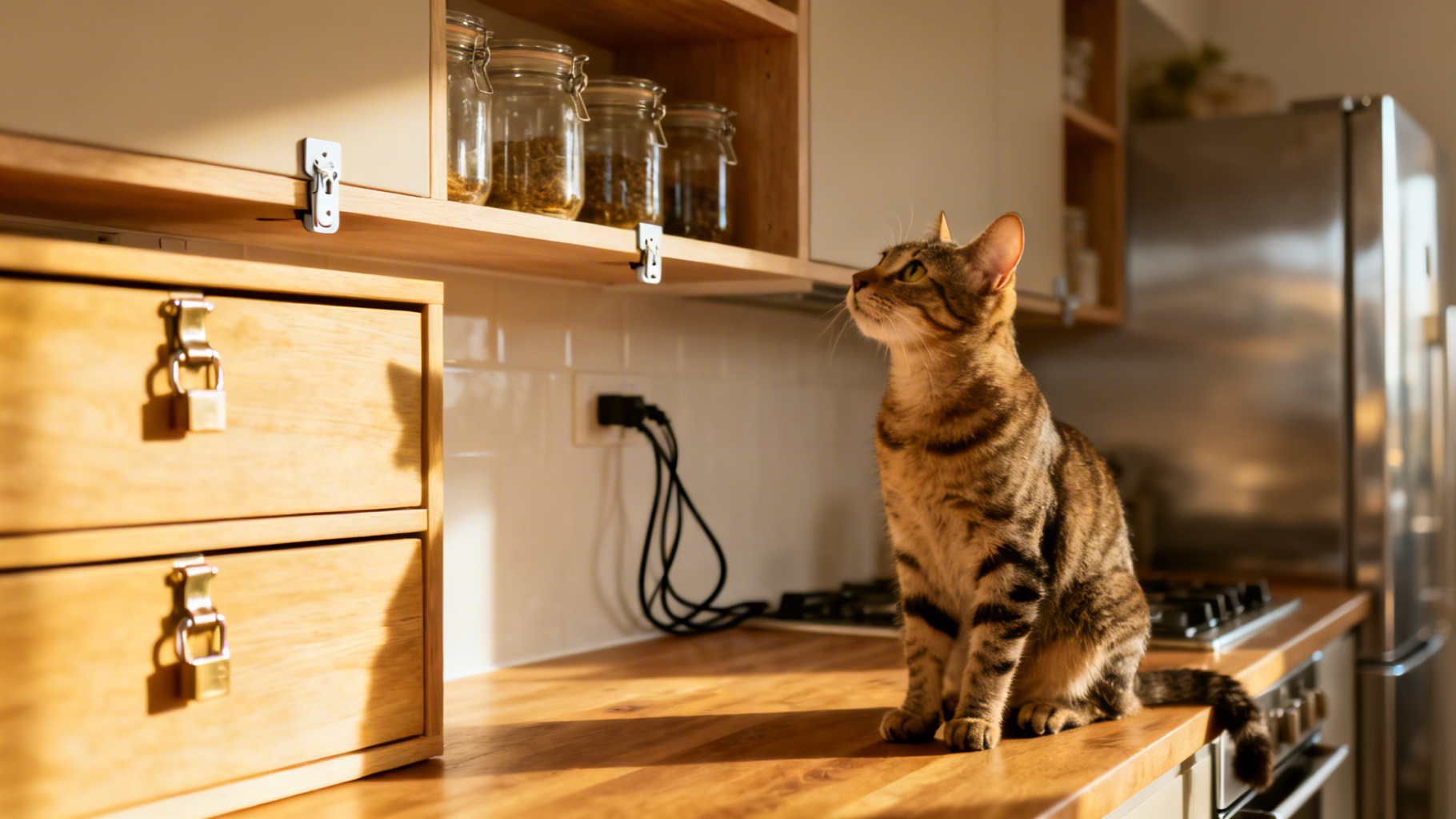
Your home might look safe to you, but to a curious cat with climbing abilities, sharp claws, and a taste for exploration, it’s filled with potential hazards. Cat-proofing your home isn’t just about protecting your belongings—it’s about creating a safe environment where your feline friend can thrive without constant supervision. Let’s identify the hidden dangers and secure them.
Why Cat-Proofing Matters
Cats are naturally curious, athletic, and persistent. They can reach places you’d never expect, squeeze through impossibly small spaces, and find danger in the most innocent-looking household items. Even experienced cat owners are often surprised by what can harm their pets.
Common cat accidents include:
- Poisoning from toxic plants or household chemicals
- Injuries from falls or unstable furniture
- Intestinal blockages from swallowing foreign objects
- Burns from hot surfaces
- Electrical shocks from chewing cords
- Drowning in toilets, bathtubs, or open containers
The good news? Most of these accidents are preventable with proper cat-proofing.
Room-by-Room Cat-Proofing Guide
Kitchen Hazards
The kitchen is one of the most dangerous rooms for cats.
Immediate threats:
- Hot stoves and burners – Cats jump on counters without checking if surfaces are hot. Use back burners when possible and never leave cooking unattended.
- Sharp knives – Store in drawers or knife blocks, never leave on counters
- Toxic foods – Keep onions, garlic, chocolate, grapes, raisins, xylitol (artificial sweetener), and raw dough secured
- Plastic bags and ties – Cats can suffocate or ingest these
- String from roasts – Can cause life-threatening intestinal blockages
- Open dishwasher – Cats can walk on sharp knives or ingest detergent
Solutions:
- Install child-safety locks on cabinets containing chemicals or food
- Use a trash can with a secure lid or keep it in a latched cabinet
- Store toxic foods in sealed containers or high cabinets
- Never leave food unattended on counters
- Close and latch the dishwasher immediately after loading
Bathroom Dangers
Water hazards:
- Toilet bowl – Kittens can drown; all cats can drink contaminated water or toilet cleaner. Keep the lid closed.
- Bathtub/shower – Cats can slip and fall. Never leave water standing.
- Running water – Some cats are fascinated by faucets and may burn themselves on hot water
Chemical hazards:
- Medications – Even one pill can be fatal. Store in closed cabinets.
- Cleaning products – Bleach, toilet cleaners, drain openers are toxic
- Personal care products – Many lotions, creams, and cosmetics are harmful if ingested
- Essential oils – Many are toxic to cats (tea tree, eucalyptus, citrus oils)
Small object hazards:
- Hair ties, dental floss, cotton swabs, razors
Solutions:
- Keep toilet lid closed (consider a lid lock)
- Store all medications in cabinets with child-safety locks
- Keep personal care products in drawers or cabinets
- Use a covered trash can for dental floss, cotton swabs, etc.
- Avoid using essential oil diffusers around cats
Living Room Safety
Electrical hazards:
- Electrical cords – Cats, especially kittens, may chew on these. Risk of shock or electrocution.
- Phone chargers – Same danger, often at perfect cat-mouth height
Furniture risks:
- Unstable furniture – Bookshelves, TV stands, and dressers can tip over when cats climb them
- Reclining chairs/sofas – Cats sleep in the mechanisms and can be crushed
- Window blinds – Cords pose strangulation risk
Decorative hazards:
- Candles – Fire risk and burn risk
- Small decorations – Can be swallowed
- Toxic plants – Many common houseplants are poisonous (see section below)
Solutions:
- Cover or conceal electrical cords with cord protectors or furniture
- Apply bitter spray to cords if chewing is a problem
- Anchor tall furniture to walls using furniture straps
- Always check recliner mechanisms before closing
- Use cordless blinds or tie cords up high out of reach
- Switch to battery-operated flameless candles
- Remove or secure small decorative items
Bedroom Hazards
- String and yarn – Can cause deadly intestinal blockages if swallowed
- Hair ties and rubber bands – Same risk, extremely appealing to cats
- Jewelry – Can be swallowed, causing blockages
- Sewing/craft supplies – Needles, thread, pins are dangerous
- Medications on nightstand – Easy access for curious cats
- Open dresser drawers – Cats can jump in and become trapped
Solutions:
- Store string, yarn, ribbon, and thread in sealed containers
- Keep hair ties in drawers
- Use a jewelry box with a secure latch
- Store craft supplies in a closed room or cabinet
- Keep medications in a drawer or cabinet, never on the nightstand
- Always close dresser drawers fully
Laundry Room Dangers
- Washers and dryers – Cats love to sleep in warm, dark spaces. Always check before starting.
- Detergent pods and liquid detergent – Highly toxic
- Fabric softener – Toxic if ingested
- Bleach – Corrosive and toxic
Solutions:
- Always check inside washers/dryers before use (make it a habit)
- Keep the door closed when not in use
- Store all laundry products in a high cabinet with child-safety locks
- Clean up spills immediately
Toxic Plants: Safe vs. Dangerous
Many popular houseplants are toxic to cats. Some cause mild stomach upset; others can be fatal.
Highly Toxic Plants (Remove These)
- Lilies (ALL parts, even pollen) – Can cause fatal kidney failure
- Sago Palm – Entire plant is deadly
- Azalea/Rhododendron – Can cause heart failure
- Oleander – Extremely toxic, affects the heart
- Autumn Crocus – Can cause organ damage
- Dieffenbachia (Dumb Cane) – Causes oral irritation and difficulty swallowing
- Kalanchoe – Affects the heart
- Cyclamen – Root is especially toxic
Moderately Toxic Plants (Use Caution)
- Pothos/Devil’s Ivy – Causes oral irritation and vomiting
- Philodendron – Similar to pothos
- Monstera – Oral irritation
- Snake Plant – Causes nausea and vomiting
- Aloe Vera – Causes vomiting and diarrhea
- English Ivy – Causes vomiting, diarrhea, and abdominal pain
Safe Plants for Cat Households
- Spider Plant – Completely non-toxic (though cats may nibble it)
- Boston Fern – Safe and cat-friendly
- African Violet – Non-toxic and pretty
- Areca Palm – Safe and air-purifying
- Calathea (Prayer Plant) – Non-toxic with beautiful leaves
- Peperomia – Safe for curious cats
- Cat Grass – Specifically for cats to nibble
- Catnip – Obviously safe and entertaining
Plant safety tips:
- When in doubt, check the ASPCA’s toxic plant database
- Place plants on high shelves out of reach (but cats can climb!)
- Use hanging planters for valuable or questionable plants
- Provide cat grass as an alternative to deter plant nibbling
- Consider replacing toxic plants with safe alternatives
Common Household Items That Are Dangerous
Foods That Are Toxic to Cats
- Chocolate – Contains theobromine, toxic to cats
- Onions and garlic – Can damage red blood cells
- Grapes and raisins – Can cause kidney failure
- Xylitol (artificial sweetener) – Causes liver failure
- Alcohol – Extremely toxic even in small amounts
- Caffeine – Found in coffee, tea, energy drinks
- Raw dough – Expands in the stomach and produces alcohol
- Bones – Can splinter and cause internal damage
Medications (Human and Pet)
- Pain relievers – Tylenol, ibuprofen, aspirin are toxic to cats
- Antidepressants – Can cause serious neurological problems
- ADHD medications – Stimulants are dangerous
- Vitamins with iron – Can cause organ damage
Household Chemicals
- Antifreeze – Sweet taste attracts cats but is deadly
- Rat poison – Causes internal bleeding
- Insecticides – Many are toxic to cats
- Cleaning products – Especially those containing phenols
Special Hazards for Curious Cats
String, Yarn, and Linear Objects
These deserve special mention because they’re one of the most common causes of cat emergencies. Cats have backward-facing barbs on their tongues, making it nearly impossible to spit out string once they start swallowing it.
Dangerous items:
- Dental floss
- String and twine
- Ribbon (especially at holidays)
- Yarn and thread
- Rubber bands
- Hair ties
- Tinsel (never use on Christmas trees)
- Easter grass
If you see string coming out of either end of your cat, DO NOT pull it. This can cause the string to saw through the intestines. Take your cat to the emergency vet immediately.
Small Objects
Cats, especially kittens, will swallow surprisingly large objects:
- Coins
- Paper clips
- Thumbtacks
- Small toys or toy parts
- Buttons
- Earring backs
Plastic and Bags
- Grocery bags – Suffocation risk and cats can strangle themselves in handles
- Plastic wrap – Suffocation risk
- Chip bags – Cats can suffocate trying to lick the inside
Windows and Balconies: High-Rise Syndrome
Cats can and do fall from windows, even those with screens. This is so common it has a name: High-Rise Syndrome.
Window safety:
- Never rely on screens—cats can push through them
- Install window guards designed for cats
- Open windows from the top instead of bottom
- If opening bottom windows, open them less than 4 inches (too small for cat to fit through)
- Never leave windows open unattended if you’re above ground floor
Balcony safety:
- Enclose balconies with cat-proof netting
- Never leave cats unsupervised on balconies
- Cats can squeeze through surprisingly small gaps in railings
Appliances and Furniture
Reclining Furniture
Reclining chairs and sofas have mechanisms that can trap and kill cats. Cats love to hide in dark spaces and often crawl into the underside of recliners.
Safety measures:
- Always check under and behind recliners before sitting or reclining
- Keep recliners in the closed position when not in use
- Consider blocking access to the underside
Tip-Over Risk
Cats climb, and unstable furniture can fall:
- Anchor tall bookshelves to walls
- Secure TVs and TV stands
- Use earthquake putty under decorative items
- Don’t place heavy items on high, unstable shelves
Creating a Safe Cat-Friendly Environment
Cat-proofing isn’t just about removing dangers—it’s about redirecting your cat’s natural behaviors to safe outlets.
Provide appropriate alternatives:
- Scratching posts – So cats don’t scratch furniture or unsafe materials
- Climbing structures – Cat trees and wall shelves direct climbing away from unstable furniture
- Toys – Keep cats engaged and entertained with safe toys instead of dangerous household items
- Cat grass – Satisfies the urge to chew on plants
- Puzzle feeders – Engages hunting instincts safely
The Cat-Proofing Checklist
Print this checklist and go room by room:
☐ All toxic plants removed or placed completely out of reach
☐ Electrical cords concealed or protected
☐ String, yarn, ribbon, floss stored in closed containers
☐ Medications stored in locked cabinets
☐ Cleaning products secured
☐ Trash cans have secure lids
☐ Toilet lids closed
☐ Washer/dryer doors closed when not in use
☐ Tall furniture anchored to walls
☐ Window guards or screens secured
☐ Small objects stored safely
☐ Toxic foods kept in sealed containers or high cabinets
☐ Blind cords secured or replaced with cordless
☐ Plastic bags stored away
☐ Recliners checked before use
Special Considerations for Kittens
Kittens require extra vigilance because they’re smaller, more curious, and less cautious than adult cats.
Additional kitten-proofing:
- Block access to any space they can squeeze into (they can fit through incredibly small gaps)
- Remove even small decorative items they might swallow
- Be extra vigilant about electrical cords (kittens are more likely to chew)
- Close off any rooms you can’t fully kitten-proof
- Supervise kittens more closely until they mature
Emergency Preparedness
Despite your best efforts, accidents can happen. Be prepared:
- Keep your vet’s number and nearest emergency vet clinic information posted
- Save the Pet Poison Control number: (888) 426-4435
- Keep a cat first aid kit stocked
- Know the signs of common poisonings and emergencies
- Have a cat carrier readily accessible
Final Thoughts: Ongoing Vigilance
Cat-proofing isn’t a one-time task. As you bring new items into your home, consider them from a cat’s perspective. That beautiful plant, those decorative items, that new cleaning product—are they safe?
Regular “cat audits” of your home help you spot new hazards before they become problems. Walk through each room once a month and look at it through your cat’s eyes: What could I climb? What could I knock over? What looks fun to chew or swallow?
The effort you put into cat-proofing pays off in peace of mind. You’ll rest easier knowing your curious companion can explore safely, and your cat will live a longer, healthier life free from preventable accidents.
Your home can be both beautiful and cat-safe with a little planning and awareness. It’s not about creating a sterile environment—it’s about creating a space where your cat can be naturally curious without stumbling into danger.