
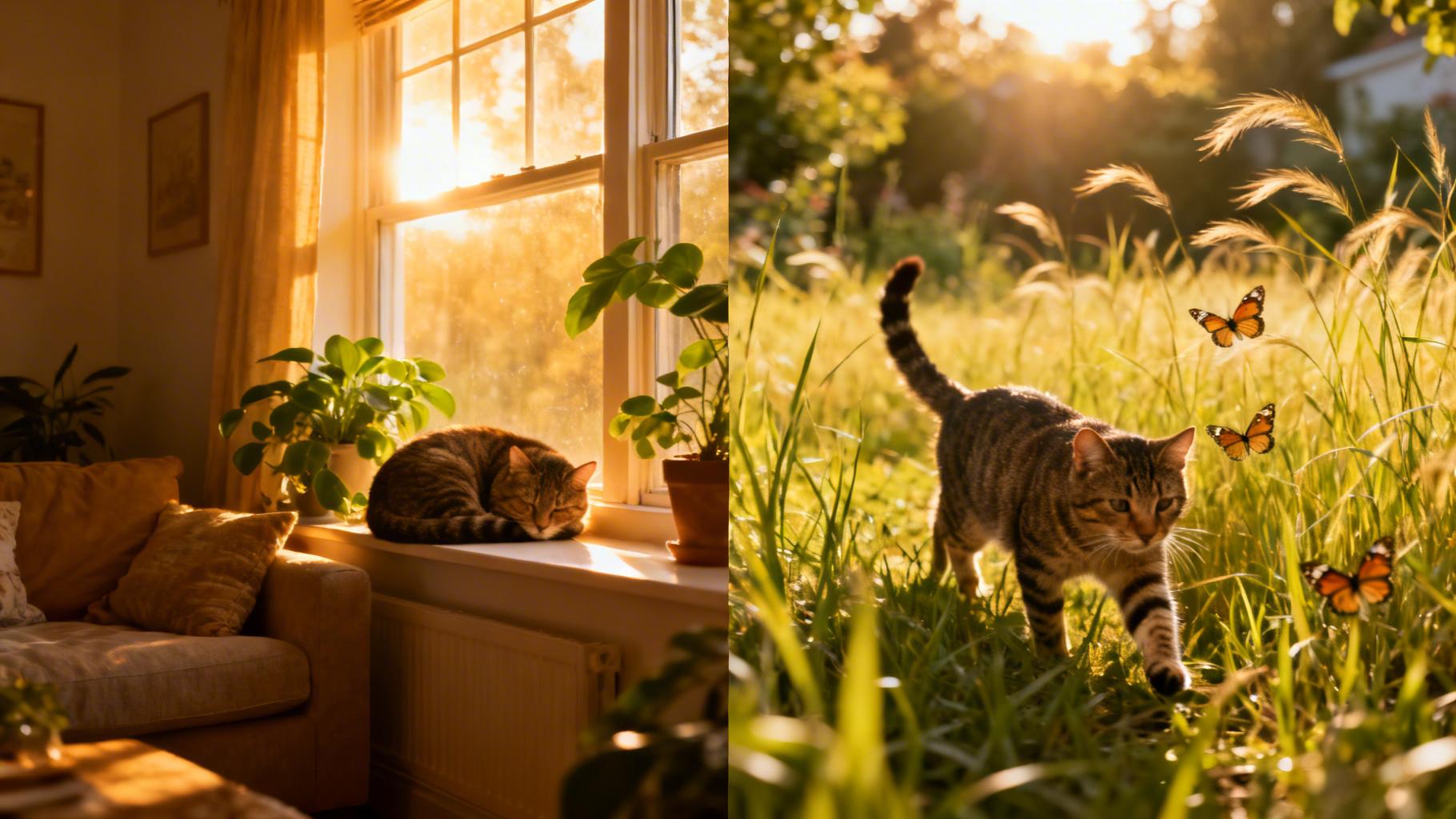
Deciding whether your cat should live indoors, outdoors, or have access to both is one of the most important choices you’ll make as a cat owner. This decision impacts your cat’s safety, health, lifespan, and quality of life. Let’s explore both options to help you make the best choice for your feline friend.
The Indoor Cat Advantage
Indoor cats typically live significantly longer than their outdoor counterparts—often 12-18 years compared to just 2-5 years for outdoor cats. This dramatic difference stems from the numerous hazards outdoor cats face daily.
Safety Benefits of Indoor Living
When you keep your cat indoors, you protect them from:
- Traffic accidents – the leading cause of death for outdoor cats
- Predators – coyotes, dogs, and even birds of prey
- Infectious diseases – FIV, FeLV, and parasites from other cats
- Poisoning – from antifreeze, pesticides, or toxic plants
- Getting lost or stolen – cats can wander far from home
- Fights with other animals – leading to injuries and infections
Indoor cats also pose less risk to local wildlife. Studies show that outdoor cats kill billions of birds and small mammals annually, making indoor living the environmentally responsible choice.
Health Advantages
Indoor cats experience fewer injuries, infections, and parasites. You’ll likely spend less on veterinary care and have better control over your cat’s diet and weight. Regular observation means you’ll notice health problems earlier.
The Outdoor Experience
Despite the risks, some cat owners believe outdoor access provides important benefits for feline well-being.
Natural Behaviors and Enrichment
Outdoor cats can:
- Hunt and stalk prey (satisfying natural instincts)
- Climb trees and explore varied terrain
- Experience natural sunlight and fresh air
- Exercise more vigorously through running and jumping
- Engage with a constantly changing environment
The Outdoor Reality
While these benefits sound appealing, the same activities that provide enrichment also expose cats to danger. A cat hunting mice may encounter poison. A cat climbing trees may fall or become stranded. The outdoor environment is inherently unpredictable.
The Best of Both Worlds: Compromise Solutions
You don’t have to choose between complete indoor confinement and unrestricted outdoor access. Several middle-ground options exist:
Catio (Cat Patio)
A catio is an enclosed outdoor space that gives cats fresh air and outdoor stimulation while keeping them safe. These can range from simple window boxes to elaborate outdoor enclosures with multiple levels, perches, and even tunnels connecting to the house.
Leash Training
Many cats can learn to walk on a harness and leash, allowing supervised outdoor time. This requires patience and the right equipment, but gives cats outdoor access under your control.
Supervised Yard Time
If you have a secure yard, you might supervise your cat during outdoor sessions. This works best with cats who stay close and come when called, though it requires your constant attention.
Enriched Indoor Environment
You can bring outdoor benefits inside through environmental enrichment. Cat trees, window perches, puzzle feeders, and interactive play sessions help indoor cats stay mentally and physically stimulated.
Making Your Decision
Consider these factors when deciding what’s right for your cat:
Your Living Situation
- Apartment living – Indoor-only is typically the only option
- Busy roads nearby – Outdoor access is dangerous
- Wildlife area – Predators make outdoor living risky
- Secure yard – Supervised or catio options become possible
Your Cat’s Personality
Some cats are natural homebodies who show no interest in the outdoors. Others constantly try to escape. Your individual cat’s temperament should influence your decision, though safety should always come first.
Your Commitment Level
Indoor cats require more active engagement from owners. You’ll need to provide entertainment and exercise that outdoor cats get naturally. Are you prepared to play with your cat daily, provide climbing structures, and rotate toys?
Transitioning Cats Indoors
If you’re bringing an outdoor cat inside permanently, expect an adjustment period. Here’s how to make the transition smoother:
Gradual Transition
Rather than an abrupt change, gradually reduce outdoor time over several weeks. Start by keeping your cat in during the most dangerous times (night and dawn/dusk when predators are active).
Increase Indoor Enrichment First
Before restricting outdoor access, set up an engaging indoor environment:
- Install cat trees and wall shelves
- Create window viewing stations
- Introduce puzzle feeders and food-dispensing toys
- Establish a daily play routine
- Consider getting a second cat for companionship (if appropriate)
Manage the Adjustment Period
Your cat will likely protest the change. Expect:
- Increased vocalization (meowing, yowling)
- Door-darting attempts
- Restlessness and pacing
- Possible litter box issues from stress
Stay firm but compassionate. These behaviors typically decrease after 2-4 weeks as your cat adapts. Increase playtime and attention during this period.
Never Reward Door-Dashing
If your cat escapes and you let them stay out, you’ve reinforced the escape behavior. Instead, calmly retrieve them immediately. Consider door barriers or creating a “buffer zone” with a screen door.
What About Cats Who Have Never Been Outside?
Cats raised indoors from kittenhood typically don’t feel they’re missing anything. They don’t know what they don’t know. These cats are often the happiest indoor cats because they’ve never experienced the stimulation of outdoor hunting and exploration.
If you adopt a kitten, keeping them exclusively indoors from the start is far easier than transitioning an outdoor cat later.
The Verdict: What’s Safest?
From a pure safety and health perspective, indoor living is unquestionably better for cats. The statistics are clear: indoor cats live three to four times longer than outdoor cats.
However, “indoor” doesn’t mean “boring.” With proper enrichment, indoor cats can live fulfilling, stimulating lives without the risks of the outdoor world. The key is owner commitment to providing that enrichment.
A Middle Ground That Works
If your cat craves outdoor access, a catio or leash walking offers the best compromise—outdoor stimulation without the dangers. These solutions require more setup or time investment but provide peace of mind that your cat is safe.
Making It Work: Your Action Plan
Whatever you decide, commit fully:
If keeping your cat indoors:
- Set up vertical space (cat trees, shelves)
- Create window perches for bird watching
- Play interactively for 15-20 minutes twice daily
- Rotate toys to maintain novelty
- Consider puzzle feeders to engage hunting instincts
If allowing outdoor access:
- Ensure your cat is microchipped and wears a collar with ID
- Keep vaccinations current
- Use flea, tick, and parasite prevention year-round
- Have your cat spayed/neutered to reduce roaming
- Bring cats in at night when most dangers increase
If building a catio or leash training:
- Start with a secure harness designed for cats (not dogs)
- Introduce the harness gradually indoors first
- Build or buy a catio that’s fully enclosed including the top
- Add enrichment items: perches, scratching posts, hiding spots
Final Thoughts
The indoor versus outdoor decision ultimately depends on your individual circumstances, but prioritizing your cat’s safety should guide your choice. Indoor cats can absolutely thrive with the right environment and owner commitment.
Remember, this isn’t about what’s most convenient for you or even what your cat wants in the moment—it’s about what provides the longest, healthiest life for your feline companion. Most veterinarians and animal welfare organizations recommend indoor living for exactly this reason.
Whichever path you choose, you’re clearly a caring owner seeking what’s best for your cat. That thoughtfulness will serve you well as you create a safe, enriching life for your feline friend.