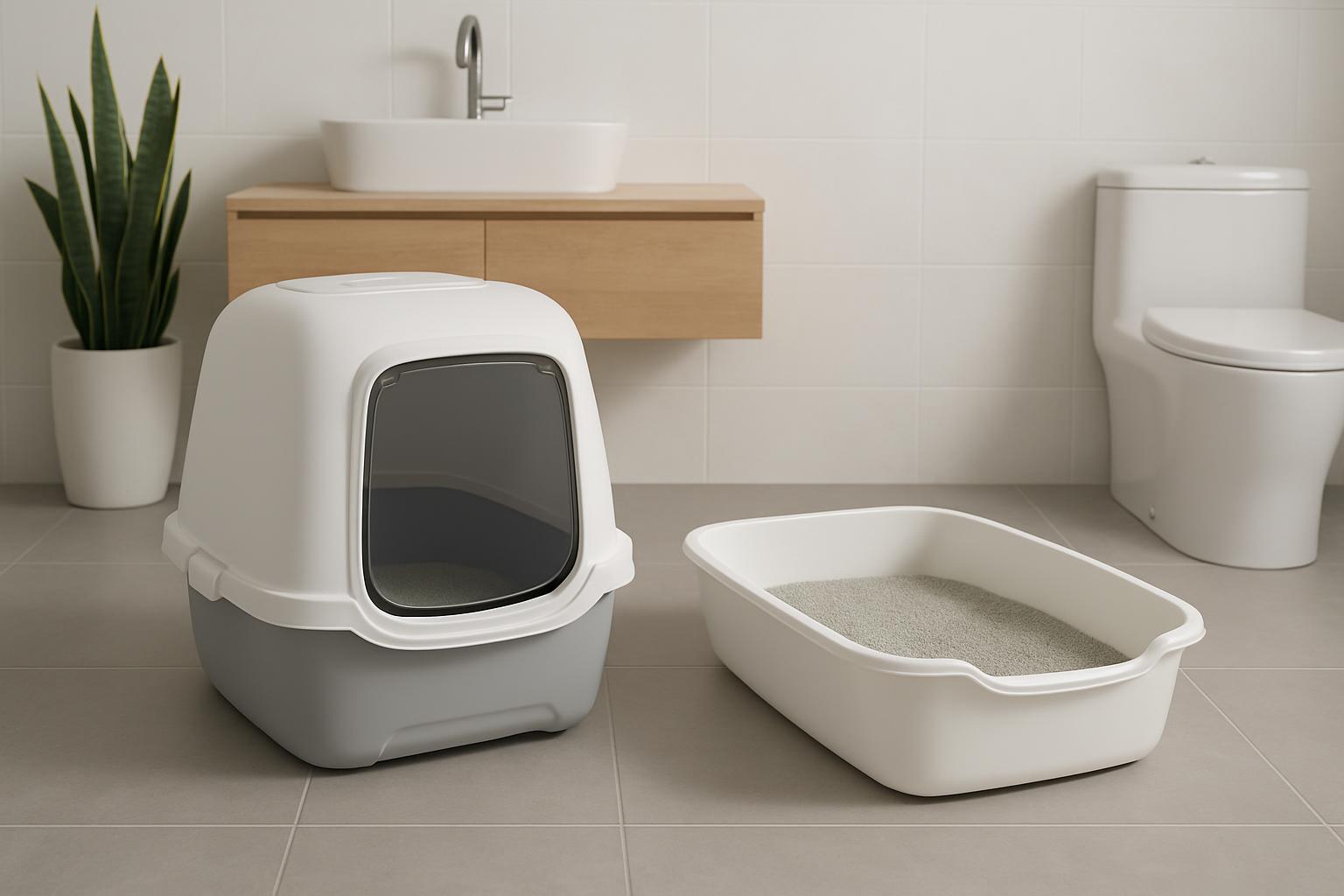
The covered vs uncovered litter box debate is one of the most common questions new cat owners ask — and the answer might surprise you. Research suggests cats and humans have very different opinions on this topic.
What the Research Says
A frequently cited 2013 study published in the Journal of Feline Medicine and Surgery found that when given a choice, most cats showed no strong preference between covered and uncovered boxes — they used both equally. However, individual cats definitely have preferences, and some strongly avoid one type or the other.
The key insight: the type of box matters less than keeping it clean. A clean covered box beats a dirty open one every time.
Covered Litter Boxes: Pros and Cons
Advantages
- Odor containment: Covered boxes trap odors inside rather than releasing them into the room — the #1 reason humans prefer them
- Reduced litter scatter: The walls and roof catch kicked litter that would otherwise fly across the floor
- Privacy: Some cats prefer the enclosed feeling, especially in busy households
- Aesthetics: Covered boxes, especially furniture-style enclosures, look better in living spaces
Disadvantages
- Trapped odors work both ways: While you can’t smell it, your cat is trapped inside with concentrated ammonia fumes. Cats’ sense of smell is 14x stronger than ours.
- Ambush anxiety: In multi-cat homes, a cat inside a covered box can’t see an approaching housemate. Some cats avoid covered boxes because they feel trapped.
- Out of sight, out of mind: When you can’t see the litter, you’re less likely to scoop promptly. This is the hidden danger of covered boxes.
- Size constraints: Many covered boxes are smaller than open ones, and the roof restricts tall cats from positioning comfortably.
Uncovered Litter Boxes: Pros and Cons
Advantages
- Better ventilation: Odors disperse rather than concentrating inside the box
- Visibility: Cats can see their surroundings — important for nervous cats or multi-cat households
- Easy access: No doorway to navigate, especially important for kittens, senior cats, or cats with mobility issues
- You see when it’s dirty: Visible messes get scooped faster
- More room: Open boxes tend to be larger and give cats more space to turn and dig
Disadvantages
- Litter tracking: Kicked litter goes everywhere without walls to contain it
- Odor: Smells reach you immediately — which is actually a feature, not a bug (it motivates faster cleaning)
- Less attractive: An open litter box is not a design element anyone wants in their living room
The Top-Entry Alternative
Top-entry litter boxes (like the IRIS Top Entry) offer a middle ground: walls contain litter scatter while the open top provides ventilation and doesn’t trap cats inside. The cat enters by jumping through a hole in the lid, which also wipes litter off their paws. Not ideal for kittens or senior cats, but excellent for healthy adults.
Multi-Cat Considerations
In multi-cat homes, uncovered boxes are generally safer. The ability to see approaching cats while using the box reduces stress and prevents ambush situations. If you use covered boxes in a multi-cat home, make sure there are enough open alternatives too — follow the n+1 rule and mix box types.
Our Recommendation
Start with uncovered. Most behaviorists recommend open boxes as the default because they work for the widest range of cats. If your cat is comfortable, you can experiment with a covered option alongside the open one and see which they prefer.
If you go covered: Remove the door flap (many cats dislike pushing through it), scoop twice daily since you can’t see the mess, and make sure the box is large enough for your cat to turn around inside comfortably.
If space/aesthetics matter: Furniture-style litter box enclosures give the hidden look of a covered box with more interior space. Check our best litter boxes for apartments for compact options.
For complete litter box setup advice, see our Litter Box Setup Guide and where to place a litter box in a small home.